REVIEW · ART GALLERIES & MUSEUMS
London: Natural History Museum Guided Tour
Book on GetYourGuide →Operated by The Great Weekender · Bookable on GetYourGuide
Sophie the stegosaurus brings science to life. I like how this is a guided, small-group way to hit the Natural History Museum’s big moments fast, with express security so you’re not stuck at the gate. You get a live guide who keeps the 80 million specimens from feeling like a never-ending maze.
I also love the mix of iconic finds and thought-provoking fossils. You’ll spend time around Archaeopteryx and Darwin’s first edition of On the Origin of Species, then connect those ideas to how scientists read the past.
One thing to consider: at $93, you’ll want to be ready for a highlights-focused tour. If you already know the basics of evolution, volcanoes, and minerals, some of the explanations may feel a bit high level for the price.
In This Review
- Key highlights at a glance
- Meet Up Outside Exhibition Road and Glide Through Security
- A 2.5-Hour Guided Route Through 80 Million Specimens
- Fossil Power: Sophie the Stegosaurus, Dodo, and Archaeopteryx
- Giant Sequoia Cross-Section and Darwin’s First Edition Moment
- Pompeii Casts and the Museum’s Earth-to-Space Materials
- Price and Value: Is $93 Worth It?
- Who This Tour Fits Best (and Who Should Skip It)
- Should You Book This Natural History Museum Guided Tour?
- FAQ
- Where do I meet for the Natural History Museum guided tour?
- How long is the tour?
- What’s included in the price?
- Does the tour include security skipping?
- Are there any photography rules?
- Is the tour refundable?
Key highlights at a glance
- Sophie the Stegosaurus: the museum’s most complete stegosaurus skeleton
- Archaeopteryx and evolution links: the “missing link” story made visual
- Giant Sequoia cross-section: a 1300-year-old tree cut down in the 1800s
- Pompeii plaster casts: human stories tied to Mount Vesuvius
- Earth materials plus space rocks: gemstones, and rock samples from the Moon and Mars
- A guide-led route: faster museum time with live interpretation
Meet Up Outside Exhibition Road and Glide Through Security
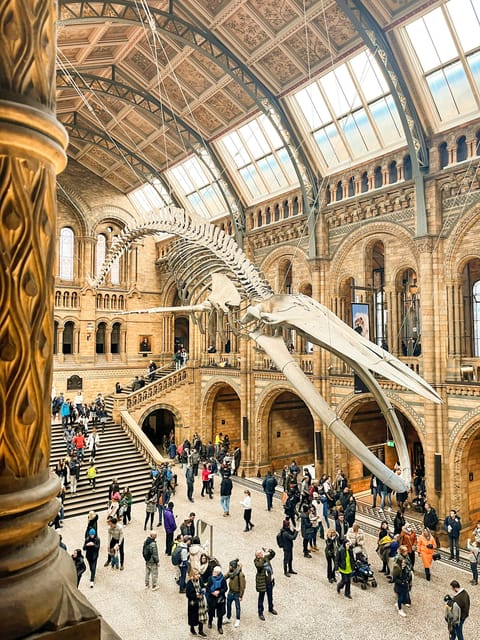
This tour starts outside the red telephone box opposite the Exhibition Road entrance. That matters more than you’d think, because the Natural History Museum can feel busy and confusing when you’re matching directions, tickets, and entrance lines. Aim to arrive a few minutes early so you can get settled before the group funnels in.
The biggest practical win is the promise of express security. In a huge museum, the first 20 to 30 minutes often decide how enjoyable the rest of the visit feels. If you’re even a little pressed for time, skipping the longest security step helps you spend that energy on the displays instead of waiting.
One simple rule to keep in mind: flash photography isn’t allowed. It sounds obvious, but people forget when they’re excited at fossils and gems. Plan to use your phone without flash and you’ll avoid awkward reminders from staff.
You can also read our reviews of more guided tours in London



A 2.5-Hour Guided Route Through 80 Million Specimens
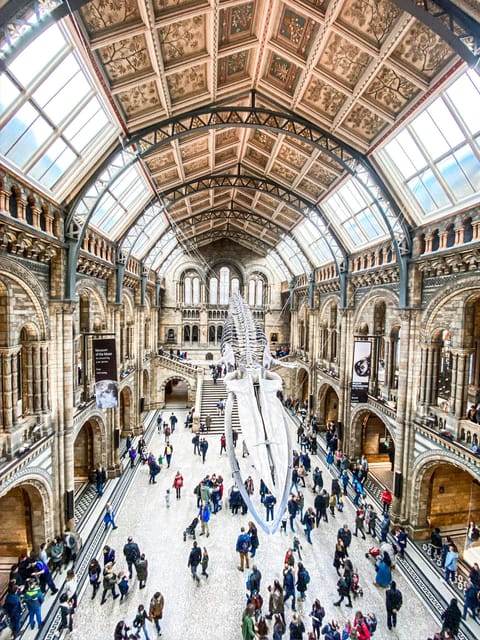
The overall time is 2.5 hours, with a 2-hour guided visit inside the museum. That timing is a sweet spot: enough time to see the signature objects, but not so long that you lose focus or start rushing through rooms.
This is private or small-group style, which tends to work better in a museum like this. Instead of just following signage, you get a guide who makes choices for you—what to linger on, what order to see it in, and how to connect the dots across geology, fossils, and evolution. Even if you’re not a “museum person,” you’ll usually find it easier to care when someone points out what to notice.
The tour is live and in English, so you can ask follow-up questions in real time. That’s especially useful when a display raises the kind of question people carry around all day, like how scientists know what they’re looking at—or what a particular fossil can and can’t prove.
Fossil Power: Sophie the Stegosaurus, Dodo, and Archaeopteryx
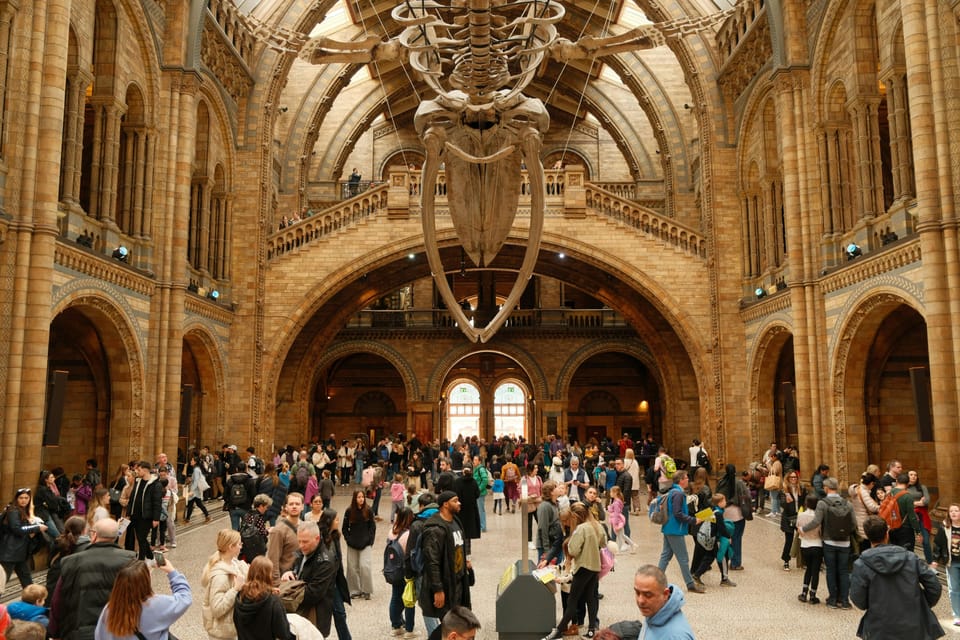
If you love fossils, this is the part of the tour you’ll remember. Sophie the Stegosaurus is the headline: a remarkably complete stegosaurus skeleton that makes the whole animal feel real instead of abstract. Standing near it, you can actually see the body shape and the “why does it look like that” details that drawings never fully communicate.
Then comes the Dodo. The Dodo stop is more than a quick checkmark on the itinerary. It’s a way to remind yourself that extinction isn’t just something that happened long ago—it’s something human action can accelerate. That context tends to make the rest of the fossil story hit harder.
Next, your guide turns to Archaeopteryx, described as the “missing link” between dinosaurs and birds. Here’s what I like about this approach: the museum doesn’t treat it like a trivia item. It frames Archaeopteryx as evidence that helps explain how scientists think traits evolved over time.
A note on expectations: you won’t get a graduate seminar in evolution in 2 hours. But you will get a clear route to the key specimens, and enough explanation to make the differences between animals feel meaningful, not random.
Giant Sequoia Cross-Section and Darwin’s First Edition Moment
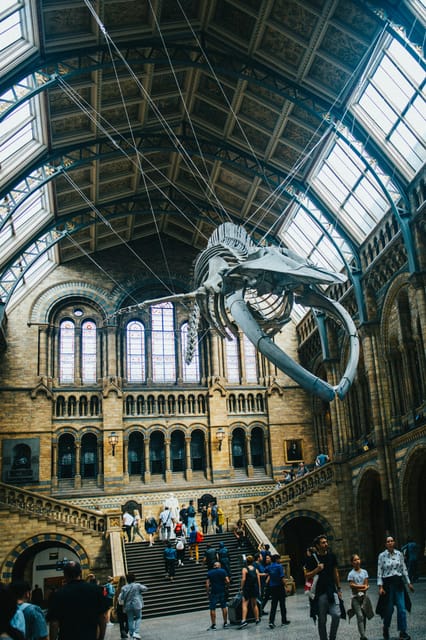
The Giant Sequoia stop is one of those museum experiences that feels oddly emotional. You’ll stand in awe of a cross-section of a tree that was about 1300 years old when it was felled in the 19th century. That’s not just a number—it’s a way to visualize time depth with your own eyes.
This display also nudges you to think like a naturalist. Tree rings, growth, and age become more than concepts when you’re staring at the physical slice. Even if you don’t care about botany, it changes how you interpret the museum’s fossil-and-earth timeline.
Then you’ll see Darwin’s On the Origin of Species in first-edition form. This isn’t just a proud artifact sitting behind glass. It represents a scientific turning point—how one book helped shift how people reasoned about life on Earth. Seeing the object itself makes the ideas feel less like textbook words and more like something real that existed in someone’s hands.
Together, these two stops connect in a satisfying way: one shows how time leaves records in nature, and the other shows how ideas let humans read those records.
Pompeii Casts and the Museum’s Earth-to-Space Materials
After the fossil and evolution highlights, you move into a different kind of wonder: earth science with drama and human gravity.
The Pompeii portion centers on plaster casts taken from the victims of the eruption of Mount Vesuvius. It’s one of the stops where a guide matters. Without guidance, you might just see bodies in plaster and move on. With a guide, you understand what the casting captures—and what it can’t—so the display becomes part of a larger story about catastrophe and evidence.
From there, the tour widens into minerals and even space materials. You’ll see some of the finest gemstones from the museum’s earth vault, plus rock samples from the Moon and Mars. It’s a bold shift, but it works because it keeps pointing back to the same theme: where materials come from, and what their features can tell you.
Even if you’re not a science nerd, I think this sequence is a smart way to break up the tour. You get emotional weight at Pompeii, then you get curiosity again with gems and extraterrestrial rock. That change of pace helps the full 2-hour guided segment stay enjoyable.
You can also read our reviews of more historical tours in London






Price and Value: Is $93 Worth It?
$93 for a 2.5-hour experience can sound steep until you break down what you’re buying.
You’re paying for:
- a guided route through major highlights (so you don’t spend your prime museum time wandering)
- express security handling that reduces wait stress
- live interpretation in English
- access to the museum’s main highlights
If your museum visit would otherwise be a self-guided rush, the guidance can be worth it fast. You’re essentially paying to trade some decision-making for expert selection—someone else handles the order and you get to focus on looking.
If you’re already well-versed in evolution, geology, volcano history, and mineral science, the tour may feel more like a curated walk-through than a deep education. In that case, you might get better value with a self-guided visit and just spend extra time at the specimens that interest you most.
My practical take: if you want a guided highlights package and you like fossils plus earth science, this price often makes sense. If you want heavy detail on every topic, you’ll probably want to supplement with your own reading during or after.
Who This Tour Fits Best (and Who Should Skip It)
This tour is a strong match if you:
- want to see Sophie the stegosaurus, Archaeopteryx, Darwin’s first edition, and the Pompeii casts without planning a route
- prefer a guide-led explanation over reading every label alone
- like the blend of natural history with human history and science
It’s also a good pick for families who benefit from a guide keeping things moving and making big objects feel less intimidating.
There is one clear limit: it’s not suitable for wheelchair users. If mobility access is a must for you, you’ll need another option.
And consider your prior knowledge. If you’re already fluent in the science behind the displays, you may feel a highlights tour is too brief for the money. But if you’re visiting for wonder and clear context, this length is about right.
One more real-world factor: it’s a live guide experience. The quality can make or break the visit. When the guide is engaging and organized, the time tends to fly. When the guide experience goes wrong, it’s a problem you’ll feel immediately.
Should You Book This Natural History Museum Guided Tour?
Book this tour if you want a time-saver route to the museum’s headline specimens—especially Sophie the stegosaurus, Archaeopteryx, Darwin’s first edition, and the Pompeii plaster casts. The express security and live guide format are practical advantages in a museum this large.
Skip it if you need wheelchair access or if you’re seeking a deep, topic-by-topic masterclass. For people who already know the subject well, the value shifts toward a self-guided visit where you can linger exactly where you want.
If you’re in the middle—curious, open-minded, and happy to be pointed to the best stuff—this is an excellent way to get a lot of meaning out of 2.5 hours in London.
FAQ
Where do I meet for the Natural History Museum guided tour?
Meet outside the red telephone box opposite the Exhibition Road entrance to the Natural History Museum.
How long is the tour?
The total duration is 2.5 hours, with a 2-hour tour inside the museum.
What’s included in the price?
You get access to the museum’s main highlights, a 2-hour guided tour with a tour guide, and entry to the museum with the guide.
Does the tour include security skipping?
Yes. It includes access through an express security check.
Are there any photography rules?
Flash photography is not allowed.
Is the tour refundable?
Free cancellation is available up to 24 hours in advance for a full refund. The tour also offers a reserve now & pay later option.