REVIEW · HISTORICAL TOURS
London: Rock ‘n’ Roll History Tour
Book on GetYourGuide →Operated by London Rock Music History Tours · Bookable on GetYourGuide
Abbey Road is the payoff, but story steals it. This London Rock ’n’ Roll History Tour strings together eras you actually care about, from Sixties swing to 70s punk, with stops around Chelsea’s King’s Road and Kensington’s Queen connections. I especially love the way the guide connects landmarks to songs and scenes, and I also like the practical pacing on an air-conditioned bus. One thing to keep in mind: most stops are quick looks from the street, not long museum-style visits.
You’re paying for focus and convenience: a 3.5-hour route through several rock-heavy neighborhoods, plus transportation and an Abbey Road stop. At $74 per person, it’s best seen as an organized way to save hours of guesswork—especially if you only have a day or two in London and don’t want to plot addresses one by one.
You’ll want comfortable shoes, since the Abbey Road moment involves walking and photo positioning. This tour isn’t set up for wheelchair users, and pickup/drop-off isn’t included, so plan to start at the meeting point and handle getting there on your own.
In This Review
- Key highlights you’ll feel right away
- 3.5 hours that actually make sense: how the route plays out
- Where to meet and when to show up (so you don’t miss the start)
- Chelsea and King’s Road: the Sixties street scene with real names attached
- Kensington: Queen’s origin area and the Freddie layer you’ll want to know
- Notting Hill and the punk-reggae pivot: Hendrix, Caribbean London, and more
- The Abbey Road crossing: how to nail the iconic photo moment
- Price and value: what $74 buys you (and what it doesn’t)
- The guide factor: why Clive, Ian, Colin, and others matter
- Who should book this London Rock ’n’ Roll History Tour
- Should you book it? My quick take
- FAQ
- How long is the London Rock ’n’ Roll History Tour?
- Where does the tour start?
- Do I get pickup and drop-off?
- What is included in the ticket?
- What languages are offered?
- What should I bring?
- Is the tour suitable for wheelchair users?
- Is there a cancellation option?
- How do I plan for the Abbey Road photo stop?
Key highlights you’ll feel right away
- Chelsea to Kensington in one ride: big names plus the street-level vibe that made it all happen
- Punk-to-reggae cross-currents: Sex Pistols and The Clash energy, then Notting Hill’s Caribbean and reggae scene
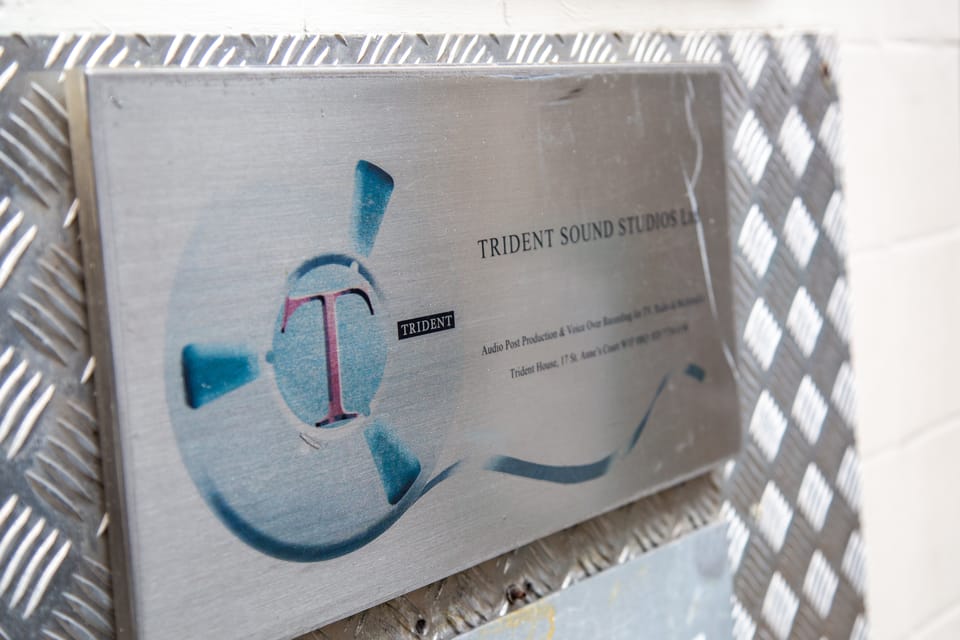
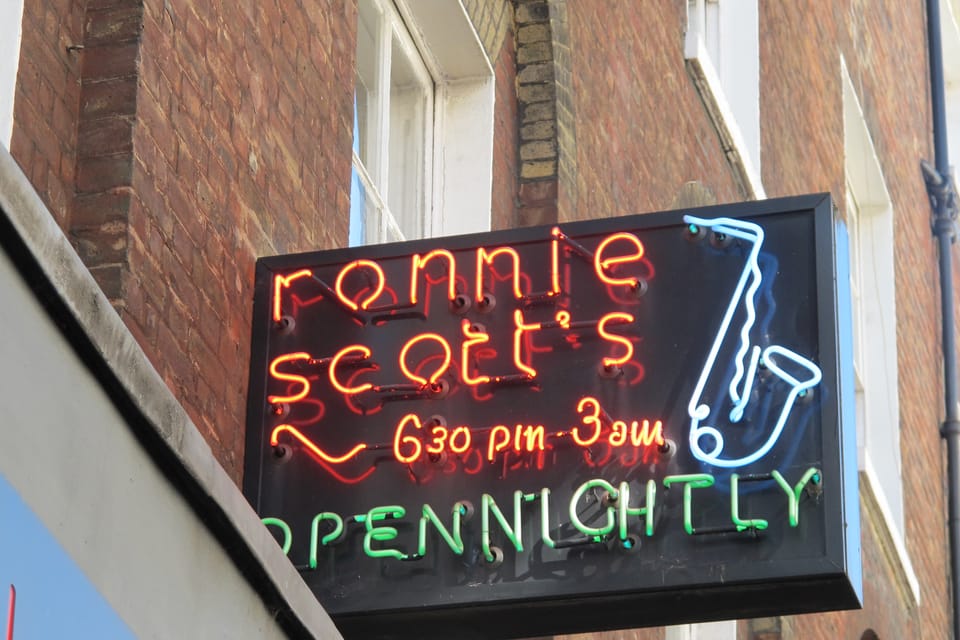
- Quick photo stops with context: studios, record-company offices, and gig sites from the outside
- A proper Abbey Road moment: a classic crossing photo where the timing and positioning matter
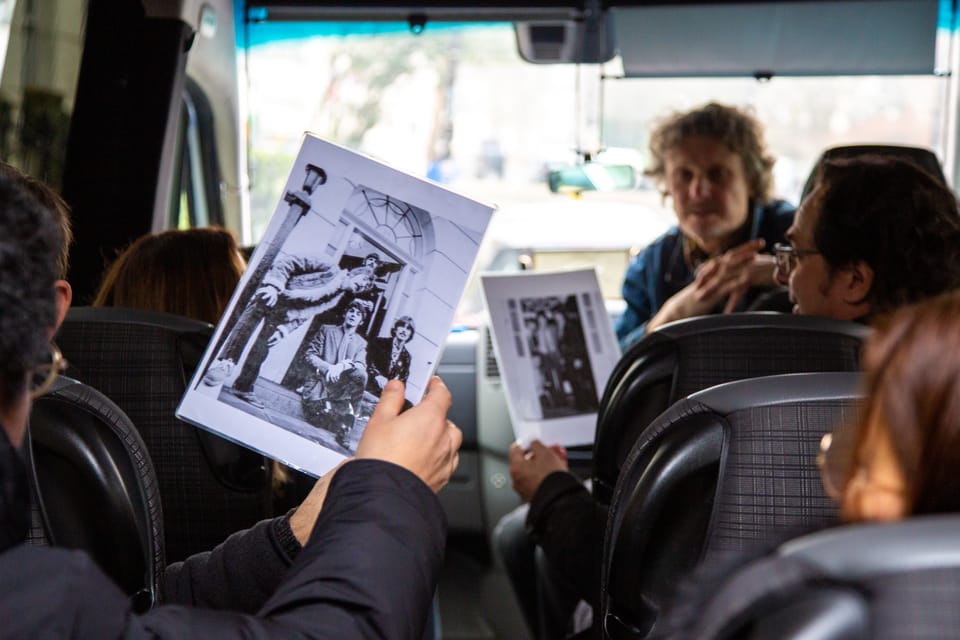
- Guides with real personality: some guides add extras like photo materials to anchor the stories
3.5 hours that actually make sense: how the route plays out
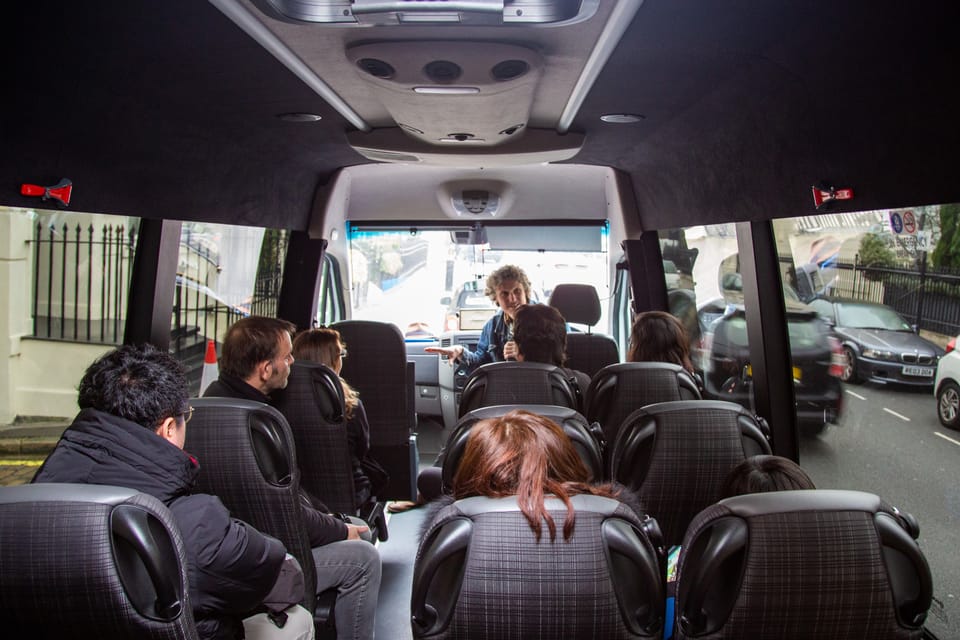
This tour is built for first-timers who want the rock timeline without turning London into a scavenger hunt. You’ll ride between a cluster of neighborhoods tied to music history, including Chelsea, Kensington, Notting Hill, and St John’s Wood—so you don’t waste your day commuting across town.
The big practical advantage is the format. You’re not stuck walking long distances, and you’re not stuck deciding whether a street is worth your time. Instead, you get short, targeted stops and “pass-by with meaning” moments that connect famous bands to specific locations. The bus keeps you moving even when London traffic slows everything else down.
Now the consideration: because the tour time is limited, you shouldn’t expect extended time at each exact site. Many locations are viewed from the outside—studios, offices, hotels, and venues. The one moment that really feels like a mini event is the Abbey Road crossing photo stop, where the group gets that iconic shot.
If your ideal London day is slow strolls with lots of inside tickets, you might feel a little rushed. If your ideal day is guided context plus the best photo opportunities, this tour hits the mark.
You can also read our reviews of more historical tours in London


Where to meet and when to show up (so you don’t miss the start)
Until March 31, 2026, the departure point is Duke of York Column, St. James’s (SW1Y 5AJ)—about a 5-minute walk from Piccadilly Circus or Charing Cross stations. After April 1, 2026, the meeting point shifts to the Millennium Gloucester Hotel in Kensington, near Gloucester Road Underground.
You’ll want to arrive at least 10 minutes early to check in with your Rock Tour Guide. That check-in buffer matters because the tour is only 3.5 hours long, and the whole schedule depends on leaving on time.
Also note what’s not included: there’s no pickup or drop-off. So treat the meeting point as your starting line. If you’re staying in Central London, this is usually convenient. If you’re far out, plan your Underground ride accordingly.
Chelsea and King’s Road: the Sixties street scene with real names attached
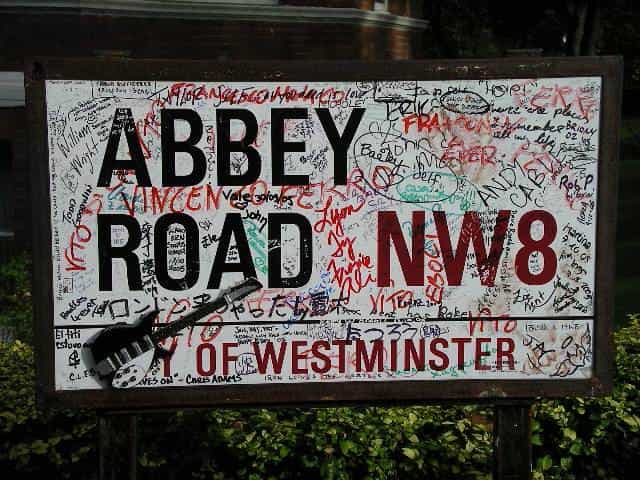
Chelsea is where the tour starts turning from general rock talk into street-level storytelling. You’ll head to King’s Road, a fashion-and-music corridor with an infamous reputation for being at the center of nightlife and trend-setting. The point isn’t just to point at cool buildings. It’s to show how those streets fed lyrics, gossip, and the whole “this is happening now” energy that bands thrive on.
From there, you’re in the thick of classic London music lore. You’ll see spots linked to the Rolling Stones sharing a flat, Mick and Marianne’s partying life, and connections around famous Chelsea nightlife. You’ll also pass the famed Chelsea Drug Store and other locations tied to recording-era happenings, plus references to the Beatles making album history and Clapton rocking his Cream years.
A lot of this tour’s value is in the guide’s ability to connect the dots. You’re not just learning band names; you’re learning why these neighborhoods mattered—who hung out where, what kind of scene it was, and how that scene fed the music.
Drawback to consider here: King’s Road and the surrounding streets are active areas. You’ll likely get your looks from the coach and short pauses, so don’t plan on reading every plaque in depth. The win is the big-picture understanding you walk away with.
Kensington: Queen’s origin area and the Freddie layer you’ll want to know
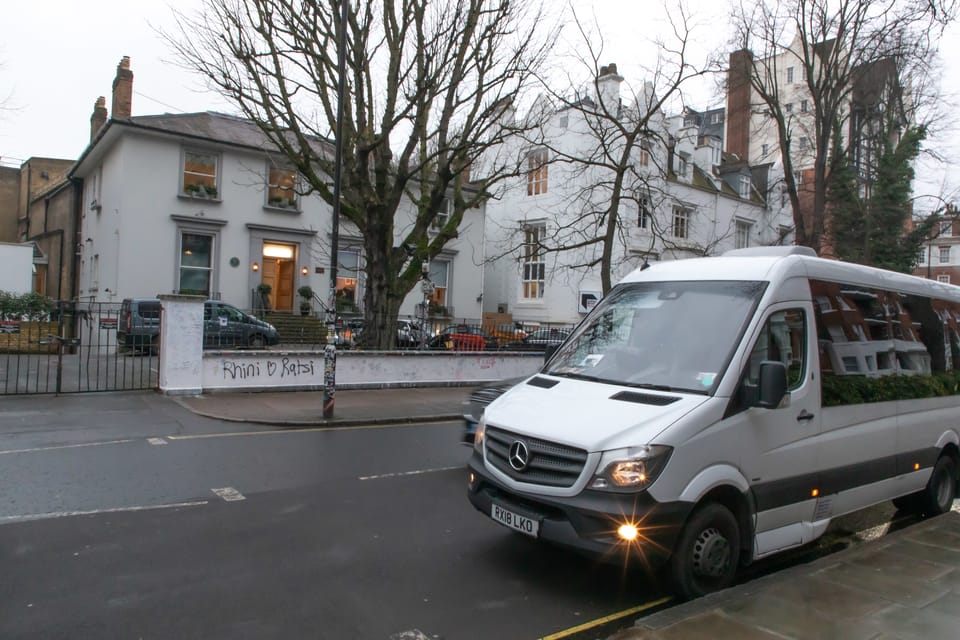
Next comes Kensington, which you’ll feel in a different way than Chelsea. Instead of sheer trend-chasing, it leans into formation stories and the real-world settings behind iconic bands.
This part of the route is built around Queen connections: you’ll see where the band was formed, places tied to album parties, and the area associated with Freddie’s life. Even if you don’t know every date in the Queen timeline, the tour helps you understand the geography—how the band’s identity formed in London and how those local spaces became part of the legend.
You’ll also move through a wider set of rock-leaning stops. The overall theme keeps your attention on the relationship between music and place: studios and offices connected to the business side, gig sites connected to the performance side, and everyday-looking streets connected to the personal side.
This is where a good guide really matters. In past runs, guides such as Clive, Colin, Ian, and Richard have brought plenty of energy and kept the story moving, which matters when you’re covering multiple decades in a short window.
Notting Hill and the punk-reggae pivot: Hendrix, Caribbean London, and more
Notting Hill is a key shift in tone. The tour frames it as the heart of London’s Caribbean community, with ties to London’s reggae scene. It also places Notting Hill in the broader counter-culture swirl—where hippies and punks shared the same city oxygen, even if their styles weren’t identical.
Then the tour turns again with more hard-edged rock connections, including sites tied to Jimi Hendrix—places where he lived, played, and died. That’s one of those details that changes how you look at a street. It’s not just “famous.” It’s human-scale. You start thinking about the timeline of a real person moving through real neighborhoods.
You’ll also pass former Beatles homes and sites connected to the Get Back rooftop concert. Even if you’ve seen photos of rooftop chaos, it helps to stand in the area and understand the immediate London context around it.
One more note for your expectations: a coach tour like this is designed for sightlines and storytelling, not deep research. So if you want to track down one specific address later, take photos and jot down what matters to you as you go. The tour gives you a map of where to focus next.




The Abbey Road crossing: how to nail the iconic photo moment
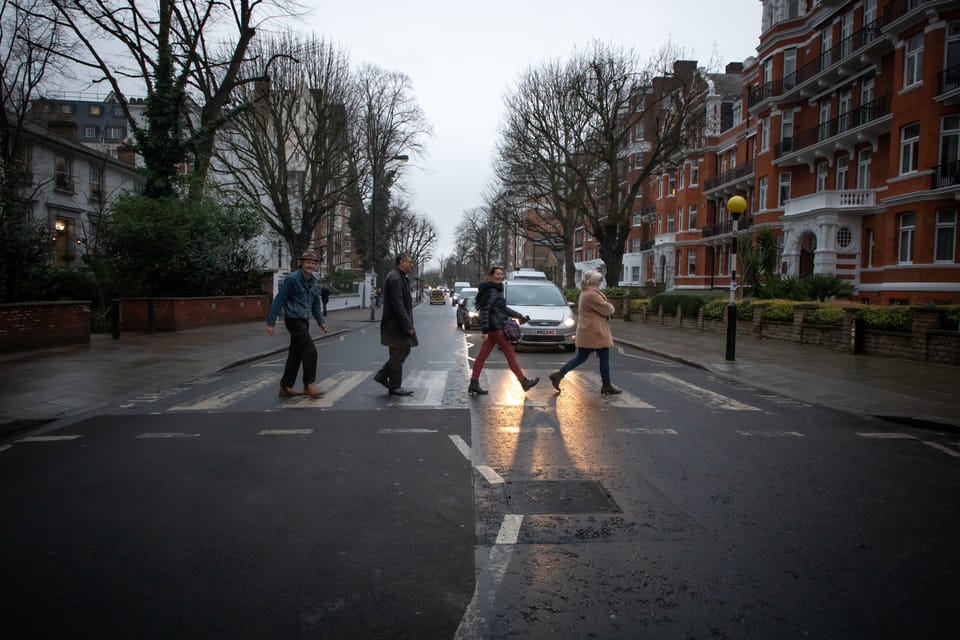
The last act is the obvious one: Abbey Road. This is the tour’s big photo payoff, and it tends to be the part people remember most clearly.
You’ll make a photo stop at the famous Abbey Road crossing. In past runs, guides have made sure everyone gets their shot—meaning you’ll have time to pose properly and not just snap from the curb. If you’ve ever tried to recreate this photo with friends at the wrong moment, you’ll appreciate the structure here.
Timing and effort matter. Wear shoes you can stand in comfortably, and bring your phone camera charged. If you like photos, you’ll also appreciate guides who help with the “group photo logistics” so you don’t end up with half the group out of frame.
This is also a place where you’ll notice the difference between a landmark and a street. Around Abbey Road, you’re not looking at a distant monument. You’re walking into a living, busy London scene that borrowed its fame from artists—then became famous in its own right.
Price and value: what $74 buys you (and what it doesn’t)
At $74 per person for 3.5 hours, you’re buying three things: an organized route, transport by air-conditioned bus, and a guide who connects locations to music history.
The value equation is strongest if you:
- want to cover multiple neighborhoods efficiently
- don’t want to plan a day around dozens of addresses
- care about context more than long stops
The value equation gets weaker if you:
- hate coach tours and want lots of free time
- expect museum-grade interiors at every stop
- need a slow, detailed pace with plenty of walking
This tour’s design is about making London’s rock timeline legible fast. The bus is part of the deal. And the route covers the “big three” you’ll likely care about—Beatles/Sixties, Queen, and punk—while still bringing in other scenes like reggae and the Hendrix layer.
Also, the driver skill matters more than you might think. London traffic and narrow streets can be brutal, and smooth navigation keeps the tour on track so you actually reach the photo stop without falling behind.
The guide factor: why Clive, Ian, Colin, and others matter
A coach tour rises or falls on its guide. The best part of this experience is the way the storytelling keeps pace with the sights.
Some guides lean on props and visual aids. For example, Clive has been praised for using a photo album to add historical context. Others—like Ian, Colin, Richard, Marc, and Steve—have been singled out for mixing subject matter with humor and energy, so you don’t feel like you’re sitting through a lecture.
Even if you’re a casual music fan, that energy matters. It keeps the decades from blurring together. It helps you remember why Chelsea looked like Chelsea in the Sixties, why Kensington felt like Kensington for Queen, and why Notting Hill had its own cultural gravity.
And the driver can be a quiet hero. Names like Paul, Dave, George, and Sylvius have been noted for handling tight streets and tight time windows, which is the difference between seeing everything you paid for and arriving too late.
Who should book this London Rock ’n’ Roll History Tour
This tour is ideal if you’re:
- a Beatles, Queen, punk, or Hendrix fan who wants London links without stress
- visiting for a short time and want the “greatest hits” geography
- the kind of person who likes songs paired with the street corner that inspired them
It’s also great for solo travelers. The group format makes it easy to engage with the guide and swap ideas mid-tour, especially during photo stops.
Skip it if you:
- need wheelchair access (it’s not suitable for wheelchair users)
- want long, unstructured walking time at every landmark
- dislike coach tours and prefer deep, one-site visits
Should you book it? My quick take
If you want one afternoon that makes London rock history make sense—Chelsea to Kensington to Notting Hill to the Abbey Road crossing—this tour is a smart use of time. The big reason to book is efficiency paired with context: you see the right neighborhoods, you get the stories behind them, and you end with the photo moment most people dream about.
If you’ve got extra days and you love research, you can absolutely use this as your starter map, then return on your own to the few places that really hooked you. For many people, this becomes the day that tells them where to go next.
FAQ
How long is the London Rock ’n’ Roll History Tour?
The tour lasts 3.5 hours.
Where does the tour start?
Until March 31, 2026 it starts at Duke of York Column, St. James’s (SW1Y 5AJ). From April 1, 2026 it starts at the Millennium Gloucester Hotel in Kensington, with instructions to wait by the hotel’s casino entrance.
Do I get pickup and drop-off?
No. Pickup and drop-off are not included.
What is included in the ticket?
Included are the classic music history tour, a visit to Abbey Road, a tour guide, and transportation by air-conditioned bus.
What languages are offered?
The live tour guide speaks English.
What should I bring?
Wear comfortable shoes.
Is the tour suitable for wheelchair users?
No, it is not suitable for wheelchair users.
Is there a cancellation option?
Yes. Free cancellation is available up to 24 hours in advance for a full refund.
How do I plan for the Abbey Road photo stop?
Plan to arrive early for check-in, and wear shoes you can stand in for the photo moment at the Abbey Road crossing.