REVIEW · BRITISH MUSEUM TOURS
London: British Museum with Expert Guide.
Book on GetYourGuide →Operated by Strabo · Bookable on GetYourGuide
History clicks into focus with a pro guide. This British Museum tour uses an expert-led route to frame the big stories through iconic objects like the Rosetta Stone and the Elgin Marbles, so your visit feels planned instead of overwhelming.
I really like that the tour is led by a certified, professional guide, and that the experience stays upbeat and easy to follow with room for questions. I also appreciate that Strabo’s style keeps the key exhibits front and center without turning the museum into a lecture.
One heads-up: 80 minutes moves fast, and the museum is enormous, so you may want extra time afterward—especially in sections that can be tricky even though the tour is wheelchair accessible.
In This Review
- Key takeaways before you go
- Meeting Strabo at the Montague Place lions
- 80 minutes inside the British Museum: what you actually cover
- Rosetta Stone to mummies: how ancient Egypt is made understandable
- Elgin Marbles: the Parthenon sculptures with clear context
- Assyrian lion hunt reliefs and royal power you can spot
- Lewis Chessmen: a medieval detour with Viking-era meaning
- After the tour: using your time in the museum gift shop
- Who should book this British Museum highlights tour?
- Should you book the British Museum with an expert guide?
- FAQ
- FAQ
- Where is the meeting point?
- What time does the tour start?
- How long is the British Museum tour?
- How much does it cost?
- Is the tour guided in English?
- Is the tour wheelchair accessible?
- Can I take photos during the tour?
- Are food and drinks allowed inside the exhibition rooms?
- Is there free cancellation?
- Can I reserve without paying right away?
Key takeaways before you go
- Meet at the Montague Place lions: you’ll gather outside the Montague Place entrance by the two stone lions.
- A tight, high-impact 80-minute route that hits the Rosetta Stone, mummies, the Elgin Marbles, Assyrian reliefs, and Lewis Chessmen.
- English-only, live guide time with a certified professional who answers questions and keeps things light.
- Designed for big-picture understanding of the rise and fall of civilisations across Egypt, Assyria, and Greece.
- You can photograph, no flash and there’s a clear rule that food and drinks aren’t allowed inside exhibition rooms.
Meeting Strabo at the Montague Place lions
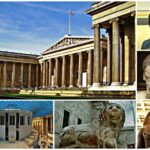
Getting started right matters at the British Museum. This tour meets outside the Montague Place entrance by two stone lions, one of the easiest visual landmarks to spot when you’re arriving from central London streets. The activity then ends back at the same meeting point, which is helpful if you have a tight schedule after your museum time.
Your guide for this experience is Strabo, and that name shows up for a reason: his approach is practical, friendly, and focused on the objects you came to see. Instead of asking you to “figure it out,” the tour gives you a guided backbone you can hang all the details on as you walk.
Timing is also part of the value. The tour runs for 80 minutes, so it’s long enough to connect major themes—like how the Rosetta Stone changed the way we read ancient Egyptian hieroglyphs, or how sculpture from Athens shaped what people understand about ancient Greece. But it’s short enough that you’re not stuck in a full-day plan you can’t adjust.
You can also read our reviews of more guided tours in London



80 minutes inside the British Museum: what you actually cover
The British Museum can feel like several museums in one. This tour cuts through that by choosing the highlights that most visitors care about and putting them in a story order that makes sense.
In plain terms, you’ll spend your guided time on a sequence of must-see works and collections:
- the Rosetta Stone as the starting point for deciphering hieroglyphs
- ancient Egyptian beliefs about life after death through mummies and coffins
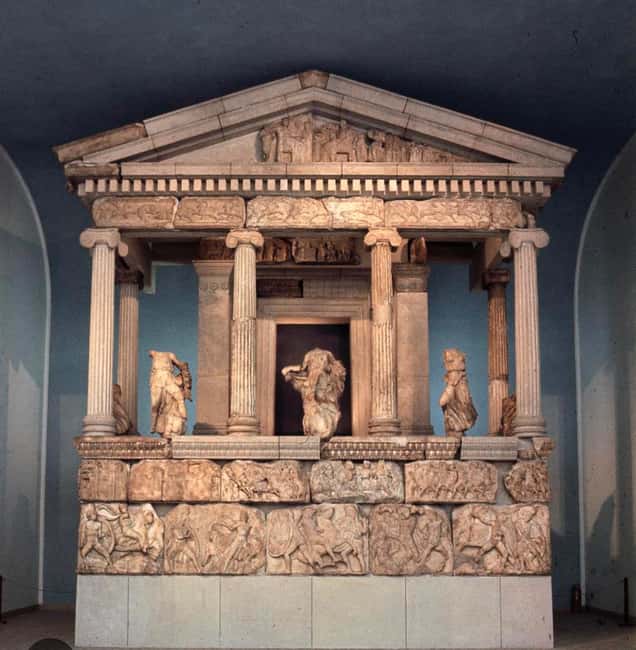
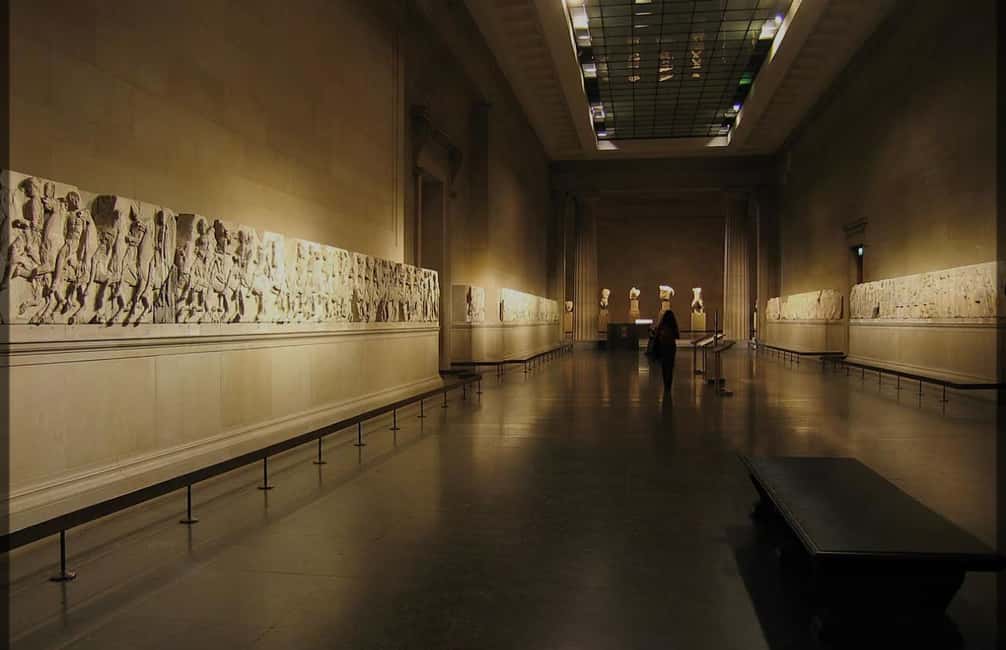
- the Parthenon sculptures people often call the Elgin Marbles, from Athens
- Assyrian royal power shown through lion hunt reliefs
- the medieval Lewis Chessmen, tied to the Isle of Lewis and Viking-era culture
What you get from this structure is context. When you see the Rosetta Stone first, the later stops stop feeling random. When you understand why mummification mattered, the Egyptian galleries become more than dramatic objects. And when you connect Greek myth and civic identity through Parthenon sculpture, you’re not just looking at figures—you’re seeing how art communicated ideas.
A small trade-off comes with that tight focus. You’re not meant to cover every room or every culture. This is a highlights tour with smart order, not a full museum study plan.
Rosetta Stone to mummies: how ancient Egypt is made understandable
Starting with the Rosetta Stone is a smart choice. It’s the kind of object that can make your whole visit click, because it played a major role in transforming how people could read ancient Egyptian writing. When you see it early, you’re given a clear reason for why Egyptian language and symbols matter, and why scholars care so much about the process of deciphering.
From there, the tour moves into ancient Egyptian beliefs about what happens after death. You’ll spend guided time with the museum’s collection of mummies and coffins, and you’ll learn about the rituals and techniques used for mummification. That detail matters because mummification isn’t just a gruesome curiosity—it’s tied to spiritual beliefs about the continuation of life after death.
Here’s why this section is so valuable for you as a visitor: without guidance, it’s easy to treat Egyptian artifacts like a set of isolated wonders. With the tour’s pacing, you get a chain of meaning—from written language, to beliefs, to funerary practice—so the objects connect.
Practical note: photography is allowed, but flash is prohibited. If you’re planning photos of the Rosetta Stone area or the mummification displays, keep that restriction in mind so you don’t get stopped mid-moment.
Elgin Marbles: the Parthenon sculptures with clear context
Next up is the Parthenon’s story—specifically the sculptures often referred to as the Elgin Marbles. These works date back to the 5th century BCE and depict scenes from Greek mythology. You’ll also get help understanding why these sculptures are so famous: they show the grandeur of ancient Greece and how myth, art, and identity were presented in monumental form.
I like that the guide doesn’t just point and move on. The point is to help you see what you’re looking at and why it mattered to the ancient world. When a guide frames myth scenes in a straightforward way, the sculptures stop feeling like distant textbook images and start feeling like “this is what people believed and represented.”
This stop is also a good test of the tour’s style. If you’ve ever wandered a museum and realized you’re staring at stone with no idea what you’re looking at, you’ll appreciate the guided explanations here. And if you’re traveling with kids or teens, this is the section where a clear, paced story tends to keep attention.
Assyrian lion hunt reliefs and royal power you can spot
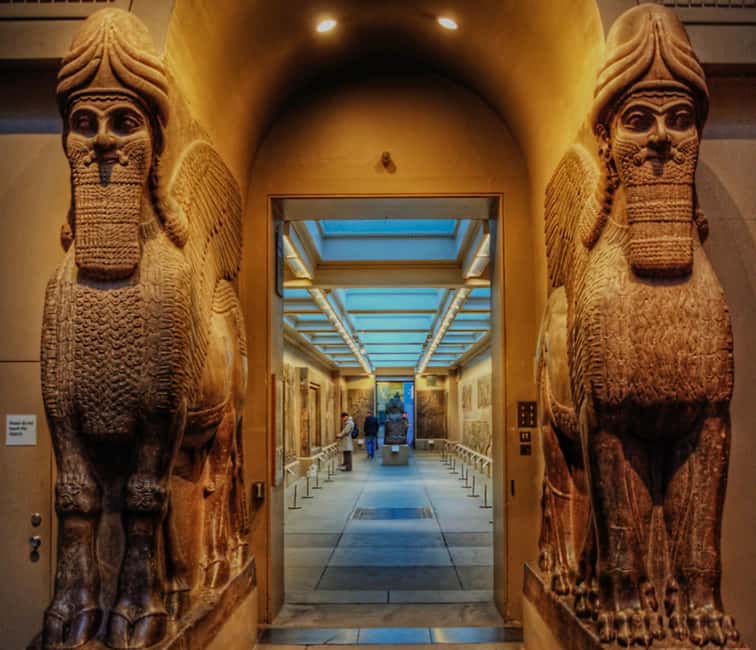
After Greece, the tour shifts gears to the ancient Assyrian Empire through the lion hunt reliefs. These intricate carvings offer a window into royal power and artistry—one of those topics that sounds vague until you’re actually looking at the details.
The lion hunt images matter because they show leadership as performance. You’re not just seeing animals and movement. You’re seeing a message: the king’s strength, control, and authority represented in a scene people could recognize as meaningful.
The guided approach helps you notice what you’d otherwise miss. Without context, reliefs can blur into “lots of carved scenes.” With context, you start recognizing patterns—what’s emphasized, how the story is structured, and why the imagery was designed to communicate.
It’s also a nice palette cleanser after Egypt and Greece. Egypt focuses on life after death and belief systems. Greece emphasizes mythology and art tied to civic grandeur. Assyria shifts toward power and political storytelling, which makes the museum feel like a sequence instead of a pile.
You can also read our reviews of more museum experiences in London





Lewis Chessmen: a medieval detour with Viking-era meaning
One of the most interesting parts of the tour is that it doesn’t stop at the ancient world. You’ll also learn about the Lewis Chessmen, intricately carved chess pieces discovered on the Isle of Lewis in Scotland.
This stop works because it’s a reminder that “history” isn’t only wars and kings. Chess pieces are personal objects. They reflect leisure, craft, and culture. The guide connects them to their medieval context and significance in Viking culture.
For you, this is a chance to slow down mentally. After big ancient empires, the chessmen feel more human. They’re still historical evidence, but they’re also part of everyday play and status. That contrast can make your whole visit more memorable.
After the tour: using your time in the museum gift shop
When the guided portion ends, you’re free to explore at your own pace. The tour information also points you toward the museum’s gift shop afterward, which is useful if you want a souvenir that’s actually tied to what you saw. If you’re traveling with family, this can be a calm landing point—something concrete to do once the high-energy guided walk is over.
Even if you don’t buy anything, the gift shop can help you remember names and themes you heard during the tour. That makes it easier to pick a couple of additional galleries to visit later, instead of drifting.
Who should book this British Museum highlights tour?
This is a great fit if you:
- want a fast way to see the top highlights without getting lost in the museum’s size
- prefer a planned route, especially if you have limited time in London
- like learning in a clear, light tone with space for questions
- are interested in ancient Egypt, Assyria, and Greece but don’t want to do full-time research
It might not be the best fit if you:
- want to spend hours in one specific wing, like deep immersion in Egyptian funerary culture or extended time with Greek artifacts
- need a fully custom pace for a lot of mobility needs in difficult corridors (the tour is wheelchair accessible, but some areas may still be challenging)
Should you book the British Museum with an expert guide?
I’d book this if your goal is to leave with strong context for the museum’s best-known objects. The price—$20.20 per person—is reasonable for an 80-minute guided experience that connects major civilizations through the Rosetta Stone, mummies and coffins, the Parthenon sculptures, Assyrian reliefs, and Lewis Chessmen. In other words, you’re paying for time-saving interpretation, not just entry into the building.
If you have time for a second pass, even better: use the guided tour to build your “map in your head,” then walk the museum on your own with purpose.
FAQ
FAQ
Where is the meeting point?
You meet outside the Montague Place entrance by the two stone lions.
What time does the tour start?
There are starting times available, but you’ll need to check availability to see the exact start times.
How long is the British Museum tour?
The guided tour lasts 80 minutes.
How much does it cost?
The price is listed as $20.20 per person.
Is the tour guided in English?
Yes, the live tour guide provides the tour in English.
Is the tour wheelchair accessible?
Yes, it is wheelchair accessible, but some areas may be challenging to navigate.
Can I take photos during the tour?
Yes, photography is allowed, but flash photography is prohibited.
Are food and drinks allowed inside the exhibition rooms?
No. Food and drinks aren’t allowed inside the exhibition rooms.
Is there free cancellation?
Yes, you can cancel up to 24 hours in advance for a full refund.
Can I reserve without paying right away?
Yes. The option includes Reserve now & pay later, meaning you pay nothing today.
If you want, tell me your travel dates and whether you’re visiting with kids or anyone with mobility needs, and I’ll suggest the most sensible museum “do next” plan after these 80 minutes.