REVIEW · JACK THE RIPPER TOURS
London: Jack the Ripper Museum Tickets
Book on GetYourGuide →Operated by Golden Tours - Gray Line London · Bookable on GetYourGuide
Step into 1888 London’s darkest rooms. You’ll walk through a six-floor museum focused on the crimes and victims of 1888, with recreations that make the case feel startlingly close. I love how the Mitre Square scene and waxwork of P. C. Watkins discovering Catherine Eddowes turn a famous moment into something you can actually see. I also love the morgue room with real autopsy photos and reports that don’t sugarcoat what happened. One possible drawback: it’s small and emotionally heavy, so it’s best to go in with time for careful reading and a level head.
The museum is in Whitechapel, at 12 Cable Street (easy to reach from Tower Gateway, Tower Hill, or Aldgate East). The layout is straightforward: you move room to room at your own pace, and the experience uses audio and set design to guide you through evidence, homes, and aftermath.
In This Review
- Key things that make this visit worth your time
- Getting to Jack the Ripper Museum on Cable Street
- Mitre Square: the scene is staged, but the details hit
- Jack’s sitting room and the Walter Sickert clue
- Whitechapel Police Station: evidence boards and real documents
- The attic and Mary Jane Kelly’s bedroom: the victims as people
- Basement morgue: actual autopsy photos and reports
- Audio, “walls,” and creepy details that change your pace
- Price and value: what $18.86 buys you in real time
- Should you book Jack the Ripper Museum tickets?
- FAQ
- How much do Jack the Ripper Museum tickets cost?
- Where is the Jack the Ripper Museum located?
- How long is the ticket valid?
- What’s the duration of the visit?
- How many floors will I explore inside?
- What are the main rooms or exhibits?
- Is audio part of the experience?
- What does the ticket include?
- Is transportation included?
- Can I cancel, and is it open on Christmas Day?
Key things that make this visit worth your time
- A 6-floor walkthrough of the Ripper story, from crime scenes to investigation spaces
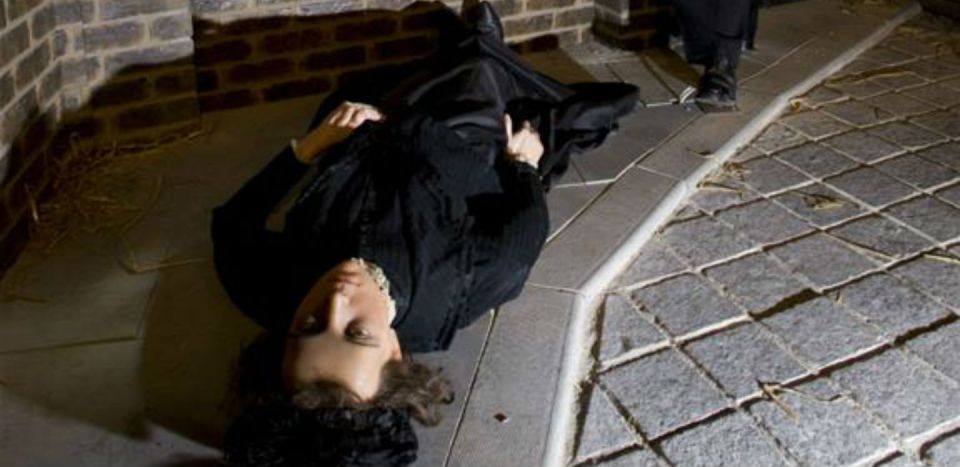
- Mitre Square recreation with a waxwork of P. C. Watkins finding Catherine Eddowes
- Whitechapel Police Station evidence boards, plus letters like From Hell and Dear Boss
- Jack the Ripper’s sitting room, including Walter Sickert’s original drawing signed in red ink
- Mary Jane Kelly’s attic bedroom with domestic details that put victims’ lives front and center
- Morgue room with actual autopsy photos and chilling display text
Getting to Jack the Ripper Museum on Cable Street
If you’re staying anywhere near central London, this is a very doable stop, because it sits right in the Whitechapel area: 12 Cable Street, London E1 8JG. For the Underground and trains, the closest options listed are Tower Gateway, Tower Hill, and Aldgate East.
The meeting point is the museum itself, and the visit ends back there. That matters because you can plan this as a self-contained experience: arrive, enter, and then work your way up (or down) through the building without needing to think about transfers afterward.
Tickets are priced at $18.86 per person, and they’re valid for 1 day—so you’re not boxed into a long commitment. Starting times are shown during booking, so do check what’s available when you plan your day.
You can also read our reviews of more tours and experiences in London



Mitre Square: the scene is staged, but the details hit
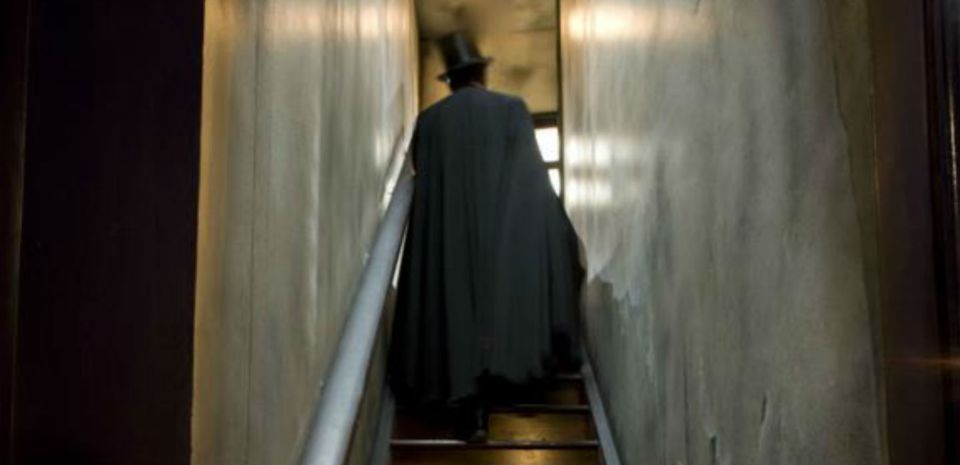
One of the first areas you’ll want to look for is Mitre Square, where the museum places you right at the point of discovery. This is where the exhibition leans hard into you can see it storytelling: you’ll find a realistic waxwork recreation of P. C. Watkins discovering the body of Catherine Eddowes.
What I like about this setup is the way it handles scale. Instead of just telling you a story, it gives you a physical reference point: where the discovery happened, who was there, and what the response looked like in the moment. That visual anchor is useful if you’ve only ever heard the case summarized in headlines.
There’s also a built-in “listen as you walk” feel. Reviews mention audio in each room, which can add a layer of atmosphere as you move through the spaces. Just be aware: audio plus dim displays can make it easy to slow down, because your brain wants to keep taking things in.
Practical tip: take your time here if you’re new to the Ripper story. If you rush, you’ll miss the way the museum ties later evidence back to what happened first.
Jack’s sitting room and the Walter Sickert clue
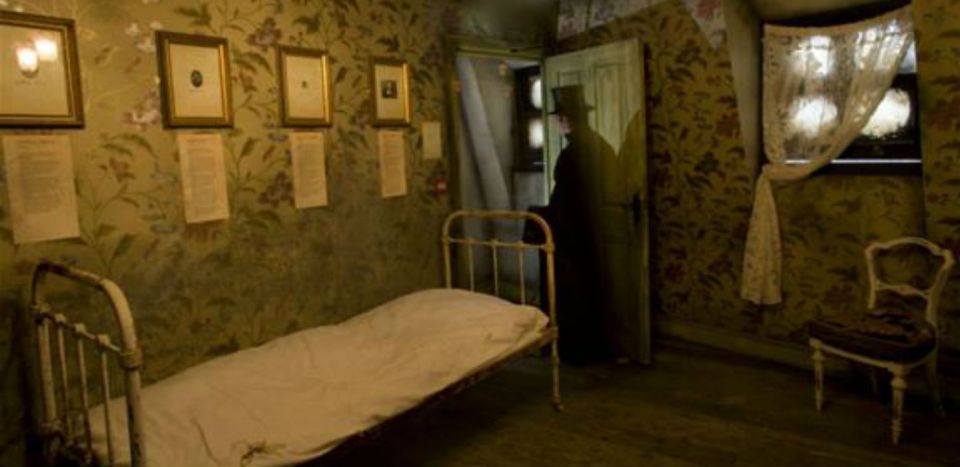
Next, the museum shifts from the street scene into the mind-and-method corner: Jack the Ripper’s sitting room. This room is built like a period study, with medical instruments, books, maps, letters, and Victorian Ripper memorabilia.
The star of the show here is the museum’s display of a prime suspect Walter Sickert’s original drawing of the body of a woman on a metal bed, signed in red ink. It’s the kind of detail that turns a theory into an object you can stand in front of. You don’t have to know every name in advance; the room explains enough to help the pieces connect.
What’s valuable for you, as a visitor, is the museum’s emphasis on paper trails and physical artifacts. That makes the story feel less like a ghost tale and more like an investigation—complete with documents, props, and evidence that shaped how people talked about the case at the time.
Also, this is a good checkpoint room. If the earlier material felt intense, this space gives you a moment to regroup without totally stepping away from the case.
Whitechapel Police Station: evidence boards and real documents
The Whitechapel Police Station recreation is the museum’s investigation hub. This is where you’ll see evidence presented on crime-scene boards, original newspapers and police artifacts, and key letters.
Two letters highlighted in the exhibit are From Hell and Dear Boss. Seeing these called out in the context of a police setting helps you understand why they were so disturbing: they weren’t just lurid text. They were part of what the police had to interpret while trying to solve an ongoing terror.
One of the standout items described is also tied to P. C. Watkins: the whistle he blew to call for help, along with his notebook, handcuffs, and truncheon. The museum notes these are on display to the public for the first time outside Scotland Yard’s private Crime Museum.
For practical reasons, this is where you’ll want to slow down and actually read the boards and labels. This room rewards attention. If you’re the type who likes to understand how investigators might think—what they recorded, what they prioritized—it’s one of the most satisfying stops.
The attic and Mary Jane Kelly’s bedroom: the victims as people
The exhibit then moves into the attic recreation of Mary Jane Kelly’s bedroom, which the museum presents as the scene of the Ripper’s most horrific murder. The museum doesn’t just show objects—it frames domestic life.
You’ll encounter photographs depicting how Mary Jane Kelly lived and family context, along with period items like boots and bonnets, a metal-framed bed with a straw mattress, and the modest belongings poor East End women had.
This room is emotionally heavy, but it’s also one of the most important parts of the museum. It’s easy to turn famous tragedies into trivia. This space pushes you back toward humanity: the idea that these were real women with homes, routines, and relatives—not just names.
If you’re sensitive to graphic material, this is where you should decide your pace early. Take breaks if you need them. There’s no prize for rushing through the hardest parts.
You can also read our reviews of more museum experiences in London





Basement morgue: actual autopsy photos and reports
The morgue room is where the museum’s darker promise becomes literal. If you dare, you can study actual autopsy photos and read reports describing the mutilation and murder of nine women.
This is not a casual stop. Even if you’re into true crime, this is the room where you should prepare yourself for detail. The lighting, the layout, and the text combine to make it feel like you’ve entered someone else’s medical aftermath rather than a theatrical reenactment.
Reviews also mention the basement featuring two mannequins that can feel super creepy, which matches the museum’s overall tone: staging plus atmosphere plus real images. If you’re photographing, be mindful and respectful, and pay attention to any signage inside.
Practical advice: if you get overwhelmed, step out, get air, and come back. The museum ends where you started, but the experience is so room-based that taking a breather can help you keep your head together for the final floors.
Audio, “walls,” and creepy details that change your pace
Even though this is a self-paced museum visit, it doesn’t feel blank or purely static. Reviews highlight audio in each room, with particularly haunting sound design in the upstairs/attic area.
Other details people note include focusing strongly on the women who were the victims, not only on the sensational aspects of the suspect story. You’ll also notice the “walls” are part of the storytelling—lots of reading and interpretive text that ties the spaces together, so the museum doesn’t feel like six separate dioramas.
For your planning, this means your time can swing:
- If you read everything slowly, it can take longer (some visitors report around an hour and a half).
- If you scan briskly, you may move through faster, but you risk missing the connections between rooms.
If you like experiences where you can take notes in your head and connect details, this is a good fit.
Price and value: what $18.86 buys you in real time
At $18.86 per person, the price feels fair for a museum with real artifacts, set recreations, and actual autopsy photos. The real “value” here isn’t just the ticket cost. It’s the structure: 6 floors that guide you from crime scene, to investigation, to victims’ domestic lives, and then to aftermath documentation.
This is also a budget-friendly way to spend a block of time in London. You’re not paying for a long guided excursion. You’re paying for an exhibition you can pace yourself through.
Because the museum is relatively compact, it’s ideal if you want something intense without committing to a half-day tour. You’ll likely finish with enough time to still enjoy the rest of your day in East London.
Who it suits best:
- People who like true crime with historical framing
- Anyone who wants a visual walkthrough of Whitechapel’s Ripper-era story
- Visitors who don’t mind dark themes and prefer facts and artifacts over spooky-only entertainment
If you hate graphic medical imagery, this may be too much. And if you need cheerful museum energy, don’t schedule this as your first London stop of the week.
Should you book Jack the Ripper Museum tickets?
I’d book these tickets if you want a tightly organized, room-by-room London experience focused on the Ripper case—with enough artifacts and staging to make it feel real, not just like a story you’ve heard before.
Skip it if you’re easily disturbed by autopsy photos and detailed accounts of violence. Also, if you like big museums with wide collections and lots of space to wander, this one may feel small, because it’s designed as a focused presentation across multiple floors, not an all-day campus.
If your goal is a sharp, memorable Whitechapel stop at a reasonable price, this visit is one of the most direct ways to do it.
FAQ
How much do Jack the Ripper Museum tickets cost?
The ticket price is listed as $18.86 per person.
Where is the Jack the Ripper Museum located?
It’s at 12 Cable Street, London E1 8JG.
How long is the ticket valid?
The ticket is valid for 1 day. You’ll need to check availability to see starting times.
What’s the duration of the visit?
The activity is described as valid for 1 day, but the experience itself is set up across multiple floors for you to explore at your own pace.
How many floors will I explore inside?
The museum is described as having 6 floors.
What are the main rooms or exhibits?
The highlights include Mitre Square (with a waxwork of P. C. Watkins discovering Catherine Eddowes), Jack the Ripper’s sitting room, a Whitechapel Police Station recreation, Mary Jane Kelly’s attic bedroom, and a morgue room with autopsy photos.
Is audio part of the experience?
Yes. Reviews mention audio in each room, including haunting sound effects in the attic area.
What does the ticket include?
The ticket includes museum admission only.
Is transportation included?
No. Transportation is not included.
Can I cancel, and is it open on Christmas Day?
Free cancellation is available up to 24 hours in advance for a full refund. The museum is closed on Christmas Day. The person accompanying a disabled person receives free entrance.