REVIEW · BRITISH MUSEUM TOURS
London: British Museum Highlights: Private Tour
Book on GetYourGuide →Operated by MyLondonGuide · Bookable on GetYourGuide
London history moves fast when you have a guide. This private 2-hour British Museum highlights tour keeps things simple with fast-track entry, plus a live storyteller who steers you to the best objects and the best stories.
I love the focus on meaning, not checklists. You’ll see how beauty ideas can be traced through the Parthenon Marbles, and you’ll get the story behind the Rosetta Stone and how it made hieroglyphs readable.
The main trade-off is time. In just 2 hours and with a moderate amount of walking, you’re getting highlights, not the whole museum, and it is not suitable for wheelchair users.
In This Review
- Key highlights at a glance
- From Edward VII’s Entrance to a Museum You Can Actually Enjoy
- Fast-Track Entry: What You Gain (And What You Don’t)
- Rosetta Stone and Lost Languages: Turning Mystery Into a Story
- Parthenon Marbles: Beauty Standards That Keep Coming Back
- Egyptian Mummies: The Dance of Life and Death
- Tragic Love and Fate in Ancestors’ Art
- Medieval Comic Style Jesus Stories and Alternative Narratives
- Museum Rules That Matter for a Smooth Visit
- Price and Value for a Private Group of Up to 4
- Who This Tour Fits Best (And Who Might Want Another Option)
- A Practical Way to Make This Tour Feel Like It’s Yours
- Should You Book This British Museum Highlights Private Tour?
- FAQ
- How long is the British Museum highlights private tour?
- Is this tour private?
- Where do we meet the guide?
- Does the tour include fast-track entry?
- What language is the guide?
- Is flash photography allowed?
- Are large bags or backpacks permitted inside the museum?
- Are food and drinks allowed inside the exhibition halls?
- Is this tour wheelchair accessible?
Key highlights at a glance
- Private group up to 4: your questions get answered without rushing.
- Fast-track security: less waiting before you start seeing real objects.
- Rosetta Stone focus: lost languages turned into a clear, human story.
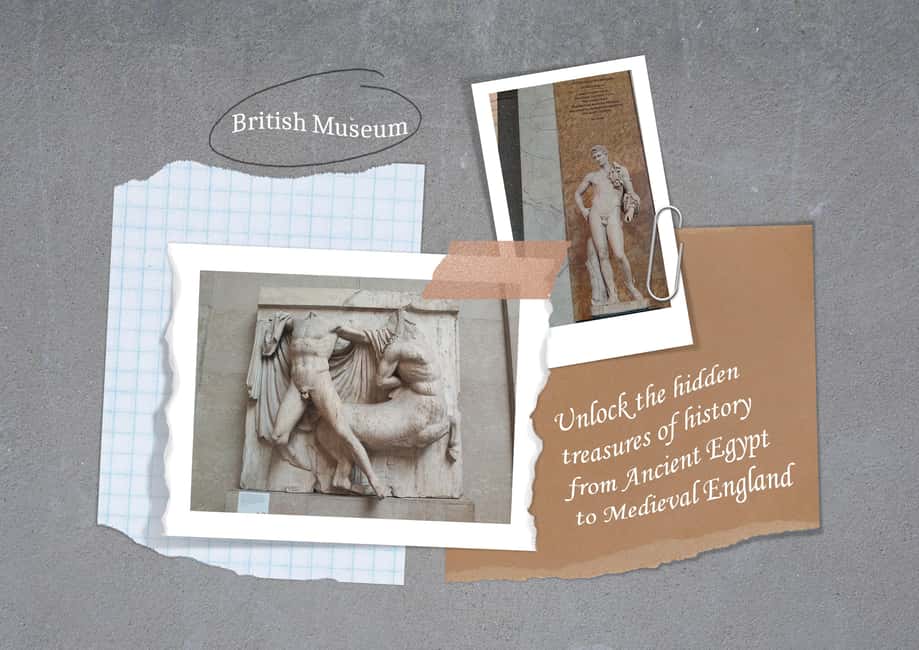
- Parthenon Marbles theme: beauty standards across time, not just art facts.
- Five big themes: Egypt, ancient drama, tragic love, and even medieval comics about Jesus.
From Edward VII’s Entrance to a Museum You Can Actually Enjoy
The British Museum can feel like a world all at once. It holds over 8 million artifacts, so trying to do it all on your own is a recipe for boredom or burnout. This private format fixes the problem fast: you arrive, get oriented, and start with the parts most likely to make you care.
You meet at the Group entrance at Edward VII’s Entrance, and your guide is holding a sign that says My London Guide. That small detail matters. It’s one less thing to figure out while you’re carrying bags, juggling tickets, and trying not to wander into the wrong line.
The tour is designed for groups of up to 4 guests, so it’s easier to keep a conversational pace. A guide like Richard (the kind of enthusiastic, clear communicator you hope for on a museum visit) can slow down when something clicks for you, and move on when you want to see what’s next.
You can also read our reviews of more private tours in London


Fast-Track Entry: What You Gain (And What You Don’t)
Fast-track doesn’t mean skipping everything. It means you use an express security check so you spend less time waiting. At the British Museum, that’s a real value because you’re starting from the middle of your limited time block.
This tour is about 2 hours, and that clock starts when you’re at the entrance. If you show up a bit late, you feel it immediately. So I’d treat this like a timed experience, not a casual wander.
Also, plan to walk inside. The tour includes a moderate amount of walking, and you’ll be moving between major displays. If you’re the type who likes to stop for long reads in every room, you might find the pace tighter than you like—but that’s also what makes it work as a highlights tour.
Rosetta Stone and Lost Languages: Turning Mystery Into a Story
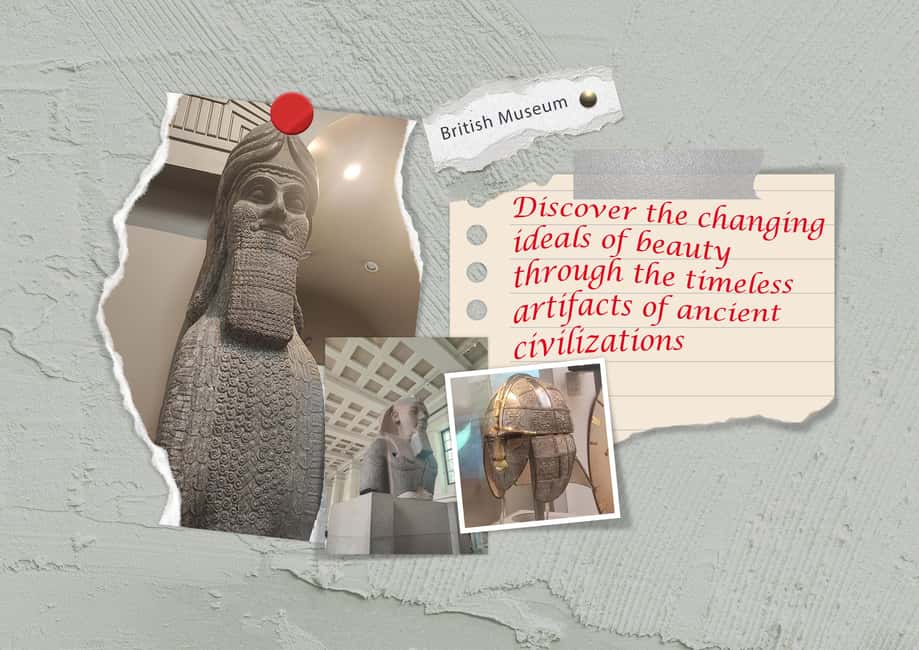
One of the tour’s strongest ideas is that language isn’t just text. It’s a key to how people thought, governed, worshiped, and remembered. The highlight here is the Rosetta Stone, presented as the artifact that made hieroglyphs understandable.
What I like about this framing is that it cuts through the usual museum fog. Instead of treating the Rosetta Stone like a famous object you stare at, you get the bigger point: decoding is a human process, built on curiosity and comparison. You end up with a sense of why this mattered, not only that it exists.
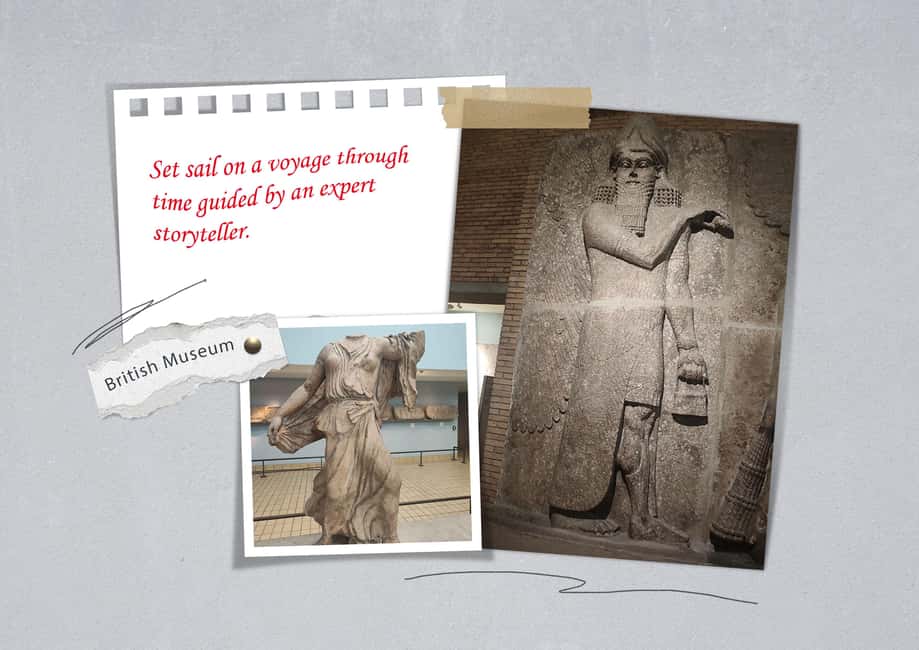
A good guide will also connect the “lost languages” angle to the broader theme of time. Egypt, Greece, Mesopotamia, and India all show up in the tour’s storytelling arc, and the Rosetta Stone becomes the moment where the past feels suddenly closer. You can look at the display and think, someone once worked hard to make meaning from writing.
If you like puzzles, this is a great stop. Even if you don’t, you’ll probably leave with at least one new mental hook for how historians and scholars connect the dots.
Parthenon Marbles: Beauty Standards That Keep Coming Back
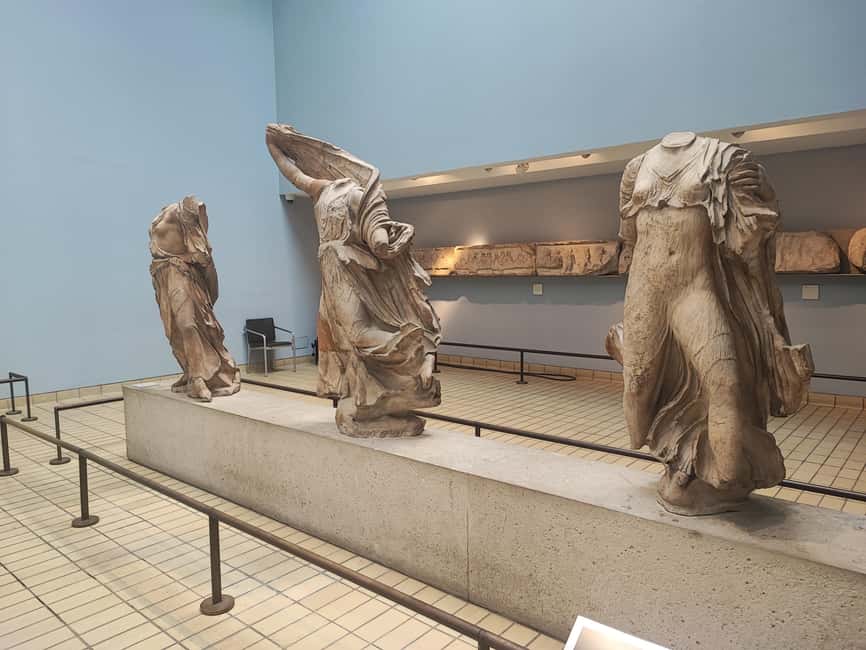
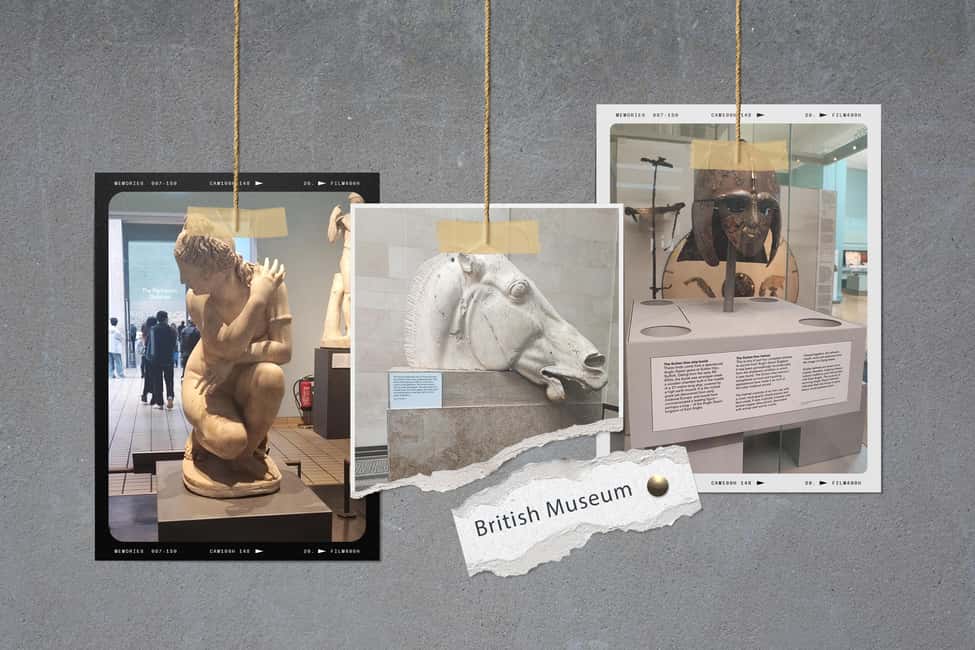
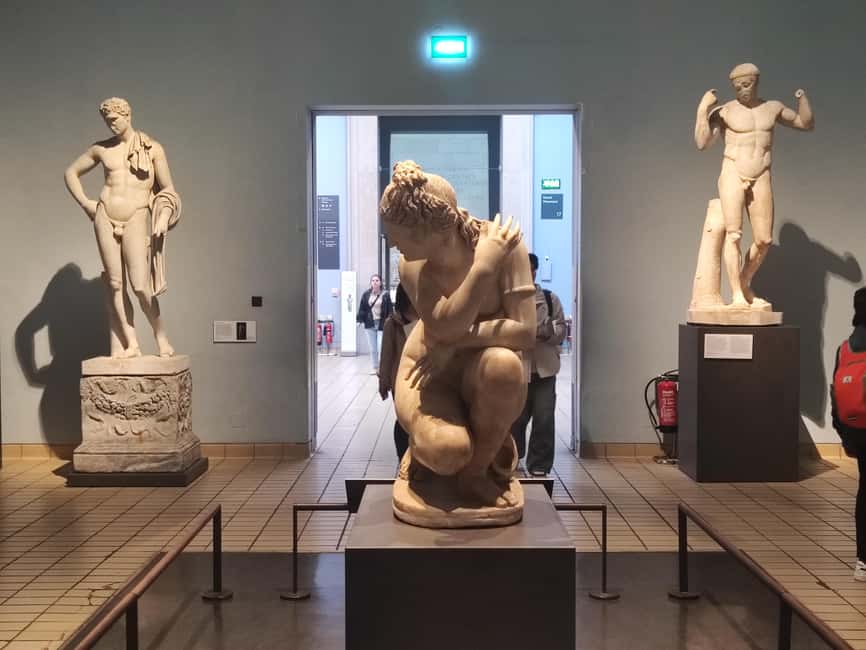
The British Museum isn’t only a place for facts. It’s a place where you can notice patterns across centuries. The tour uses the Parthenon Marbles to talk about the evolution of beauty—how ancient Greek ideas influenced later ways of seeing and judging form.
I like this approach because it makes “art history” feel personal. You’re not asked to memorize style names. You’re asked to consider a question: did ancient Greece shape our ideas of beauty, art, and culture today? That’s a discussion you can actually have with yourself while you’re standing there.
The Parthenon Marbles focus also balances the tour. It’s a change of pace from the very text-and-reading energy around the Rosetta Stone. Instead of decoding language, you’re looking at visual decisions and thinking about ideals—what people valued, copied, and repeated.
One caution: if you’re expecting lots of time to sketch, read every label, and linger in silence, the schedule might feel brisk. The tour is built to help you understand the theme quickly, then move on.
Egyptian Mummies: The Dance of Life and Death
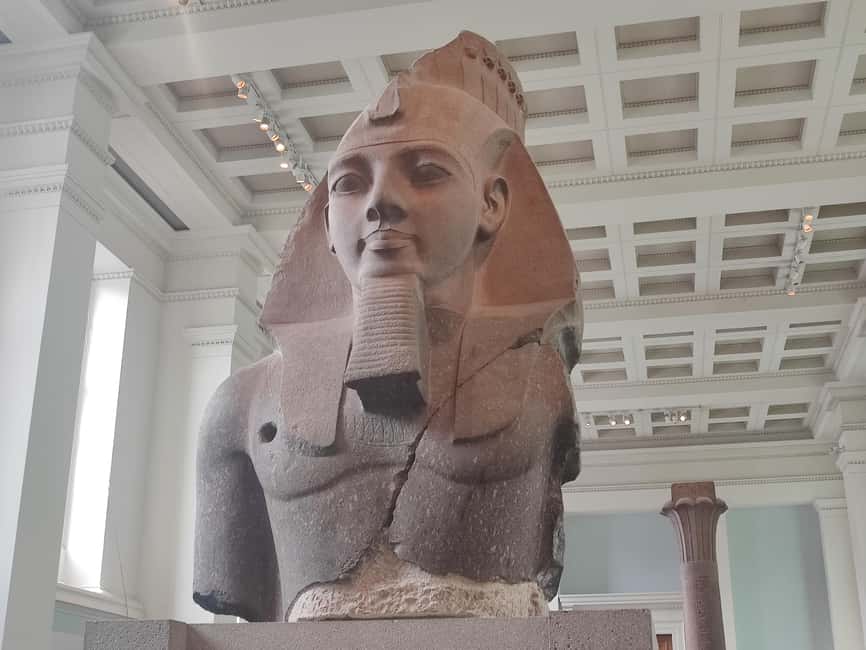
Then the tour shifts into Egyptian themes, anchored by Egyptian mummies and the idea of life and death. The emotional angle here isn’t spooky for the sake of spooky. It’s about how people designed meaning around mortality, and how those ideas show up in the way bodies were treated and displayed.
The tour’s wording leans playful—there’s humor in how it contrasts imagination and reality—but the topic stays grounded in human belief. This is a stop that helps you switch from “culture as entertainment” to “culture as worldview.”
You might find it helpful to approach this moment with a question in mind. Not what you already know about mummies. Instead: what did the Egyptians seem to believe about what happens next, and how does that show in the objects you’re seeing?
It’s also a good chance to take a breath. Your feet keep moving, but the guide can slow the story so it feels less like a sprint and more like a narrative.
You can also read our reviews of more museum experiences in London





Tragic Love and Fate in Ancestors’ Art
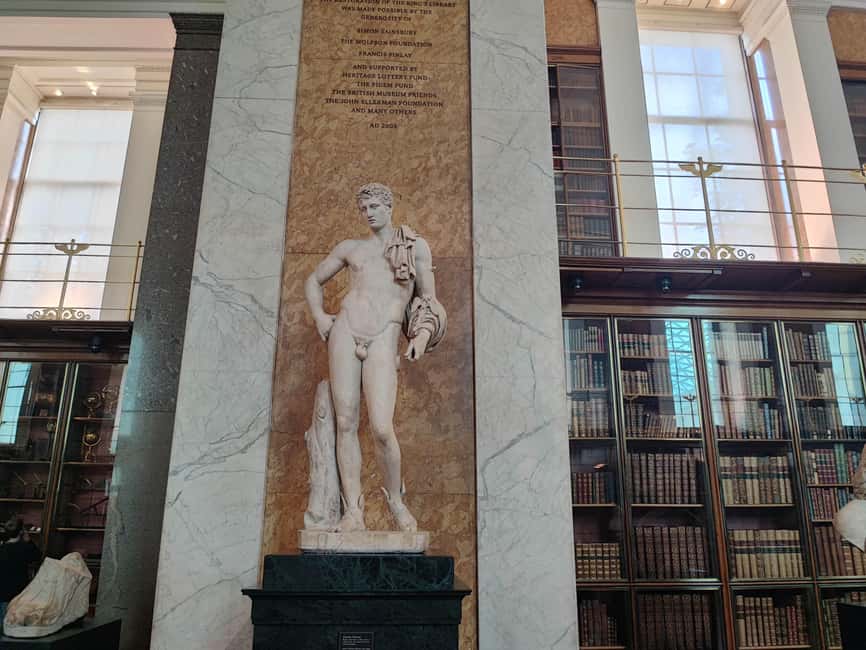
One of the most memorable parts of the tour is the human theme: love and fate in your ancestors’ art. It’s a reminder that ancient audiences weren’t so different from us. They still told stories with stakes. They still mixed romance with tragedy and asked what power guides our lives.
I like how this turns “antique imagery” into something you can emotionally read. Instead of thinking you need background knowledge, you’re encouraged to follow the story logic. The theme is framed as tragic love that resonated deeply, with the suggestion that audiences cared enough to feel the weight of it.
You won’t be asked to treat it like a melodrama, though. The point is that art can be a recording device for shared emotions. You’ll likely notice recurring patterns—symbolic choices, dramatic contrasts, the sense that the story had to land clearly with its audience.
If you enjoy literature, theater, or myth, this stop should click. Even if you don’t, it can still be a useful reminder that museums are not just about objects. They’re about how people made sense of feelings.
Medieval Comic Style Jesus Stories and Alternative Narratives
The tour ends with a surprising turn: medieval comic books connected to Jesus Christ. The theme is big—Jesus influenced the world more than anyone—and the tour also points you toward alternative narratives beyond traditional accounts.
This is one of those “only at a place like this” moments. You’re not just seeing religious art as decoration. You’re seeing it as a storytelling machine. The medieval comic-book framing suggests how stories were packaged for audiences, retold, and turned into something people could follow step-by-step.
I appreciate that the tour doesn’t treat religion as a single fixed story. It presents the idea that there were bonus tales and competing versions, which is exactly how cultural history works: stories change, get edited, and shift depending on who’s telling them and why.
Practical note: if you’re very literal and want a single straight-line timeline, this part might feel more like a discussion than a lecture. But if you’re curious—if you like comparing narratives—this stop can be genuinely fun.
Museum Rules That Matter for a Smooth Visit
This tour runs in a real museum environment, so the rules are part of how your experience goes. A few things to know before you arrive:
- Flash photography is not allowed. Regular photography is allowed.
- Selfie sticks are not allowed.
- Large bags and backpacks are not permitted inside the museum.
- Food and drinks are not permitted inside the exhibition halls.
- Weapons or sharp objects are not allowed.
- Pets are not allowed, though assistance dogs are allowed.
These rules might sound basic, but they affect comfort. If you’re carrying a backpack full of day-trip stuff, you’ll need to plan how you keep essentials on you without bringing something the museum won’t let you inside.
And because this is a private tour, you’ll feel it if you have to stop and reorganize. So I’d travel light: phone charger, water bottle if you’re allowed it before entering (food and drink aren’t permitted in halls), and minimal extras.
Price and Value for a Private Group of Up to 4
At $74.08 per person for a 2-hour private experience, the price makes sense best when you spread it across your group. The tour is built for up to 4 guests, and that private size is key to the value.
Here’s what you’re paying for, in plain terms:
- A live guide who tells stories instead of handing you labels.
- Fast-track entry so you start seeing objects sooner.
- A tight, themed route that helps you understand what you’re looking at, rather than getting lost in the museum’s scale.
If you’re traveling solo or as a couple, you may feel the cost more. If you’re a small group, it starts to look like good money for focused time with an expert storyteller—especially because you’re not wasting hours sorting out what to see.
Also, no hotel pickup or drop-off is included, so factor that into your day plan. You’ll rely on getting yourself to the Edward VII’s Entrance meeting point on time.
Who This Tour Fits Best (And Who Might Want Another Option)
This tour is best for you if you want:
- A private experience with up to 4 people.
- Clear storytelling that connects objects to themes like beauty, language, mortality, and narrative.
- A guided route that saves you from deciding what to prioritize in a massive museum.
It’s also a good pick if you like humor and human framing. The tour’s style treats the museum like a conversation, not a test.
It’s not the right match if you:
- Need wheelchair accessibility (it is not suitable for wheelchair users).
- Want to spend long, quiet hours reading every label without movement.
- Bring a lot of bulky items that you can’t comfortably store away.
A Practical Way to Make This Tour Feel Like It’s Yours
Even with a set route, you can get more out of it. Here are a few ways to shape the experience to your interests without slowing the group down too much:
Before you start, pick one theme you care about most: beauty standards, lost languages, life and death, tragic love, or narrative traditions around Jesus. When the guide brings in that theme, lean into it.
If you’re bringing someone who is less into museums, choose the stops that sound most story-driven to them. The tragic love angle and the medieval comic-book framing often land well because they feel approachable.
And as you move through rooms, watch for the guide’s pacing. The tour is built to cover key highlights fast, so ask questions while they’re still in that story thread. Waiting until later usually turns the conversation into a blur.
Should You Book This British Museum Highlights Private Tour?
Book it if you want a smart, themed British Museum visit in 2 hours, with fast-track entry and a private group size that keeps the experience personal. This is especially worth it if you care about how stories and ideas move across time—beauty, language, mortality, love, and religious storytelling.
Skip it if you’re aiming for maximum museum coverage. This tour is built to pick highlights and make them meaningful, not to help you see everything. And if accessibility is a priority, you’ll need to choose a different format because it is not suitable for wheelchair users.
FAQ
How long is the British Museum highlights private tour?
The tour lasts about 2 hours.
Is this tour private?
Yes. It’s a private tour exclusively for your group of up to 4 guests.
Where do we meet the guide?
You meet at the Group entrance to the British Museum at Edward VII’s Entrance. The guide will be holding a sign that says My London Guide.
Does the tour include fast-track entry?
Yes. It includes fast track entry with an express security check.
What language is the guide?
The tour guide speaks English.
Is flash photography allowed?
No. Flash photography is not allowed, but photography is allowed without flash.
Are large bags or backpacks permitted inside the museum?
No. Large bags and backpacks are not allowed inside the museum.
Are food and drinks allowed inside the exhibition halls?
No. Food and drinks are not permitted inside the exhibition halls.
Is this tour wheelchair accessible?
No. It is not suitable for wheelchair users.