REVIEW · BRITISH MUSEUM TOURS
London: British Museum Guided Tour
Book on GetYourGuide →Operated by My tour London · Bookable on GetYourGuide
If you think the British Museum is too big, this tour fixes that. You get a tight route through the most talked-about galleries, with a licensed guide who helps you read what you’re seeing. I especially like the way the story links Egypt to Greece to Rome, instead of treating them as random rooms.
Two things I like a lot: the tour focuses on the museum’s biggest hits (including Rosetta Stone and the Elgin Marbles) without turning into a sprint, and the guides are genuinely engaging. When I hear guides like Filomena, Stuart, or Tara mentioned by name, the pattern is clear: they’re friendly, quick to explain, and they help you move through the maze without missing the meaning.
One thing to consider: the museum can be loud, so hearing every word may take a little luck, especially when crowds cluster near famous objects. If you’re sensitive to noise, plan to stand closer to the front of the group.
In This Review
- Key highlights worth planning around
- Why a British Museum guided tour works better than trying to wing it
- Price and logistics: what $39 buys you (and what it doesn’t)
- Where to meet: don’t get tripped up at security
- The opening act: ancient Egypt and the Rosetta Stone
- Ancient Greece: philosophy, art, and the shadow of the Parthenon
- Ancient Rome: emperors, mosaics, and the engineering mindset
- The British Museum surprises: Sutton Hoo and early England
- Easter Island’s Hoa Hakananai’a: the tour’s far-reaching moment
- How the route ties together: time, culture, and why stories matter
- What it feels like in real life: guide energy and crowd dynamics
- Is the Elgin Marbles and other contested artifacts handled well?
- Who this British Museum guided tour is best for
- Should you book this tour or not?
- FAQ
- How long is the British Museum guided tour?
- How much does it cost?
- What’s included in the price?
- Where do we meet the guide?
- How do we get the tickets?
- Do we need to pass security first?
- Are there multiple tour languages?
- Is the tour accessible for wheelchair users?
- What should I wear or bring?
- Is free cancellation available?
Key highlights worth planning around
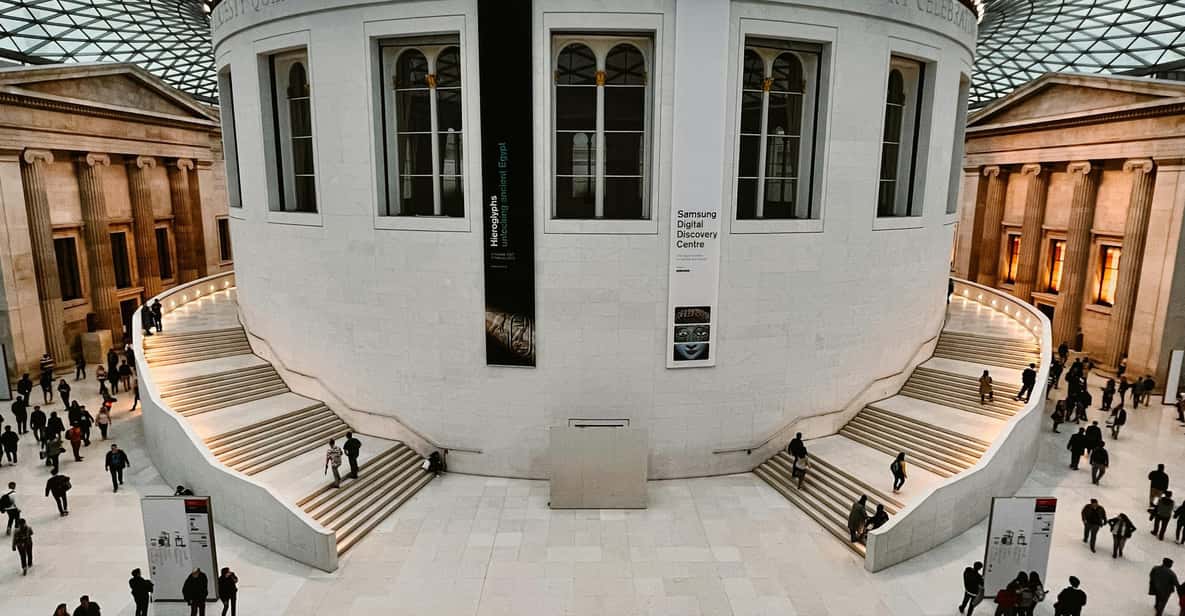
- Express security help: you use an express security check so you’re not stuck waiting at the busiest part of the visit.
- A guided route, not a gallery crawl: you’re shown the “most remarkable parts” in a way that saves time in a museum that’s basically infinite.
- Stop-by-stop storytelling: Egypt, Greece, Rome, Sutton Hoo, and Easter Island all get their own moments.
- Contentious-object awareness: guides tend to flag why certain masterpieces are controversial, not just pretty.
- Sometimes small-group energy: on lighter days, the tour can feel closer to a private visit.
- Two-language flexibility: depending on demand, the tour can run in two languages at once.
Why a British Museum guided tour works better than trying to wing it

The British Museum doesn’t behave like a normal museum. Even if you know what you want to see, the layout can make you second-guess everything. You can spend an hour just figuring out which direction to go—and still end up staring at the same couple of rooms.
This 2-hour British Museum guided tour helps you get your bearings fast. You’re not wandering; you’re walking a route built to hit key periods and the objects that connect them. The result is that the museum starts to feel organized, with cause-and-effect instead of a list of artifacts.
Another practical win: you get a licensed live guide, not just a self-paced audio track. That matters in places where labels are too short, or where context is everything (think translations, symbols, and why one object changed how people understood another).
You can also read our reviews of more guided tours in London



Price and logistics: what $39 buys you (and what it doesn’t)

At $39 per person for 2 hours, the value is mostly about time and direction. The British Museum is free to enter, but the problem is time—time to choose what to prioritize, time to connect stories, and time to avoid getting lost in rooms you’d never pick on your own.
What’s included is straightforward: the tour guide. Transportation isn’t included, and you’re doing the museum visit yourself once you’re inside the route.
You’ll also want to understand the ticket flow. The tour provides entry tickets via WhatsApp about 1 hour before the tour. If you don’t have WhatsApp, you’ll need to email to get the tickets sent. And if admission tickets are needed, they’re supplied 1–2 hours before the tour via WhatsApp (or by email if needed).
Where to meet: don’t get tripped up at security
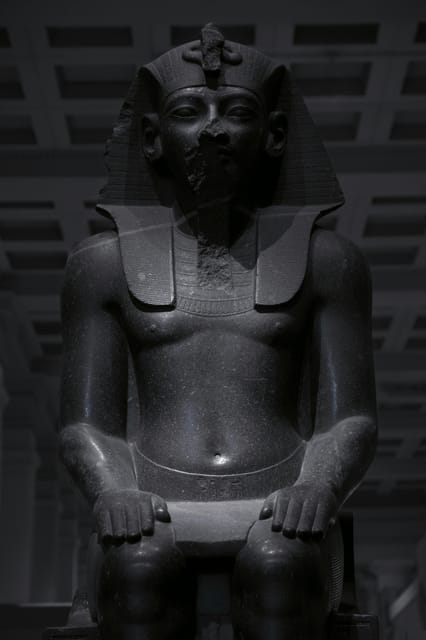
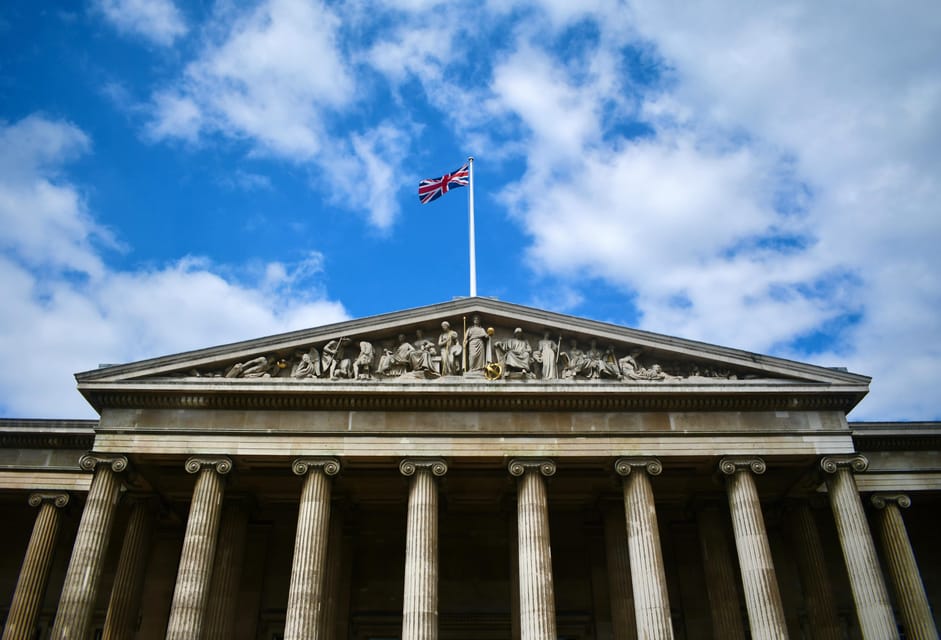
The meeting point is specific, and it’s important. You meet your guide in front of the British Museum portals on the stairs near the pillars after you’ve passed security. That means: not outside the gates.
The easiest way to handle this is to build in a little buffer. Go through security, then look for the guide by the portals and stairs. Once you’re inside, you’re in the “correct geometry” of the museum—right where the tour route starts.
The opening act: ancient Egypt and the Rosetta Stone
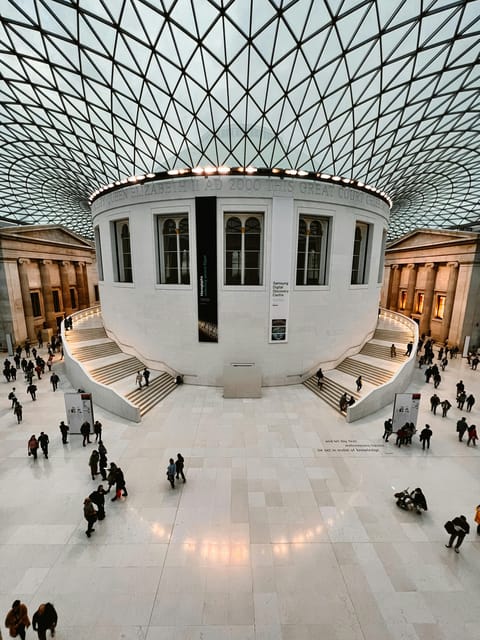
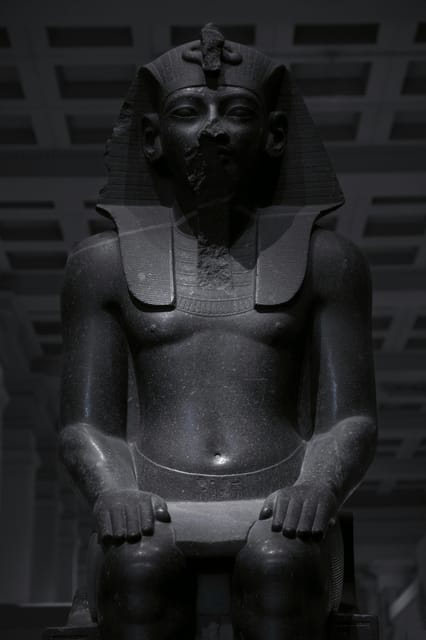
The tour typically starts with the pull of ancient Egypt, which is smart because those objects set the tone for the whole museum visit. You’re not just looking at artifacts; you’re learning how people read symbols and how power and belief show up in stone.
A highlight here is the Rosetta Stone. This is the moment where many visitors go from seeing hieroglyphs as decoration to seeing them as a communication system. The guide helps you understand why this object matters—because it’s one of the clues that let later scholars connect script to meaning.
You’ll also spend time on pharaonic stories and Egyptian relics. Even if you already know the basics, a guide tends to point out the details your eyes normally skip: how inscriptions are structured, what scenes imply, and why certain objects were built to last.
Practical note: the famous Egyptian rooms can get crowded quickly. If you want a good view, position yourself early in the group rather than hoping for space later.
Ancient Greece: philosophy, art, and the shadow of the Parthenon
From Egypt, the tour shifts into ancient Greece, where the museum turns into a conversation about ideas—especially through art and architecture. This is where Western thinking keeps echoing, even when you’re not trying to notice it.
You’ll see iconic sculpture linked to the Parthenon, plus marble inscriptions connected to how people argued, taught, and remembered. The guide’s job is to make the objects feel like evidence in a story, not just impressive stonework.
And yes, the tour includes the Elgin Marbles. This is where having a guide adds real value. You’re not left with conflicting headlines in your head; you get a clearer explanation of what you’re looking at and why it remains a sensitive topic. It’s also a good time to notice how the tour handles ethical context without turning the visit into a lecture.
You can also read our reviews of more museum experiences in London






Ancient Rome: emperors, mosaics, and the engineering mindset
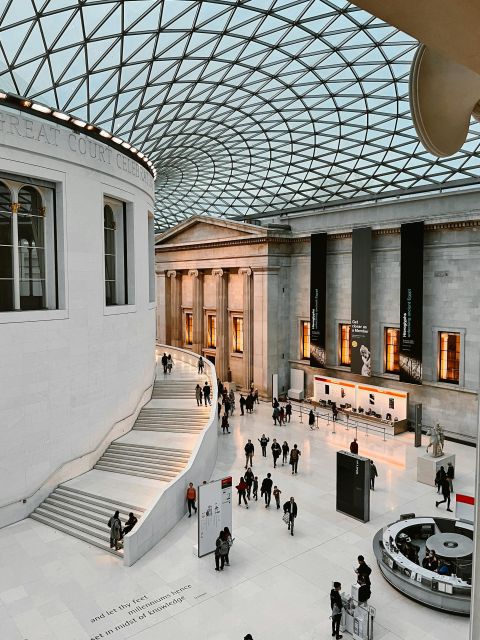
Next comes ancient Rome, which tends to feel different from Greece and Egypt. The energy changes from symbolism and craft to public power, identity, and engineering-style spectacle.
You’ll spend time with objects connected to emperors and Roman life, including mosaics and statues portraying gods and heroes. What I like here is how the guide helps you spot recurring themes: the way Rome used imagery to claim authority, and how craftsmanship carried political messaging.
A good guided moment in Roman galleries is when you learn to connect technique to purpose. A mosaic isn’t just decoration. It’s a statement about status, taste, and what a household wanted visitors to understand instantly.
The British Museum surprises: Sutton Hoo and early England
Then you hit a fascinating left turn: Sutton Hoo. This is where the tour broadens from Mediterranean civilizations into early English life, and it tends to grab people who came for Egypt and Greece.
Sutton Hoo treasures bring the early medieval story to life in a way that feels more personal than you might expect. You’re looking at objects that suggest beliefs, wealth, and social structure—basically, a snapshot of a society forming its identity.
This segment is one reason I’d recommend the tour even if you’re a casual museum fan. It prevents the visit from becoming only a highlight reel of the most famous foreign dynasties.
Easter Island’s Hoa Hakananai’a: the tour’s far-reaching moment
Another standout detour is the artwork linked to Easter Island, including the Hoa Hakananai’a moai. This stop is valuable because it shows how the museum’s “world story” isn’t just a timeline—it’s also a pattern of human meaning across distance.
The guide frames it around spiritual and cultural essence, so you’re not just looking at a famous sculpture. You’re seeing how art can function as a vessel for belief and identity.
If you’re the type who likes travel that feels unexpected but still meaningful, this is one of those stops. It also works well as a mental reset between ancient empires.
How the route ties together: time, culture, and why stories matter

The best guided tours don’t just list objects. They connect the dots so the museum stops being random. That’s what this route aims to do—moving through major civilizations and turning points, then circling back to show patterns in how humans record power, belief, and everyday life.
By the end, you should feel like you saw the museum’s most essential threads, not just a set of famous rooms. And the tour’s global wrap-up—artifacts from around the world—helps you zoom out and remember this isn’t one country’s treasure cabinet. It’s humanity’s broad record.
It also helps if you care about how to look. With a guide, you start reading visual cues faster: what’s emphasized, what’s repeated, what looks ceremonial versus functional, and how the same idea can show up in totally different cultural contexts.
What it feels like in real life: guide energy and crowd dynamics
A consistent theme in the tour experience is guide personality and pacing. Names like Filomena, Stuart, Tara, Rebekka, and Lucia come up with the same vibe: friendly, engaged, and focused on helping you understand what you’re seeing.
Some guides also seem to make space for practical questions. If your group includes kids, you may find the guide adapting without losing the main story. And if the group is light, the experience can feel more tailored—sometimes even like a mini private tour.
The main real-world friction is hearing. The museum is big and busy, and sound carries oddly. If the guide isn’t loud enough for the exact spot you end up in, you might struggle. My advice: try to stay within a comfortable speaking distance and don’t let yourself drift to the back.
Is the Elgin Marbles and other contested artifacts handled well?
This matters because the British Museum’s collection includes objects with ethical debates around acquisition and ownership. A strong guide doesn’t dodge that. Instead, they flag contentious works and give you enough context to think about them responsibly.
In this tour, the Elgin Marbles are specifically part of the route, and guides often make time for awareness around looted or stolen discussions. The goal is not to “take sides” for you—it’s to make sure you understand what’s complicated about what you’re seeing.
That’s another reason I’d choose a guided visit over solo wandering. You can read labels alone, but ethical context often needs a human explanation in plain language.
Who this British Museum guided tour is best for
This tour is ideal if you want:
- The big highlights without losing the story thread
- A guided explanation of objects that require more than a quick label read
- A structured route through a museum that can overwhelm first-timers
It’s also a strong pick for couples who like learning together, and for people who don’t want to spend half a day planning. If you’re short on time but still want the museum to make sense, this is a practical solution.
If you’re a hardcore “wander at your own pace” museum lover, you might find the route limiting. But even then, using a guided start can set you up to explore afterward with much more confidence.
Should you book this tour or not?
Book it if you want direction, context, and a time-efficient route through the British Museum’s most important stops—especially if you care about Egypt, Greece, and Rome, plus the surprising additions like Sutton Hoo and Easter Island.
Skip it (or consider a solo plan) if you’re the kind of visitor who loves staring at every detail for hours and doesn’t mind figuring out the museum layout yourself. A guided tour gives you structure. That’s its strength—and its trade-off.
If you do book, go in with one mindset: your goal isn’t to see everything. Your goal is to see what helps the museum click. This tour is built for exactly that.
FAQ
How long is the British Museum guided tour?
The tour lasts 2 hours.
How much does it cost?
It costs $39 per person.
What’s included in the price?
The tour guide is included. Transportation is not included.
Where do we meet the guide?
Meet your guide in front of the British Museum portals on the stairs near the pillars after passing the security check (not outside of the gates).
How do we get the tickets?
Tickets are provided via WhatsApp about 1 hour before the tour. If you don’t have WhatsApp, contact the provider by email so they can send the entry tickets.
Do we need to pass security first?
Yes. The meeting point is after you’ve passed the security check.
Are there multiple tour languages?
Yes. The live tour is available in English, French, and Italian, and the tour may run in two languages at the same time depending on demand and tickets.
Is the tour accessible for wheelchair users?
Yes, the tour is wheelchair accessible.
What should I wear or bring?
Bring comfortable shoes and weather-appropriate clothing.
Is free cancellation available?
Yes. You can cancel up to 24 hours in advance for a full refund.