REVIEW · GREENWICH & CABLE CAR
London: Cutty Sark Entry Ticket with Guided Rig Climb
Book on GetYourGuide →Operated by Royal Museums Greenwich · Bookable on GetYourGuide
Climb London’s tall ship rigging, for real. This guided Cutty Sark Rig Climb turns a museum stop into hands-on sea work, with a climb onto the ratlines and a controlled abseil back down. You also get time after the climb to wander the ship at your own pace.
I especially like the start: a short briefing under the ship’s hull where you learn what it was like to live and work aboard Cutty Sark. And once you’re up on the Main Deck and moving through the rigging, the experience becomes physical in a good way—gripping bars, climbing carefully, and finally shuffling along the Lower Topsail Yard for a view that hits you from above.
One big consideration: this is not for everyone. There are strict size limits (minimum height and maximum weight) and it’s not suitable for people with heart problems or for pregnant women, so check eligibility before you buy.
In This Review
- Key Things You Should Know Before You Go
- Why Climb the Cutty Sark Rigging in Greenwich?
- Your 2.5-Hour Flow: From Under-Hull Briefing to Lower Topsail Yard
- Main Deck and Ratlines: What the Climb Really Feels Like
- Platform Views and the Lower Topsail Yard Footrope Challenge
- The Abseil Back Down: Easy to Picture, Different to Experience
- Exploring Cutty Sark After the Rig Climb (Your Own Pace)
- Price and Value: Is $80.82 Worth It?
- Who This Rig Climb Suits Best (And Who Should Skip)
- Practical Tips So You Enjoy It More
- Should You Book the Cutty Sark Rig Climb?
- FAQ
- How long does the Cutty Sark Rig Climb take?
- Where do I meet for the rig climb?
- What are the height and weight requirements?
- Is it suitable for children?
- Who should avoid booking?
- Does my rig climb ticket include access to the rest of the ship?
Key Things You Should Know Before You Go
- Briefing under the hull first: You start with a safety talk and context for what sailors did day to day.
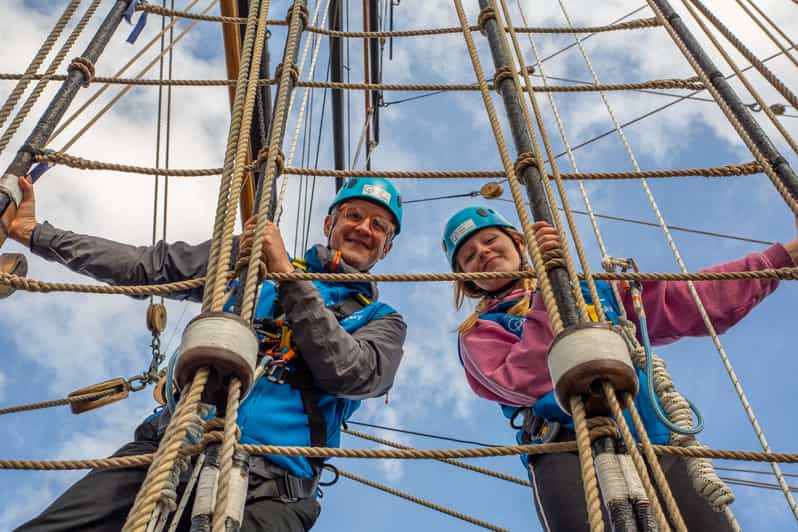
- Ratlines to rigging: You’ll climb rope ladders and work your way up into the rigging area.
- Lower Topsail Yard challenge: The last test involves gripping a bar and holding steady on the footrope.
- Controlled abseil back down: After the high point, you descend straight back to the Main Deck.
- Your ticket covers all ship areas: After the climb, you can explore crew spaces and decks on your own.
Why Climb the Cutty Sark Rigging in Greenwich?
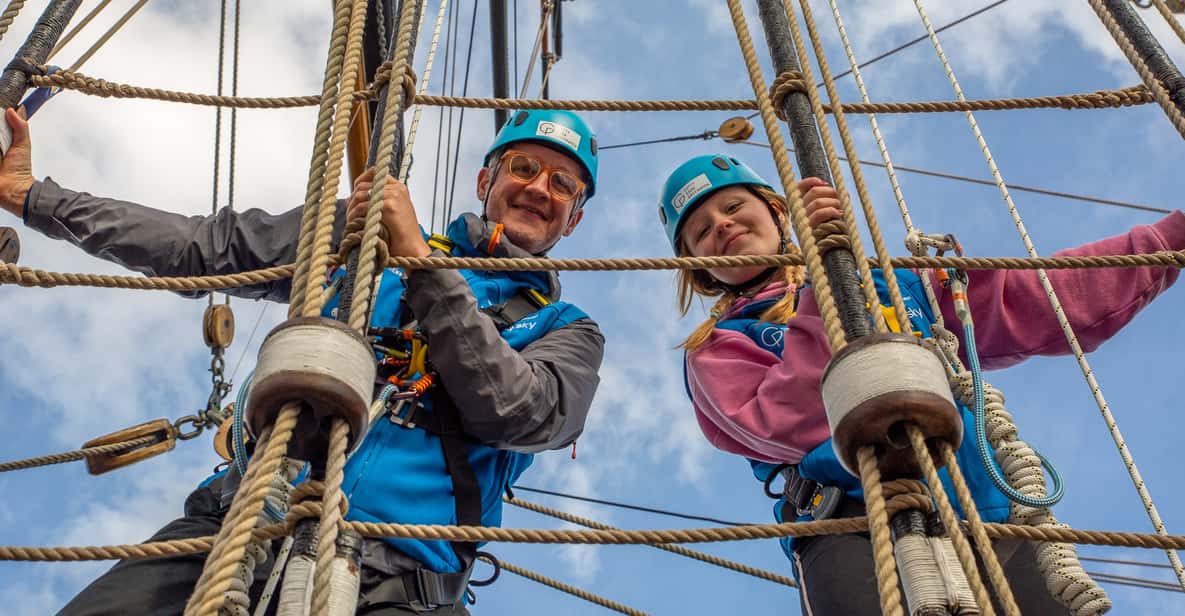
Cutty Sark isn’t just any ship you look at. It’s a London icon sitting in Greenwich, and this rig climb is one of the rare ways visitors can actually get a feel for sea life—especially since the ship has been in Greenwich since 1954 and this climbing access is a major return of something visitors haven’t been able to do for decades.
What makes this experience worth your time is the mix of storytelling plus real movement. You don’t just stand and read. You climb onto the ship, follow the guidance, and end up with a perspective most people never see—looking down on a famous landmark from up in the rigging.
There’s also something satisfying about the structure. You’ll get a briefing, then a guided climb path, then a clear finish with a descent. It feels like a complete activity, not a “stand in line, take a photo” add-on.
You can also read our reviews of more tours and experiences in London



Your 2.5-Hour Flow: From Under-Hull Briefing to Lower Topsail Yard
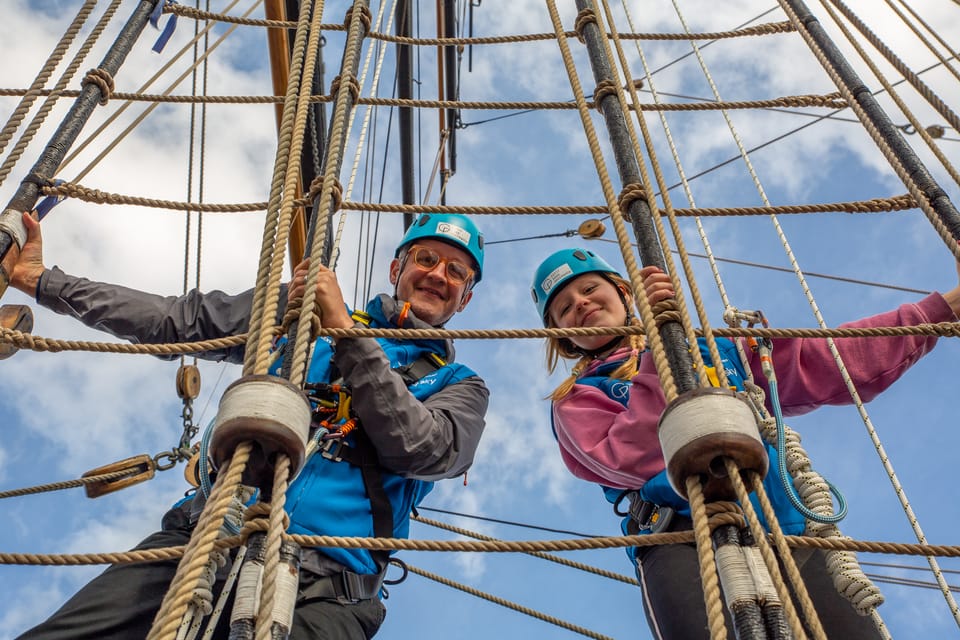
This experience runs about 2.5 hours, but your actual pace matters. The climb depends on how quickly each person moves, so if you’re steady and focused you might go faster; if you take time to pause and look, plan for longer.
Here’s the flow in a way you can picture before you arrive:
First, you meet at Cutty Sark and arrive at least 15 minutes early. That early window matters because you’ll receive a short safety briefing and hear what it was actually like to live and work on board the ship. I like that this isn’t treated as a separate add-on—it sets the tone right away.
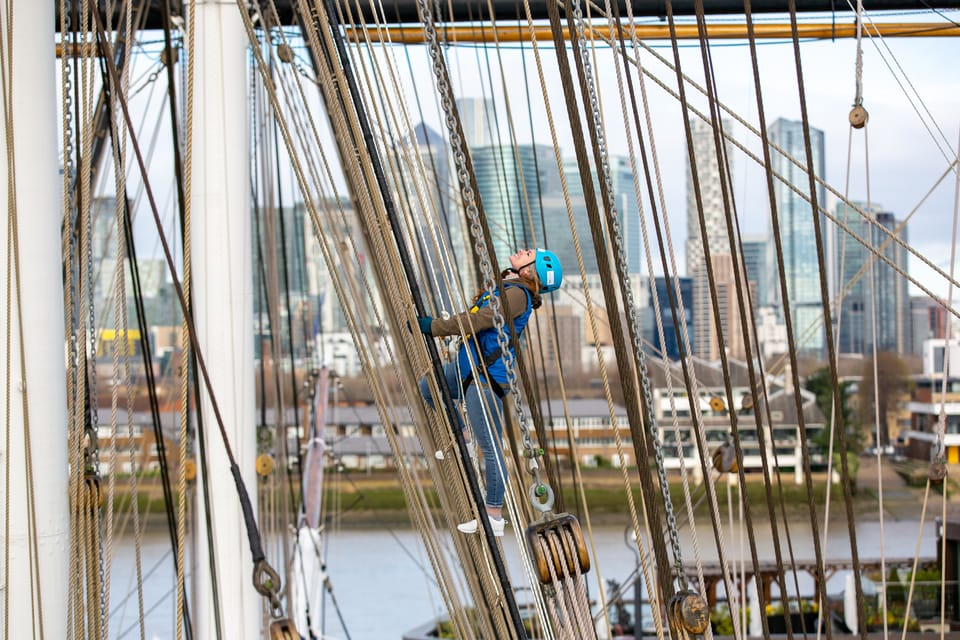
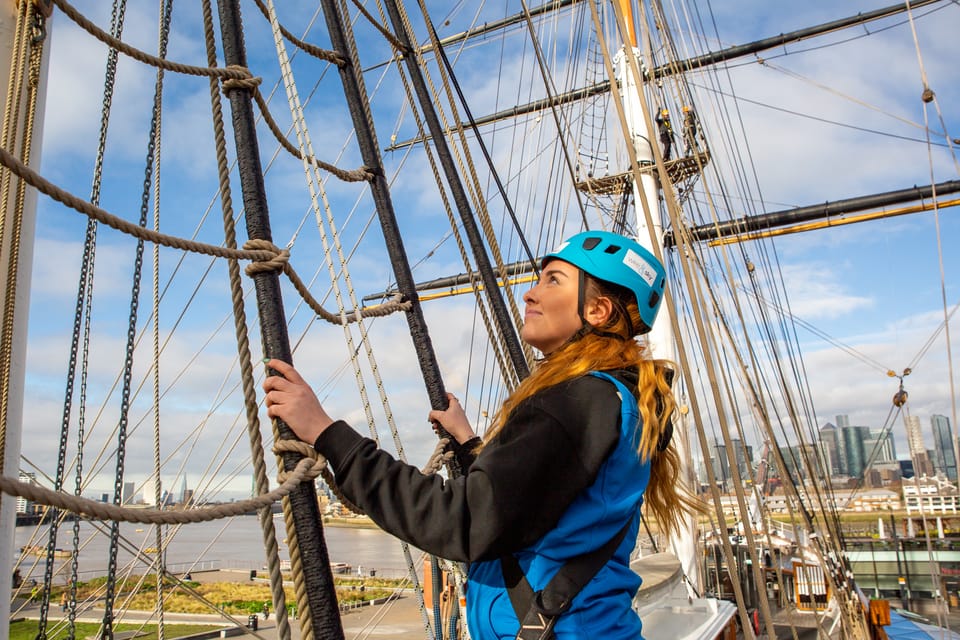
Next, you move up to the Main Deck. From there, you climb onto the ship’s ratlines, the rope ladders that let sailors get higher up the rigging. This is where the activity becomes real: you’ll be using your hands and your balance, not just walking through a display.
Then you make your way into the rigging itself. When you reach a platform, you take a breath and get the kind of view that makes the climb feel worth it—looking down from up high at a real London landmark.
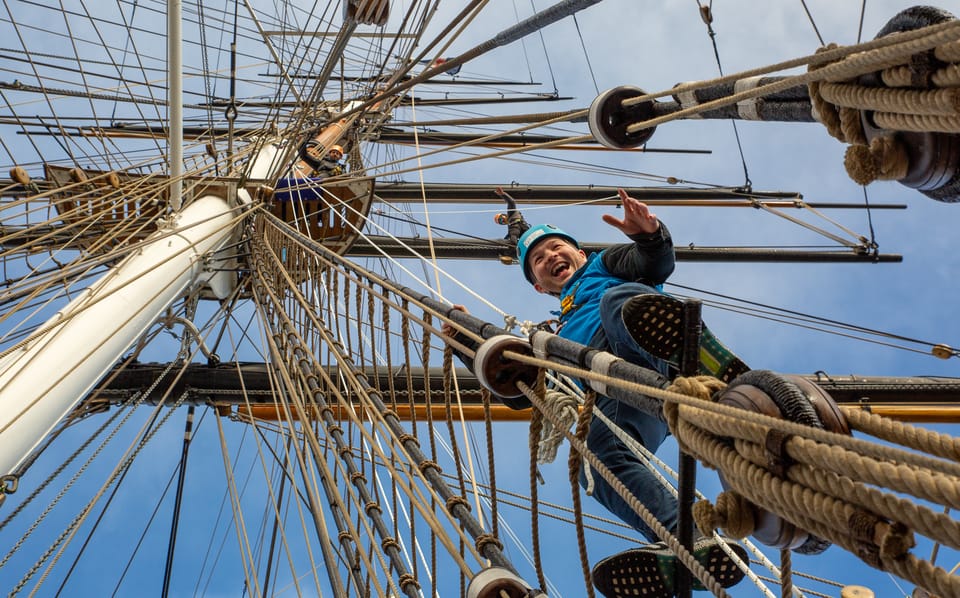
Finally, you tackle the Lower Topsail Yard: grip the bar, hold on tight, and shuffle along the footrope. It’s a controlled, guided moment, but it still asks you to stay brave and look up while you hold your footing.
After that, you return via a controlled descent—an abseil-style move straight back down to the Main Deck. Once you’re back on the deck, the experience stops feeling like a climb and becomes a visit again.
Main Deck and Ratlines: What the Climb Really Feels Like
The most memorable part of this rig climb is that you’re stepping into a sailor’s workflow, not just viewing rigging from a safe distance. The ratlines are the bridge between “on the ship” and “in the rigging.”
If you’re picturing it as a simple ladder climb, expect a bit more. Rope ratlines demand attention. Your movement isn’t just up and down; you’ll manage where your hands go, where your feet land, and how you shift as you progress.
This is also why I think the briefing is more than a formality. When they explain what daily life on board involved, the climb feels less like a stunt and more like a hands-on way to understand work at sea. It’s one of those rare activities where the story and the physical action match up.
And because it’s guided, you’re not doing this alone. You follow the instructor’s safety approach and the sequence of the climb. Still, it’s your body and your pace that determine how long it takes—so it helps to bring a calm mindset.
Platform Views and the Lower Topsail Yard Footrope Challenge
The platform moment is a natural mental reset. You reach the platform, pause, and take in the view while looking down on Cutty Sark. That pause matters because it turns the climb from effort into reward—you get to feel where you are and why you’re doing it.
Then comes the Lower Topsail Yard. This part is described as one final challenge: grip the bar, hold on tight, and shuffle along the footrope. That bar-and-footrope setup is the key detail here. It’s not a free-for-all balance test; it’s structured, but it’s still the point in the climb where you feel height and space.
If you tend to get nervous at heights, don’t try to muscle through. Treat it like a slow process: steady grip, deliberate shuffle, focused attention on what’s right in front of you. The controlled nature of the climb helps, but your calm is what makes it work smoothly.
The Abseil Back Down: Easy to Picture, Different to Experience
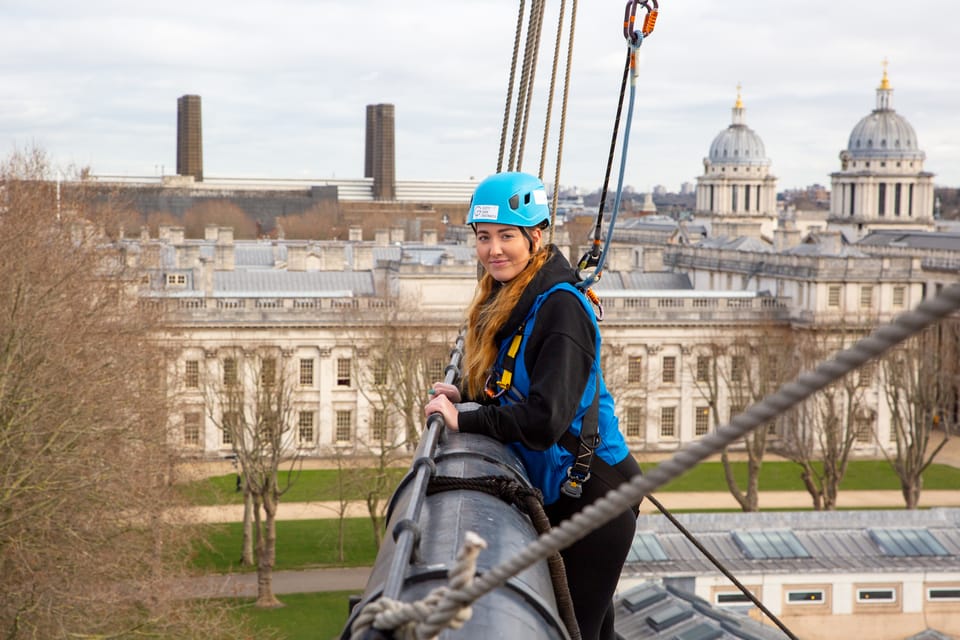
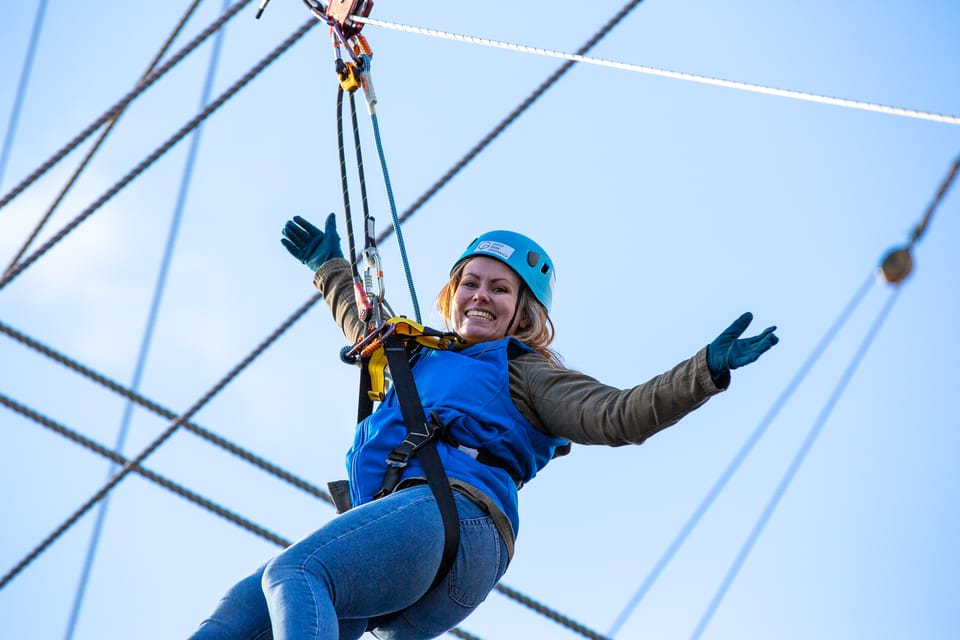
After the rigging challenge, you return via a controlled descent straight back down to the Main Deck. Highlights specifically describe an abseil back down, which is the right mental model: you’re not walking down a ladder again. You’re coming down in a managed, safety-focused way.
This is a big deal for value and comfort. The hardest part of many high attractions is not only getting up—it’s also getting back down safely and without turning the experience into pure exhaustion. Here, the descent is designed to wrap the activity with a clear endpoint.
Once you’re back at Main Deck level, you can breathe, regroup with your group or companions, and transition into exploration time.
You can also read our reviews of more guided tours in London






Exploring Cutty Sark After the Rig Climb (Your Own Pace)
Here’s where this ticket pays off in a way that’s easy to miss at first glance: your Rig Climb ticket includes free access to all areas of the ship.
So after the climb, you’re not done. You can explore the crew’s cabins and take a stroll around the decks at your own pace. This is your chance to connect what you just did with what sailors lived with—seeing spaces from a different angle once you’ve been up in the rigging.
You’ll also have a natural ending point beneath the ship’s gleaming hull, where the experience describes finishing with a drink. Even if you keep it simple, the vibe is clear: this is meant to feel like a full arc, from safety briefing to sea-work simulation to a calmer wind-down on board.
Price and Value: Is $80.82 Worth It?
At $80.82 per person, this isn’t priced like a quick museum entry. You’re paying for gear, supervision, and the rare part: the rigging climb itself plus a guided sequence that ends with a controlled descent.
So the value comes from two places:
- You get more than entry: the experience includes the rig climb experience and entrance to Cutty Sark.
- Your time doesn’t end when the climb ends: the ticket also covers access to all areas of the ship, so you can spend extra time exploring what you came to see.
If you’re the type who likes active tours and you enjoy hands-on learning, the price starts to make sense fast. If you’re mostly looking for a relaxed walk-through, you might find this too physical or too time-focused. But for people who want the ship to feel real, this is exactly the right kind of add-on.
Who This Rig Climb Suits Best (And Who Should Skip)
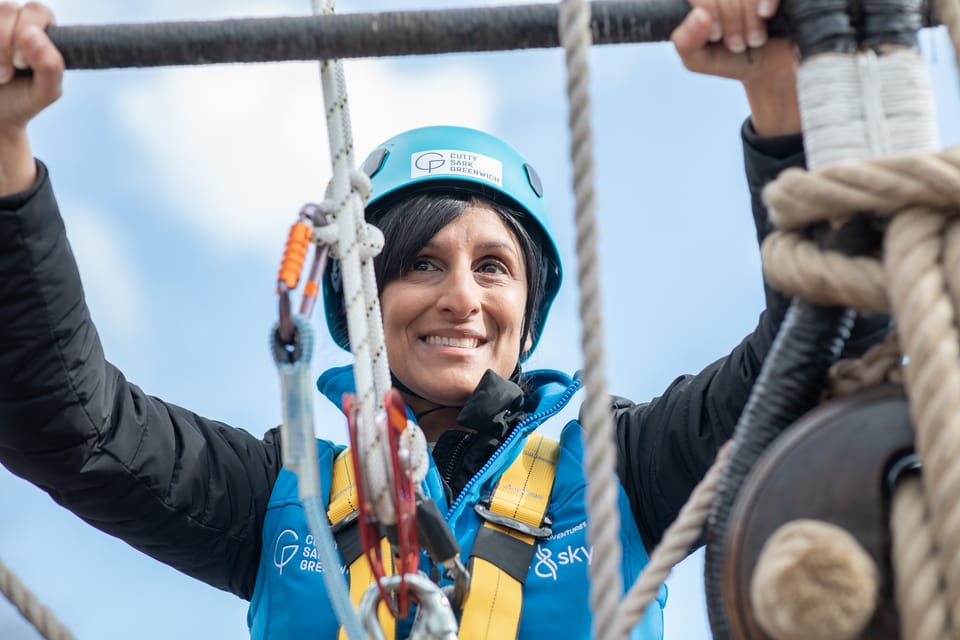
This activity is not for everyone, and that’s a good thing. It keeps the experience safe and fair for the people who can take part.
It’s not suitable for:
- Children under 10 years
- Pregnant women
- People with heart problems
There are also specific physical requirements:
- Minimum height 1.2m / 3ft 9in (because of the gap in the rope ratlines)
- Maximum weight less than 21 stone / 130kg
- Harness limits: maximum waist width 130 cm / 51.1in and maximum upper thigh width 75 cm / 29.5in
So I recommend booking if you can meet those requirements and you like guided, hands-on challenges. If you’re close to the height or weight threshold, check carefully before you go—don’t rely on hoping things work out on the day.
Practical Tips So You Enjoy It More
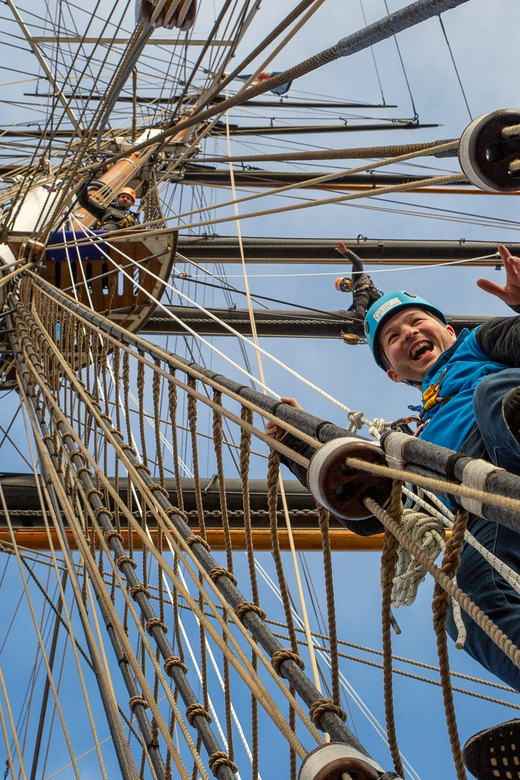
A few details make a noticeable difference:
- Arrive 15 minutes early. You’ll get a short safety briefing and learn what it was like to live and work on board. Going late just compresses your time.
- Plan for the full experience pace. The climb depends on individual speed, and they recommend allowing up to an hour to enjoy the whole experience. If you’re scheduling a tight connection afterward, leave buffer time.
- Wear gear that helps you move. Clothing comfort matters because you’ll be gripping and shifting. The goal is to avoid fuss during the climb.
Also, the instructor is English, so it’s straightforward if you’re comfortable in English.
Should You Book the Cutty Sark Rig Climb?
If you want a London experience that feels genuinely different from the usual museum circuit, I’d say yes—especially if the idea of climbing the rigging and finishing with a controlled descent appeals to you. The best part is that the rig climb ticket doesn’t stop at the high point; it turns into free exploration of the ship’s interiors and decks too.
Don’t book if you’re worried about height requirements, you fall into one of the stated “not suitable” categories, or you prefer passive sightseeing. This is an active tour. It asks you to be present, use your hands, and take things one step at a time.
If you do book, treat the briefing as part of the fun, not paperwork. It’s the moment that helps you understand what you’re seeing and doing while you’re up there.
FAQ
How long does the Cutty Sark Rig Climb take?
The activity duration is about 2.5 hours. Start times vary, so check availability for the schedule.
Where do I meet for the rig climb?
The start and end point is Cutty Sark, and the activity ends back at the meeting point.
What are the height and weight requirements?
You must be at least 1.2m (3ft 9in) tall, and less than 21 stone (130kg) in weight.
Is it suitable for children?
No. It is not suitable for children under 10 years old.
Who should avoid booking?
It’s not suitable for pregnant women or people with heart problems.
Does my rig climb ticket include access to the rest of the ship?
Yes. Your rig climb ticket includes free access to all areas of Cutty Sark, so you can explore crew cabins and decks after the climb.