REVIEW · 2-HOUR EXPERIENCES
London: 2-Hour Guided Tour of the British Museum
Book on GetYourGuide →Operated by My tour London · Bookable on GetYourGuide
London’s museum galleries can swallow a whole day.
This short 2-hour British Museum guided tour gives you a guided storyline from ancient Egypt to global masterpieces, so you leave with more than just random photos. I really like the way the guide connects big ideas across cultures, especially through the Rosetta Stone and what it unlocks. One thing to consider: it’s a fast pace, so if you want to linger on details, you’ll likely want to come back on your own.
You’ll also enjoy seeing famous “must-sees” like the Parthenon sculptures and the Elgin Marbles debate, but explained in context rather than as isolated objects. Expect a thoughtful highlight route that includes Egypt, Greece, Rome, Sutton Hoo, and even an Easter Island Moai, so the museum feels less like a warehouse and more like a human timeline. The main drawback is that language format can be a bit mixed on some departures, so if you’re counting on a strictly single-language experience, keep your expectations flexible.
In This Review
- Quick hits you’ll actually care about
- A 2-hour route that makes the British Museum make sense
- Meeting at the British Museum portals: the part that can trip you up
- First stop: ancient Egypt and the Rosetta Stone effect
- Greece and the Parthenon sculptures: ideas you can feel
- Ancient Rome and the engineering of power
- Sutton Hoo: the Anglo-Saxon story that changes your sense of place
- Easter Island at the British Museum: Hoa Hakananai’a Moai
- How this tour turns into real value (not just a checklist)
- Who should book this British Museum guided tour
- Guide quality: what you can hope for
- Should you book this 2-hour British Museum tour?
- FAQ
- How long is the British Museum guided tour?
- What is the meeting point for the tour?
- Are entry tickets included?
- When will I receive the entry tickets?
- What if I don’t have WhatsApp?
- Does the tour include skip-the-line security?
- What languages are offered?
- Is the tour wheelchair accessible?
- What should I bring?
- Is there free cancellation?
Quick hits you’ll actually care about
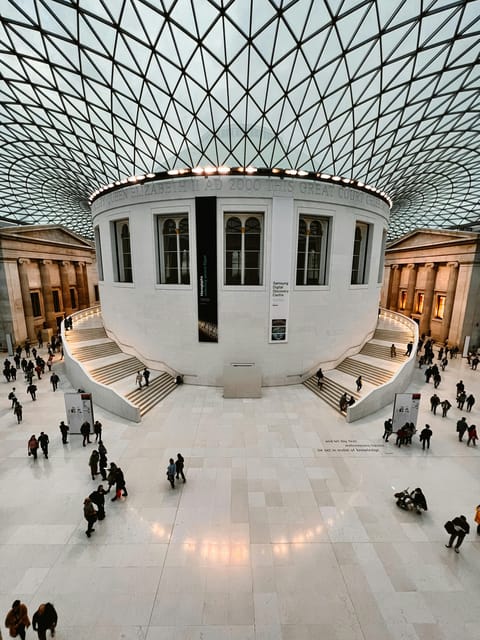
- Licensed guide storyline: You get the why behind the objects, not just the what.
- Rosetta Stone focus: Egyptian hieroglyphics get explained as a key turning point.
- Parthenon sculptures and the Elgin Marbles angle: The guide tackles the controversy as part of the story.
- Sutton Hoo in 2 hours: Anglo-Saxon treasures give you an early England snapshot.
- Hoa Hakananai’a Moai: You’ll see a spiritually important Easter Island figure that broadens the whole route.
A 2-hour route that makes the British Museum make sense
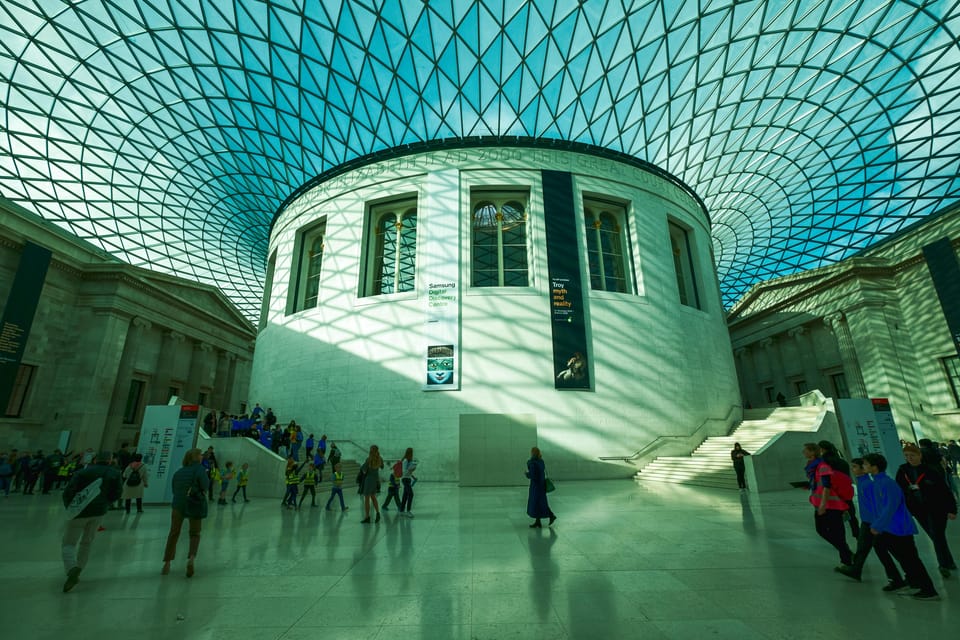
The British Museum is huge. If you go in cold, it’s easy to wander for two hours and still feel like you barely scratched the surface. What I like about this tour is that it turns the museum into a sequence: Egypt sets the stage, Greece sharpens ideas, Rome shows power, and then you get a few major “world” detours so you don’t get stuck in just one era.
You’re also not just chasing the most famous items. The tour is built around understanding how different civilizations recorded beliefs, built societies, and shaped later thinking. The guide’s job is basically to connect the dots—so you can follow the logic even if you’re not a museum person.
At $64 per person for a guided, ticketed visit that includes express security, it’s best seen as a time-saver and a learning shortcut. You’re paying for someone to point you to the right rooms and explain why they matter.
One note on expectations: two hours means you’ll see highlights, not every major gallery. If your goal is slow looking and reading every label, plan extra time to self-explore after the tour.
You can also read our reviews of more guided tours in London



Meeting at the British Museum portals: the part that can trip you up
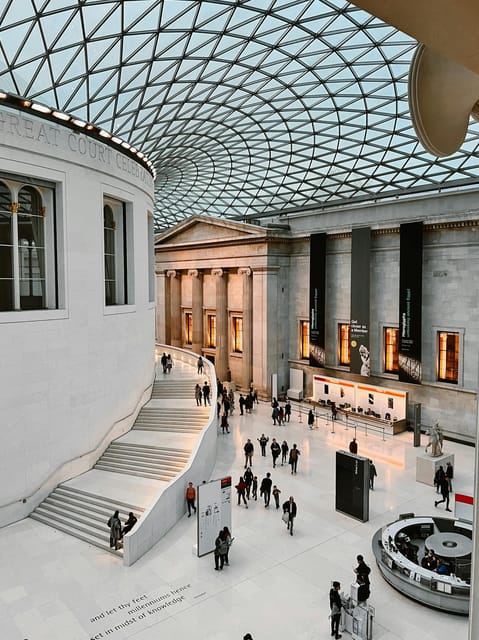
The meeting instructions matter here because the museum security process can feel confusing if you’re arriving for the first time.
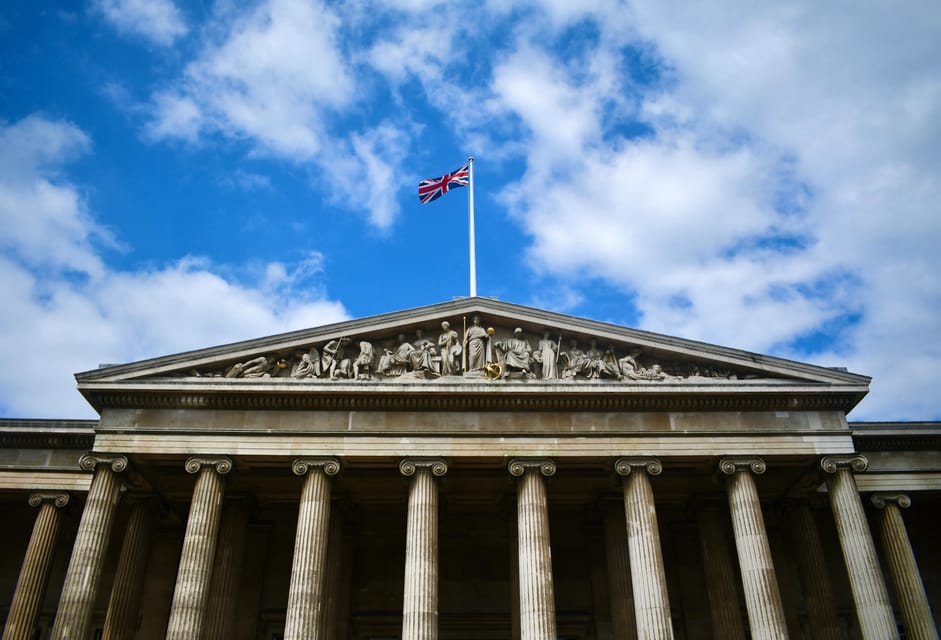
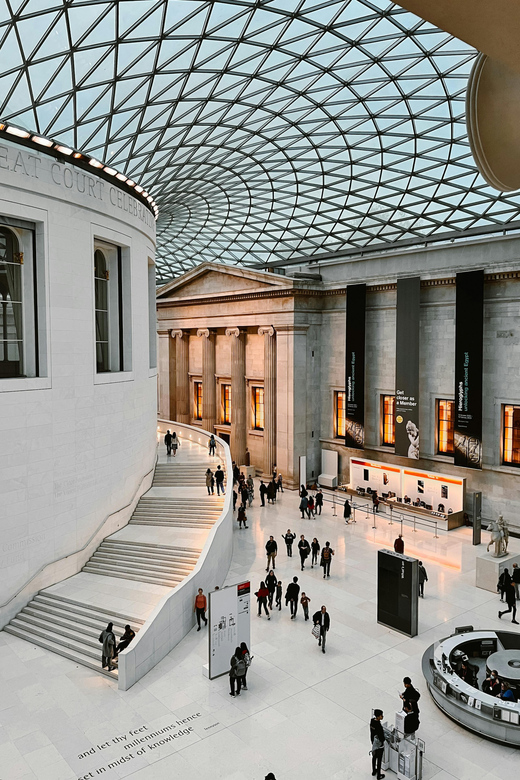
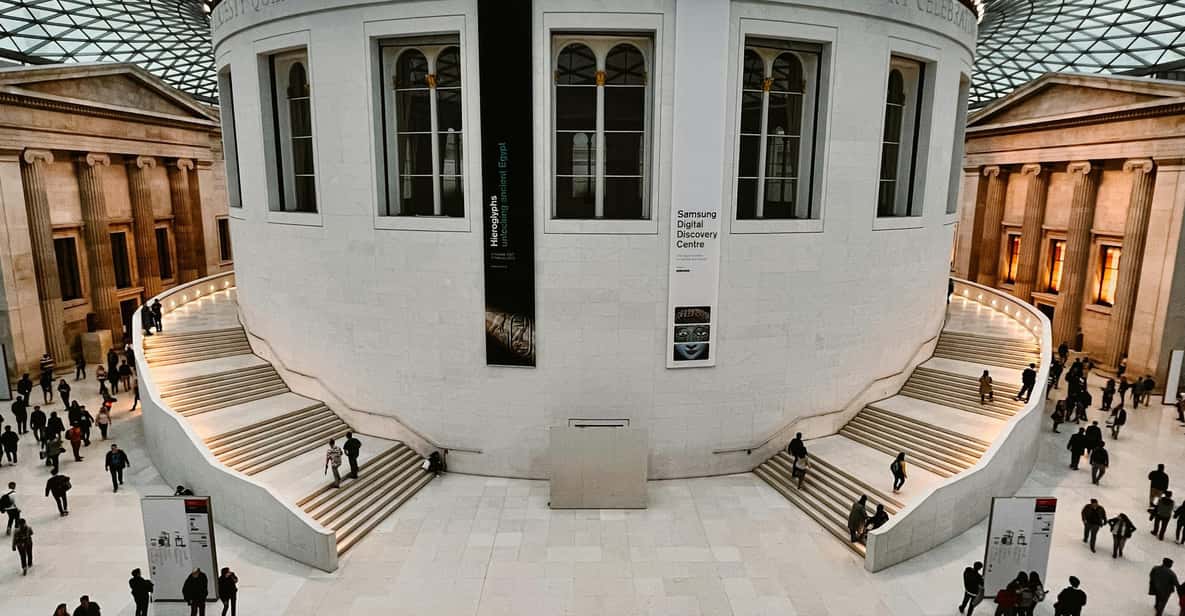
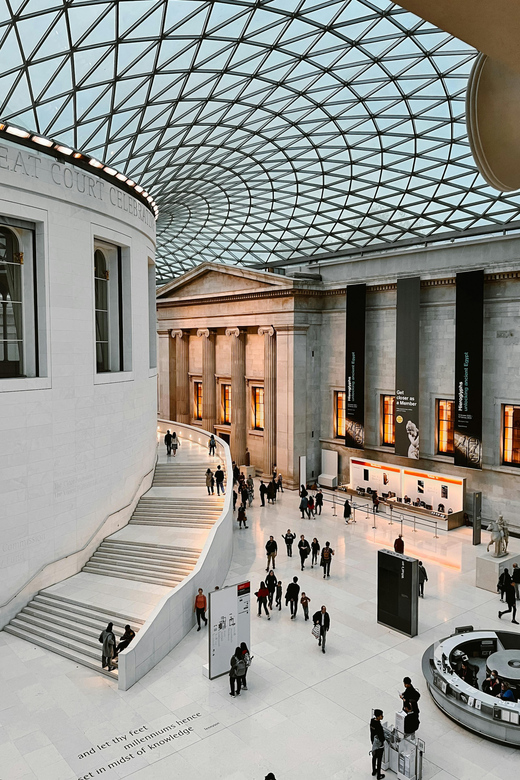
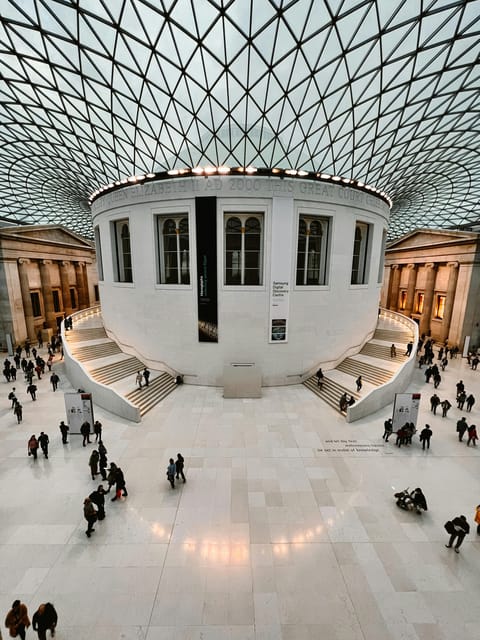
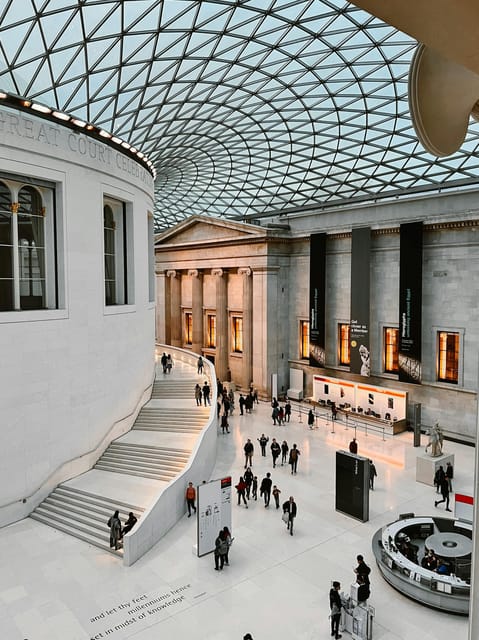
Meet your guide in front of the British Museum portals on the stairs near the pillars, after you’ve passed the security check. The key detail: this is not outside of the gates. You’ll want to be clear on this so you don’t waste time looping around the entrance.
Tickets are handled close to departure. You’ll get the entry tickets via WhatsApp about 1 hour before the tour. If you don’t use WhatsApp, you’ll need to contact the provider by email so they can send the entry tickets another way.
Also, this tour includes an express security check, so you’re not doing the full slow line routine before the fun begins. Still, wear comfortable shoes. The museum floor isn’t the time to test new footwear.
First stop: ancient Egypt and the Rosetta Stone effect
The tour starts with ancient Egypt, and that’s a smart move. Egypt gives you a foundation for how ancient people recorded language and beliefs—so when you hit later Greek and Roman ideas, they feel connected instead of randomly stacked.
You’ll focus on Egyptian royal relics and the story around how hieroglyphs were deciphered. The headline moment is the Rosetta Stone, presented as the key to unlocking those ancient scripts. Even if you know the broad idea of the Rosetta Stone, a good guide helps you see why it was such a breakthrough in practice, not just as a museum-famous object.
This is also a helpful emotional warm-up for the whole visit. Egyptian artifacts tend to feel direct and dramatic. Once you’ve seen that the museum can explain how scholars learned to read the past, you’re more likely to enjoy what comes next—even if you aren’t a professional-history nerd.
If you’re the kind of traveler who likes learning one concrete takeaway, this section is your best bet to walk away with something you can explain to friends.
Greece and the Parthenon sculptures: ideas you can feel
Next comes ancient Greece, and the tour keeps the focus on philosophy and art—basically the “thinking culture” side of the Mediterranean. This is where the route leans into the objects that helped shape how later societies talked about reason, aesthetics, and civic life.
You’ll see iconic sculpture, including the Parthenon works, and you’ll encounter the marble inscriptions that connect to Western thought. The guide also addresses the Elgin Marbles as a controversial part of the Parthenon story, which matters because the debate isn’t just academic. It affects how we interpret what we display and why.
Here’s the practical value: in a short tour, the hardest thing is knowing what you’re looking at. If you don’t already know Greek art conventions, it can feel like sculpture is just decoration. With the guide’s framing, you get a reason to keep looking—what these forms were meant to communicate and how that message traveled forward.
Potential drawback: if you’re sensitive to controversial topics, you might prefer a slower visit with more time for context. But if you’re okay with a guided overview, this is one of the tour’s strongest “big ideas in small time” segments.
Ancient Rome and the engineering of power
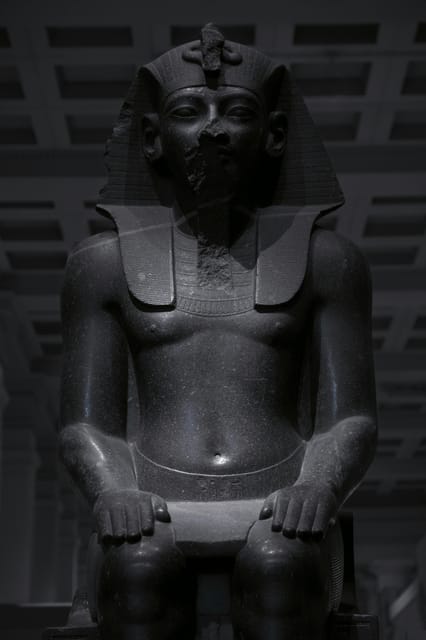
After Greece, the tour shifts into ancient Rome: emperors, monumental ambition, and art that signals status. Rome often feels more “human” in a different way. You get the sense of systems—how people organized power, built cities, and displayed authority.
You’ll see Roman relics tied to rulers and grand engineering achievements, plus artworks like mosaics and statues depicting gods and heroes. This blend is key. Rome didn’t separate politics from culture. It wrapped them together, and the tour helps you notice that pattern.
In a two-hour visit, Rome gives you variety. It’s not just big philosophy vibes anymore. It’s also about texture and technique—mosaics you can almost read with your eyes, and statues that show how religious and political worlds overlapped.
One consideration: because the tour is time-boxed, you may not get the level of detail you’d want from a longer gallery session. But the guide’s job is to point you to the most telling pieces so you don’t need to rely on label-reading alone.
You can also read our reviews of more museum experiences in London






Sutton Hoo: the Anglo-Saxon story that changes your sense of place
Then the tour surprises you with Sutton Hoo. This is a major highlight for many people because it pulls you toward early England, not just the ancient Mediterranean loop.
You’ll spend time with Anglo-Saxon treasures and get a glimpse of early English life through what’s been preserved and displayed. Even with limited time, it’s powerful because it shifts the museum’s story from “ancient world elsewhere” to “this connects to Britain’s own past.”
If your British Museum plan is mainly about Egyptians and classics, this stop is what adds balance. It helps you remember the British Museum isn’t only about distant civilizations. It’s also a map of how knowledge, culture, and identity developed in the British Isles.
In a tour that covers so many regions quickly, Sutton Hoo anchors the visit with something geographically close and emotionally relatable. You’re not only traveling through time—you’re landing in a familiar place.
Easter Island at the British Museum: Hoa Hakananai’a Moai
After early England, you get a long jump across the globe with the Hoa Hakananai’a—a Moai from Easter Island. This is one of those moments where a short tour actually earns its keep.
Most museum “world art” routes risk feeling random. Here, the guide frames the Moai as connected to spiritual essence, which helps you approach it with respect rather than as a curiosity. When you understand the object’s role—what it signaled within its culture—you look at it differently even if you don’t know the language or the specific mythology.
I like this kind of pacing because it reminds you that human culture repeats similar needs in different forms: belief, memory, identity, and community storytelling. The museum becomes less about “ancient vs modern” and more about shared human patterns across distance.
How this tour turns into real value (not just a checklist)
Let’s talk price and what you’re buying. At $64 per person for a 2-hour guided visit that includes entry tickets and an express security check, the value comes from three things:
- Time saved before you even start. The express security helps you get moving without spending your limited museum time stuck in lines.
- Guided interpretation. The guide doesn’t just point. The tour highlights big concepts like deciphering hieroglyphics, how Parthenon inscriptions connect to Western thought, and how Rome used art to communicate power.
- A smart highlight route. You’re guided through key stops (Egypt, Greece, Rome, Sutton Hoo, Easter Island, and more global artifacts) so you don’t waste your energy deciding where to go.
The tour doesn’t pretend you’ll see everything. With two hours, that would be unrealistic. Instead, it sets you up to enjoy the museum afterward—either by doing a second self-guided pass or by returning later with better context.
Who should book this British Museum guided tour
This tour is ideal if you:
- want a fast, guided orientation to the British Museum
- like understanding major breakthroughs (like how hieroglyphs were deciphered) instead of only reading labels
- enjoy seeing famous highlights but also hearing what makes them debated or significant (like the Elgin Marbles controversy)
- want a route that includes non-classical stops like Sutton Hoo and the Hoa Hakananai’a Moai
It may not be the right match if you:
- want to spend long, quiet time with fewer objects
- hate the feeling of time pressure
- need a strictly single-language experience every second (there are indications that some departures can feel bilingual, which can squeeze the explanations)
Guide quality: what you can hope for
You’ll be with a live English/French/Italian guide. Some names have been praised for keeping the information clear and for providing alternative ways to understand what you’re seeing. For example, Filomena has been specifically called out as a standout.
That kind of guide matters here because the tour has to cover a lot ground. When a guide is skilled, the route feels coherent—more like a lesson than a sprint. When the language setup isn’t ideal for your preferences, the pacing still works, but you may catch less detail in your chosen language.
Should you book this 2-hour British Museum tour?
If your time in London is limited and you want your museum visit to feel purposeful, I’d book it. The structure is built for learning: Egypt through the Rosetta Stone, Greece through the Parthenon and its inscriptions, Rome through power-filled art, plus Sutton Hoo and the Hoa Hakananai’a Moai to make it feel truly global.
Skip this tour only if you want slow, label-by-label browsing or if language consistency is your top priority. Otherwise, this is a strong way to get oriented, appreciate the biggest objects, and leave with a storyline you can actually remember.
FAQ
How long is the British Museum guided tour?
It lasts 2 hours.
What is the meeting point for the tour?
Meet your guide in front of the British Museum portals on the stairs near the pillars, after passing the security check. It is not outside of the gates.
Are entry tickets included?
Yes, the activity includes entry tickets.
When will I receive the entry tickets?
The tickets are provided via WhatsApp about 1 hour before the tour.
What if I don’t have WhatsApp?
Contact the provider via email so they can send your entry tickets.
Does the tour include skip-the-line security?
Yes. You get an express security check.
What languages are offered?
The live tour guide is available in English, French, and Italian.
Is the tour wheelchair accessible?
Yes, the museum is wheelchair accessible and the tour is described as accessible.
What should I bring?
Wear comfortable shoes.
Is there free cancellation?
Yes. You can cancel up to 24 hours in advance for a full refund.