REVIEW · COTSWOLDS & OXFORD DAY TRIPS
Downton Abbey Film Locations & Blenheim Palace Day Tour
Book on GetYourGuide →Operated by International Friends · Bookable on GetYourGuide
Downton looks real outside London. This one-day trip threads Downton Abbey locations through the Oxfordshire Cotswolds, then ends at Blenheim Palace, birthplace of Winston Churchill. I like how it mixes recognizable sets with real villages you can actually walk, plus a palace tour that makes British class history feel concrete. One drawback to plan for: it’s a full day with a lot of moving between stops, and you do not visit Highclere Castle.
I also appreciate the small-group approach. With a maximum group size of 16, the day feels more relaxed on the bus and at the quieter photo stops, so you’re not stuck in a huge crowd shuffle.
Key thing to know up front: food and drink aren’t included. Lunch is timed around Burford, but you’ll need to budget for what you eat and drink along the way.
In This Review
- Key Moments You’ll Remember
- A Downton Abbey Day That Includes Real Cotswolds Life
- From Marble Arch to the Cotswolds: How the Mini-Coach Helps
- Yew Tree Farm (Cogges): Beyond the Set Look
- Bampton as Downton Village: Streets, Church, and the Hospital Site
- Burford Lunch: Medieval Market Town After Downton Stops
- Swan Inn in Swinbrook: A Downton Elopement Story Stop
- Approaching Blenheim: Churchill’s Graves in Bladon
- Blenheim Palace Tour: Upstairs, Downstairs, and State Apartments
- The Gardens and the Temple of Diana Proposal Point
- Price and Value: Is $245.15 Worth It?
- Who Should Book This Day Tour (and Who Might Feel Let Down)
- The Real-Day Takeaway: Guide Energy Makes or Breaks It
- Should You Book It?
- FAQ
- How long is the Downton Abbey Film Locations & Blenheim Palace Day Tour?
- Where does the tour start?
- Where does the tour end?
- What locations are included during the day?
- Is Highclere Castle included?
- Is lunch included in the price?
- What transportation do you use?
- How many people are in the group?
- Are there any admissions included?
Key Moments You’ll Remember
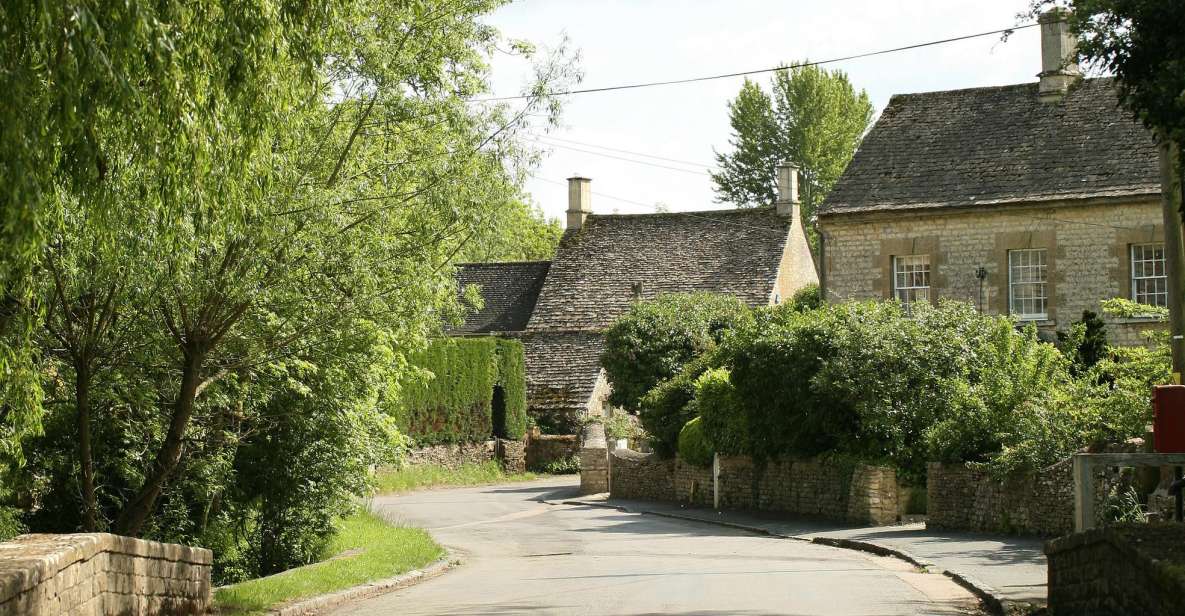
- Yew Tree Farm in Cogges: a tour that connects Downton set details to tenant farming and landowners.
- Bampton as Downton village: the library, church, and the streets used for real scenes.
- Burford lunch and the Wool Church: time to wander a medieval market town after Downton filming stops.
- Swinbrook’s Swan Inn photo stop: a spot tied to Lady Sybil’s elopement story.
- Blenheim Palace upstairs/downstairs tour: class history, room by room, plus Churchill’s birthplace context.
- Temple of Diana walk: the garden landmark linked to Churchill’s 1908 proposal.
A Downton Abbey Day That Includes Real Cotswolds Life
This is the kind of tour that works on two levels. If you’re a Downton fan, you’ll get the pleasure of seeing the filming locations connected to the show. If you’re more interested in the wider place, the Oxfordshire Cotswolds stops let you experience how “period England” actually looks when it isn’t a set.
The route also makes sense. You get out into the countryside early, cover the key Downton-related spots in a tight geographic loop, then finish with a major anchor: Blenheim Palace. That pacing matters. After the palace, you’ll be glad the day ends there rather than dropping another big attraction into the last hour.
On the group side, I like that the tour caps at 16 people. On a day like this, that number tends to keep the experience from feeling frantic. You should still wear comfortable shoes, because you’ll be doing plenty of walking and village-street time.
You can also read our reviews of more tours and experiences in London.


From Marble Arch to the Cotswolds: How the Mini-Coach Helps
Your day starts outside the Cumberland Hotel main entrance at Marble Arch (formerly the Hard Rock Hotel). From there, you’re headed out of London toward Oxfordshire with an executive mini-coach.
The mini-coach detail is more than marketing. Smaller vehicles can often reach viewpoints, village edges, and tight stops that larger buses can’t handle. That’s how you end up with frequent photo stops and smoother transitions between smaller locations like Bampton and the places around Burford.
You’ll also have a live English-speaking guide throughout. This matters because Downton filming locations are more interesting when someone explains what you’re looking at—especially when the same building has served different roles over time.
Finally, the tour includes transportation back to the original meeting point. That’s not a small thing in England, where “how do we get back?” can otherwise eat into your evening.
Yew Tree Farm (Cogges): Beyond the Set Look
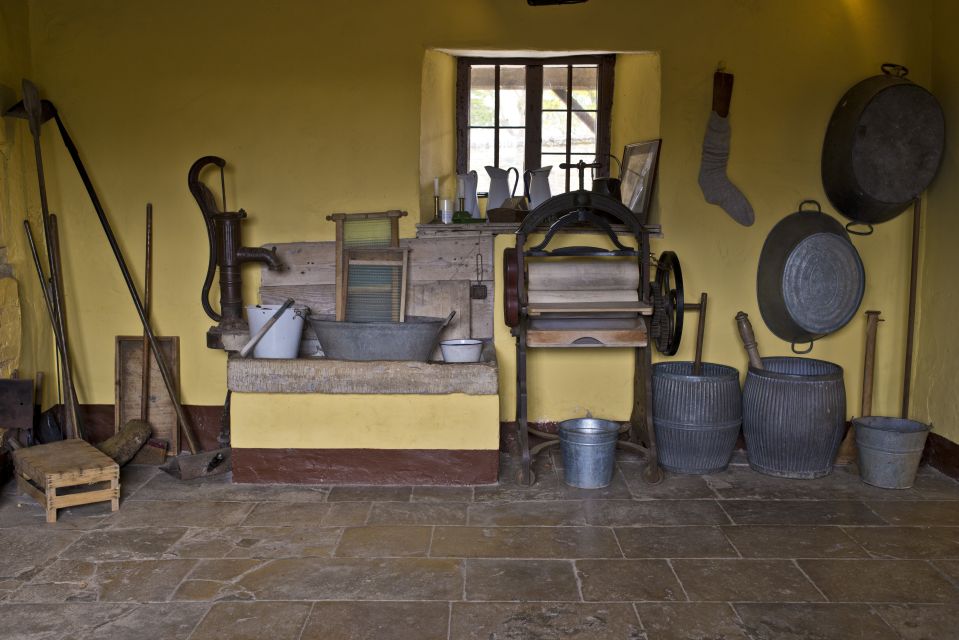
Yew Tree Farm in Cogges is the first major stop, and it’s a smart place to start. This is where the tour connects Downton Abbey to the real agricultural rhythms of the region.
After you arrive, you’ll take a break at the refurbished Cogges Café. If you want tea or coffee before the farm visit, this is your chance. It’s also a good time to reset your legs, because once you’re out exploring and walking around, you’ll appreciate having caffeine in the tank.
Then comes the farm portion: you’ll tour and learn about the relationship between tenant farmers and landowners. That’s a historical angle that fits the Downton world perfectly. Even if you don’t know the show by heart, the idea of who worked the land versus who owned it is the kind of context that turns a location into something meaningful.
A practical note: this is one of those stops where weather matters. Bring clothing that handles sudden changes, because the Oxfordshire countryside can be calm one minute and breezy the next.
Bampton as Downton Village: Streets, Church, and the Hospital Site
Next up is Bampton, a classic Oxfordshire Cotswolds village used extensively for Downton Abbey filming. If you’ve seen Downton village scenes, this part is where recognition starts to click.
You’ll spend time around the village and see key buildings used for the series. The Bampton Library was filmed as the Downton Cottage Hospital and doctors’ surgery. St. Mary’s Church became Downton Church, and Churchgate House served as the Crawley family home.
What I like here is that the village isn’t presented as a “theme park.” You’re walking real streets that have served the community for years. That makes it easier to imagine daily life in the show—because the place is built for daily life, not just camera angles.
You’ll also walk along the street where you can picture shops, the post office, and the Grantham Arms. Even if you don’t match every storefront from memory, you’ll still get the feeling that Downton wasn’t invented from thin air. It was built from an actual village.
If you want a tip for photos: slow down. You’ll get more satisfying pictures when you take a moment to line up the street view from the same angle as the building frontings.
Burford Lunch: Medieval Market Town After Downton Stops
After Bampton, you head toward Burford, often described as the Gateway to the Cotswolds. This is where you’ll have lunch, and the timing is good. By the time you reach Burford, you’ve already had multiple filming-location stops, and you’ll want a break that isn’t just the bus-and-back routine.
Burford also gives you a change of pace. You’ll have time to see the Wool Church, a landmark built on the wealth of the wool trade. It’s the kind of building that quietly explains why these towns look the way they do. When you see how prosperity from wool shaped the town, you’ll understand why local architecture stayed impressive even as centuries changed.
Lunch itself is not included (food and drink are listed as not included). The tour does give you time in Burford, so you can choose what fits your tastes and budget—quick and casual, or sit-down if you want a longer pause before the palace.
Two practical suggestions for Burford:
- Wear shoes you can walk in for a while, because the town center is made for wandering.
- Bring or buy water. You’re traveling and exploring outdoors, and you don’t want to waste energy on constant refills.

Swan Inn in Swinbrook: A Downton Elopement Story Stop
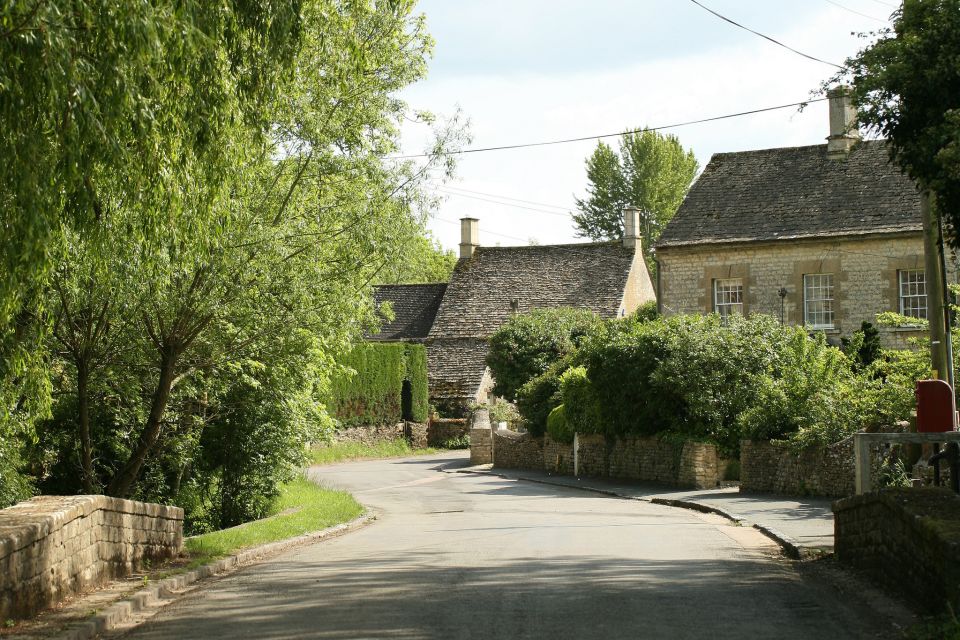
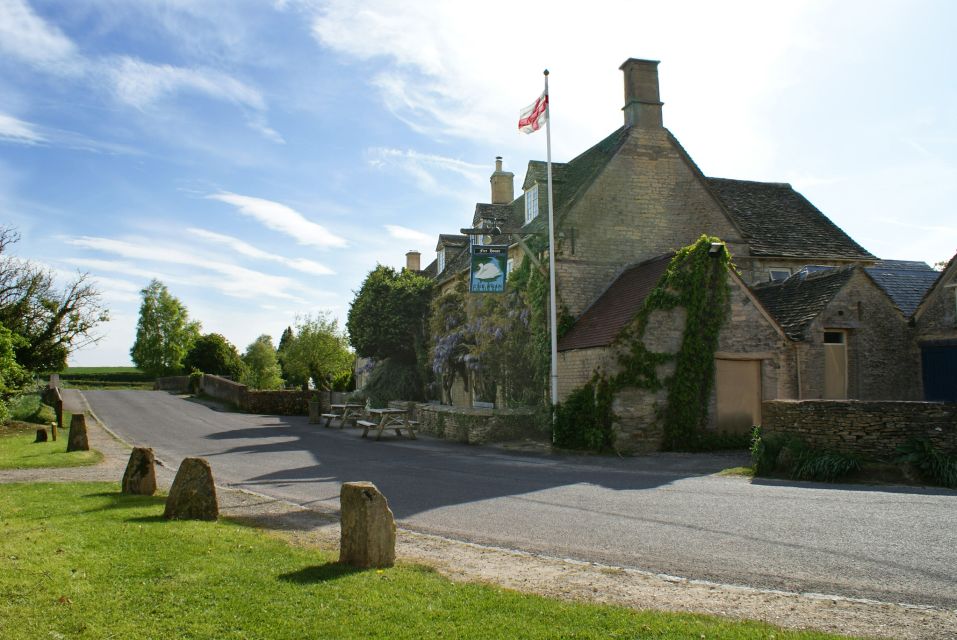
After lunch, you’ll drive through the Oxfordshire Cotswolds countryside. Along the way you’ll stop at the Swan Inn in Swinbrook.
This stop is tied to a very specific Downton Abbey moment: it was the site of Lady Sybil’s elopement with Branson, the family chauffeur. Whether you’re a plot-rememberer or more of a “place and vibe” traveler, this kind of story link is what turns a photo stop into something you’ll actually remember.
One thing to manage here: this is a stop that’s probably shorter than the bigger village parts. It’s still worth it, but don’t plan to treat it like a full attraction. Use it for photos, a quick look, and then get ready for the final stretch.
Approaching Blenheim: Churchill’s Graves in Bladon
As you get closer to Blenheim Palace, the tour adds a thoughtful pause: you’ll see the graves of Sir Winston Churchill and Lady Churchill in the nearby village of Bladon.
Even if you’re not a deep Churchill scholar, seeing the graves before the palace can change how you experience the day. It puts the final attraction into a personal, human context rather than treating it as just another big stately home.
This is also a nice moment for photos from outside the palace area context. Just remember: if it’s windy or cold, you’ll be glad you dressed for it.
Blenheim Palace Tour: Upstairs, Downstairs, and State Apartments
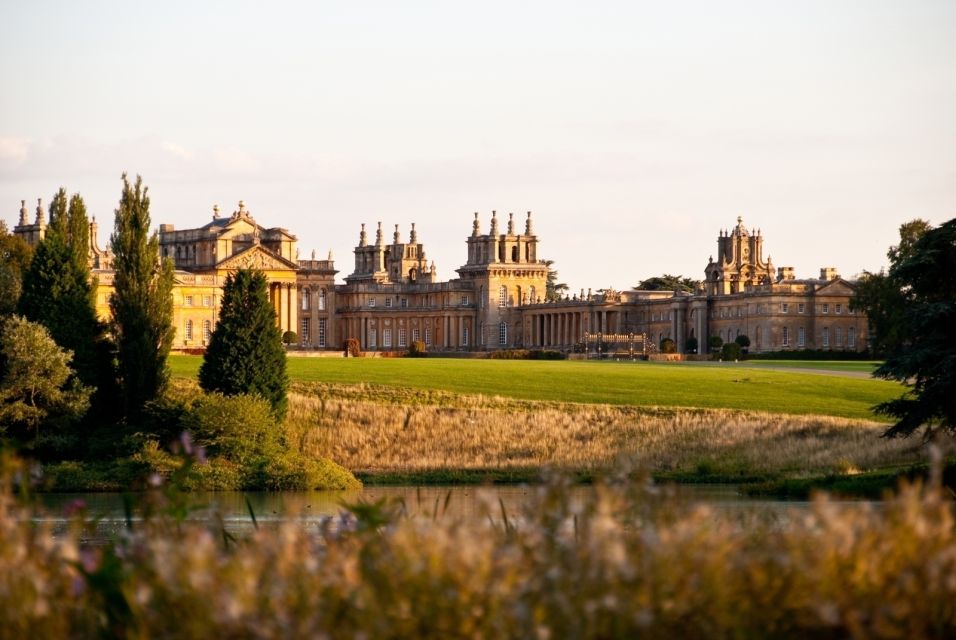
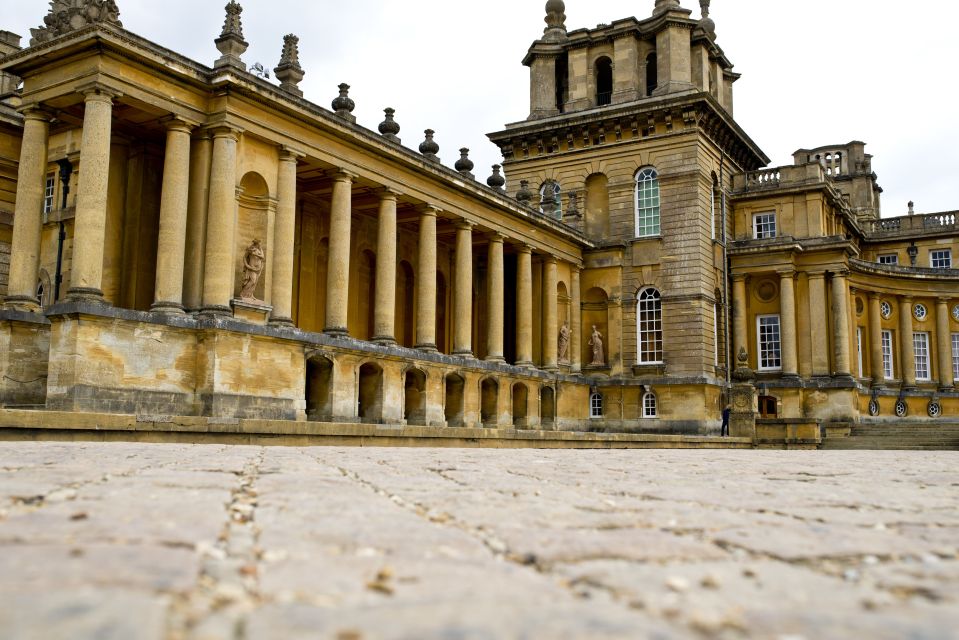
Now you’re at the main event: Blenheim Palace, the birthplace of Winston Churchill (1874). Your palace tour starts with an introduction to upstairs and downstairs—a look at how people lived in a class-conscious world.
You’ll learn about Blenheim’s background as a historic stately home built in the early 18th century for the first Duke of Marlborough, John Churchill. From there, the tour moves room by room and focuses on how the state apartments gained importance over time.
What I like about this style of touring is that it matches the Downton theme in an intelligent way. Downton is all about social structure and the collision of classes. Blenheim gives you a real setting for those dynamics—so you don’t just get a show reference. You get a sense of the architecture behind the power.
Also, this stop includes admission to Blenheim Palace, so you’re not juggling ticket lines or extra payments just to see the main attraction.
The Gardens and the Temple of Diana Proposal Point
After the house tour, you’ll have time for a walk through the landscaped gardens. The highlight here is the Temple of Diana, the spot linked to Churchill’s proposal to Clementine Hozier in 1908.
This is a good moment to slow down. The house portion can feel fast because it’s guided and structured; the gardens give you space to breathe, take photos, and just absorb the setting. If you’re traveling with someone who likes history but also enjoys scenic wandering, this garden segment is usually the part where everyone starts smiling at the same time.
If you want your best photos, aim for earlier rather than later in the garden time window—depending on weather and light, you’ll often get better results before paths get crowded.
Price and Value: Is $245.15 Worth It?
At about $245.15 per person, this tour isn’t bargain-bin travel. But it can still be strong value if you look at what’s included.
Here’s what you’re paying for:
- Round-trip transportation by executive mini-coach from central London
- A professional, full-day guide working across multiple locations
- Visits to key filming-related stops (Yew Tree Farm, Bampton/Downton village areas)
- Admission to Blenheim Palace
- A final layer of story stops and viewpoints that tie the day together
What you’re not paying for:
- Food and drink (lunch time is built in at Burford, but you choose what to eat)
So the value equation depends on your priorities. If you’d otherwise rent a car or take trains plus pay separate admissions and guide services, this price starts to look more reasonable. The included palace admission and the fact that you’re not dealing with transit logistics across several countryside towns can save you real time and hassle.
If you’re trying to do a DIY route and keep it cheap, you’ll likely come in under $245.15. But you’ll pay the cost in time, planning, and figuring out which filming-related spots are worth your effort without a local guide.
Who Should Book This Day Tour (and Who Might Feel Let Down)
This tour is a great fit if you want:
- Downton Abbey locations explained with historical context
- A full day that also gives you Oxfordshire Cotswolds village wandering
- A strong finale at Blenheim Palace that goes past surface sightseeing
It’s not the best match if:
- You mainly want to see one specific “big ticket” site and everything else feels like padding. The day is built to cover several locations.
- You were hoping for Highclere Castle. It isn’t included, so your expectations need to match the tour focus.
The best results happen when you treat it like a guided storytelling day. Let the guide connect the dots between film scenes and real places, and the whole day feels coherent rather than scattered.
The Real-Day Takeaway: Guide Energy Makes or Breaks It
A standout theme from the experiences people describe is how much the guides improve the day. Guides such as Catherine, Tony, and Amber are praised for being engaging, friendly, and comfortable telling stories without turning the ride into a lecture.
You also benefit from that attention because a full-day tour runs on timing. When the guide keeps things moving without rushing you at stops, you get more out of each place. People also highlight that even when pick-up details can go wrong in the broader world of tours, the guide approach matters—and a steady, proactive response is what keeps the day from unraveling.
Should You Book It?
I’d book this tour if you want a single, well-paced day that blends Downton Abbey filming locations with a meaningful stop at Blenheim Palace, and you don’t want to manage countryside logistics on your own. The mini-coach setup plus the small-group size makes it feel practical, not just scenic.
Pass or adjust expectations if Highclere Castle is your main goal. Also, plan for a long day on your feet. Bring comfortable shoes, dress for weather, and decide your lunch budget before you arrive in Burford.
FAQ
How long is the Downton Abbey Film Locations & Blenheim Palace Day Tour?
It’s a one-day tour (duration listed as 1 day).
Where does the tour start?
It starts outside the Cumberland Hotel main entrance at Marble Arch (formerly the Hard Rock Hotel).
Where does the tour end?
The tour ends back at the same meeting point.
What locations are included during the day?
You visit Yew Tree Farm (Cogges) and Downton village filming areas in Bampton, plus you have time in Burford for lunch, photo stops in Oxfordshire Cotswold villages, a stop connected to the Swan Inn in Swinbrook, and a tour of Blenheim Palace.
Is Highclere Castle included?
No, Highclere Castle is not included.
Is lunch included in the price?
Food and drink are not included. Lunch time is built into the day at Burford, but you pay for what you eat.
What transportation do you use?
You travel by executive mini-coach.
How many people are in the group?
The tour is a small group with a maximum of 16 people.
Are there any admissions included?
Yes, admission to Blenheim Palace is included.