REVIEW · GUIDED
London: The Lost Tunnels of Euston Station Guided Tour
Book on GetYourGuide →Operated by London Transport Museum · Bookable on GetYourGuide
Euston feels crowded above ground. Then you step into dusty passages below. This guided walk turns London’s busiest rail hub into a real, physical maze, from concealed poster remnants to a rare look down at the Victoria Line.
I especially like the off-limits feeling: you’re not just hearing facts about the Tube, you’re walking through the station’s lesser-known underground spaces. I also like how the tour ties the past to what’s next, with HS2’s planned reshaping of Euston and what that means for the station’s future.
One clear consideration: the tour involves a lot of walking with uneven ground, stairs, low lighting, and no toilets, so it’s not a good fit if you’re tight on mobility or claustrophobia.
In This Review
- Key highlights worth planning for
- Finding the meeting point at Euston Square fast
- The first steps into Euston’s disused underground maze
- Hidden posters and the station’s origins near Melton and Drummond Streets
- Leslie Green relics before HS2 forces the next shift
- The secret ventilation shaft and looking down at the Victoria Line
- How the guide brings it to life in 75 minutes
- Price and value for a special-access Euston experience
- Who should book, and who should skip this one
- Should you book the Lost Tunnels of Euston Station tour?
Key highlights worth planning for
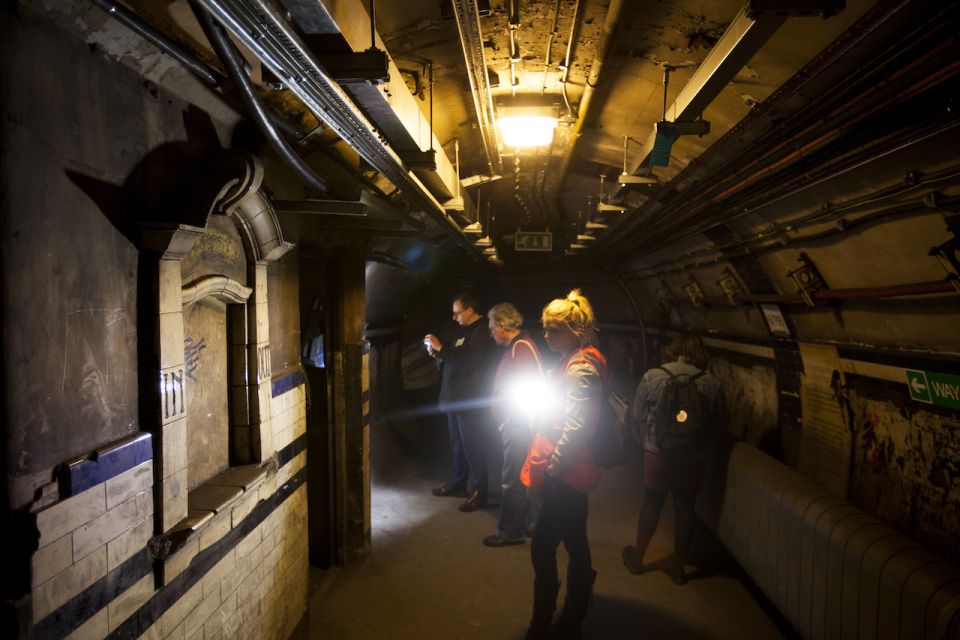
- Disused Euston Underground tunnels with a labyrinth of dark, dusty passageways
- Concealed vintage posters you can only see because the tour leads you to the hidden spots
- A Leslie Green station look and the area around it, before changes tied to HS2
- HS2 context at Euston, including how it will become London’s terminus for the Midlands line
- A secret ventilation shaft stop, where you can look down on Victoria Line trains
- A short 75-minute format that still packs history, access, and photo moments
Finding the meeting point at Euston Square fast
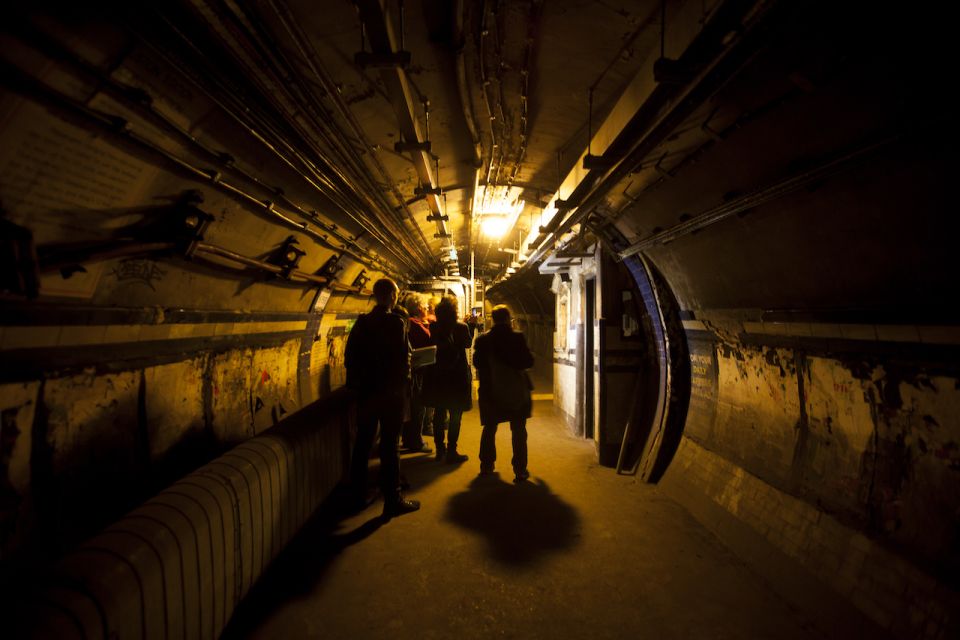
Your tour starts at Euston Square station, at the south exit. The meeting spot is on the corner of Gower Street and Gower Place (what3words: baked.bend.worry). There are multiple entrances to Euston Square, so match the description: look for the glass façade on the hospital side of Euston Road.
This matters because the tour is 75 minutes long. You don’t want to burn that time figuring out the exact doorway. If you’re arriving from central London, I’d give yourself extra buffer so you’re not sprinting across Euston’s sprawling streetscape.
You’ll come back to the same meeting point at the end, which keeps the logistics simple.
You can also read our reviews of more guided tours in London



The first steps into Euston’s disused underground maze
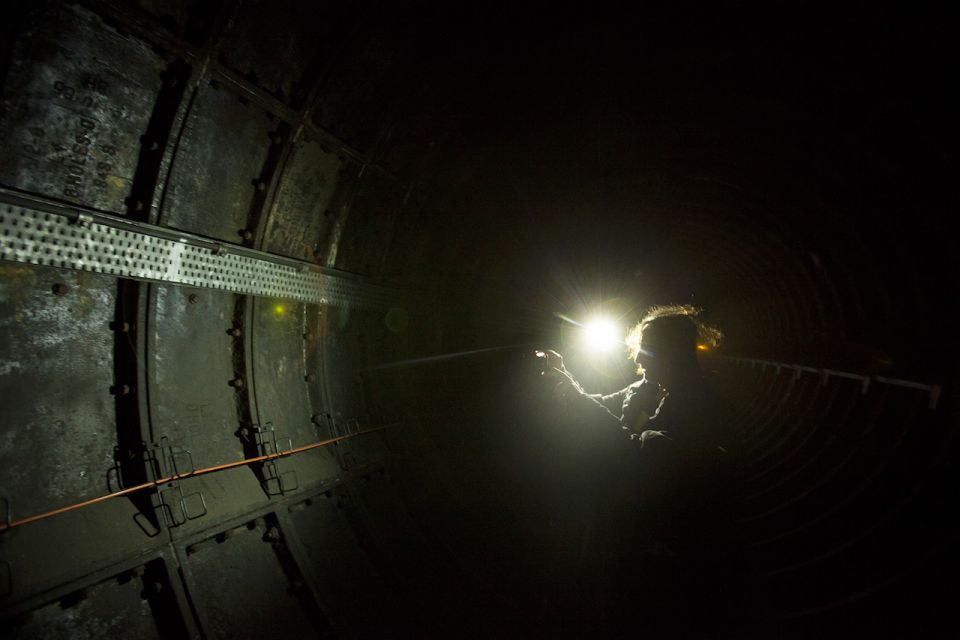
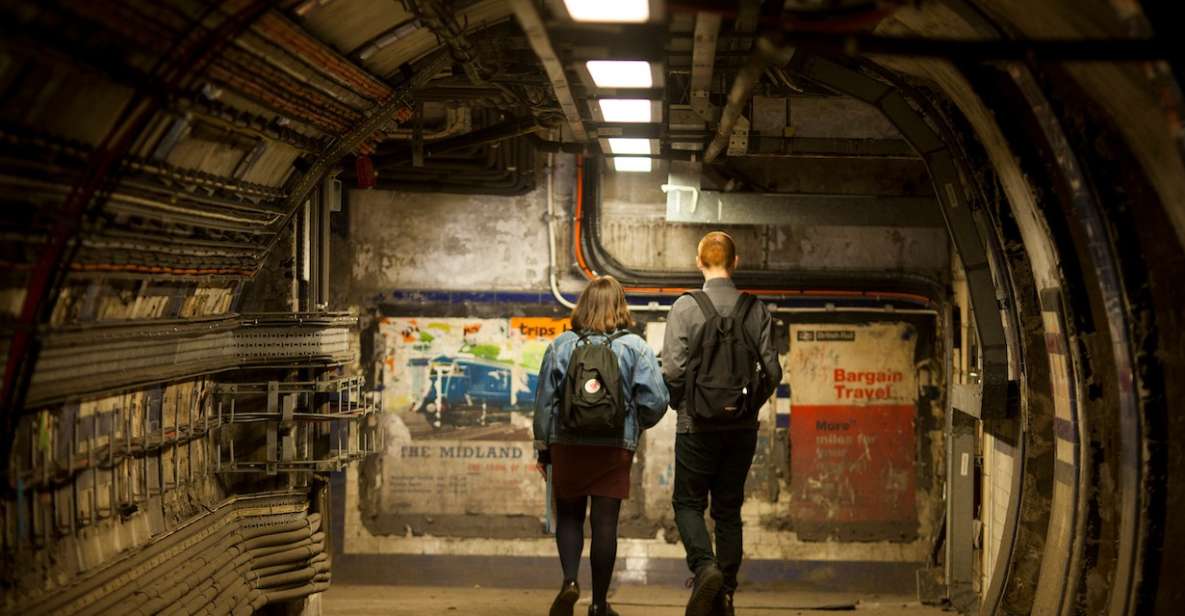
Once you’re gathered, you’ll begin exploring Euston Underground’s disused tunnel network on foot. The tone is part history lesson, part guided walk-through. Expect dark, dusty passageways, plus stops where the guide slows you down to point out what you’re looking at and why it’s there.
This is the core draw: most people see Euston only as a station they pass through. Here, the station becomes a place with hidden layers. You’ll learn that these passages once served traveling public life, then later changed or closed as the station evolved.
Practical note: because the lighting can be low and the ground can be uneven, comfortable closed shoes are not optional. Open-toed footwear is also not allowed. If you usually do London in flexible sneakers, great. If your footwear is more fashion than grip, swap it.
Hidden posters and the station’s origins near Melton and Drummond Streets
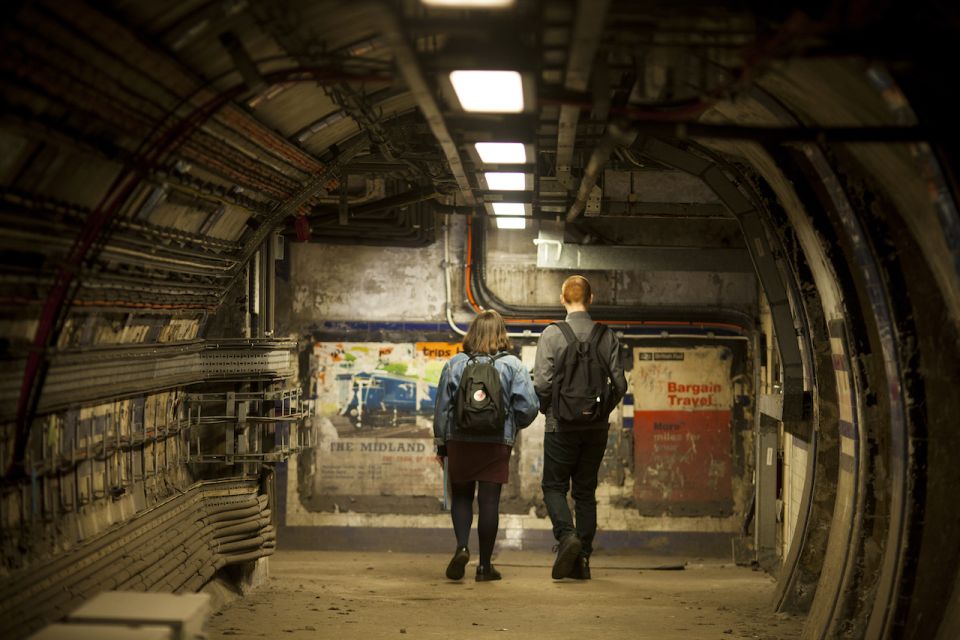
One of the most fun stops is about what’s not meant to be visible. You’ll see remnants of vintage advertising posters that have been concealed from view for decades, described as hidden for over 50 years. It’s the kind of detail you’d almost certainly miss on your own, even if you stood in the right place above ground.
The tour also gives you a grounded timeline. You’ll hear about Euston’s early beginnings at the corner of Melton and Drummond Streets. That detail helps the whole experience click. You start to see Euston not as one building, but as an evolving system that grew from a real street corner and expanded into today’s high-throughput transport machine.
And when you start noticing old poster fragments next to modern station infrastructure, you get the satisfying feeling that you’re seeing London’s layers in the right order: origin, expansion, concealment, and change.
Leslie Green relics before HS2 forces the next shift
A standout moment comes when the tour shows you Leslie Green station and its surroundings—an area that’s expected to be swept away as HS2 planning moves forward. Even if you’re not a rail-nerd, this is worth your attention because it’s concrete.
You’ll also hear how Euston Station is set to change with the arrival of High Speed 2 (HS2), with Euston becoming the London terminus for the brand-new line up to the Midlands. That’s more than a headline. The guide frames it as a major redesign of how one of London’s key stations functions.
Here’s why this portion is valuable: it gives you a reason to care about the underground spaces you’re walking through. The disused tunnels aren’t just spooky trivia. They’re part of the same story that explains why infrastructure gets closed, repurposed, and rebuilt as passenger volumes climb.
The station is described as serving over 42 million passengers each year, which is a mind-bender on its own. Connecting that number to the physical constraints of a real site makes the future changes feel less abstract.
The secret ventilation shaft and looking down at the Victoria Line
The tour includes a visit to a secret ventilation shaft. This is one of those stops that feels slightly rebellious, like you’ve found a maintenance-only angle of the city. You’ll look down and see Victoria Line trains below.
It’s a great moment to shift your brain from history to systems thinking. Ventilation shafts sound boring until you see how they fit into how the Tube works every day. You get a visual reminder that what keeps passengers moving also depends on hidden engineering.
This is also one of the best photo opportunities on the route, as long as you pay attention to where the guide wants you to stand. If you’re hoping to take photos, wear something you can move in and be ready to pause at different points rather than expecting one single grand viewpoint.





How the guide brings it to life in 75 minutes
The tour is led by a live English guide, and the experience is written and structured by historical experts from the London Transport Museum, based on their archive and collection. That combination matters. You get real specificity, not generic ghost-tunnel storytelling.
Guides have been praised for being friendly and for taking time to explain what happened to the tunnels and how service improvements tie into ongoing Tube operations. In particular, Scott and Anthony have been mentioned as especially approachable, with a good habit of giving groups time to take pictures.
Small group energy can also make the walk more enjoyable. Some departures run very quietly, and when you’re not competing for attention, it’s easier to ask a question and actually hear the answer. Even if your group is larger, the 75-minute length helps keep things moving without rushing.
Expect frequent short stops rather than one long uninterrupted sprint. That’s good news if you like history but don’t want your legs to hate you by minute 30.
Price and value for a special-access Euston experience
At $60.61 per person for about 75 minutes, this isn’t the cheapest thing to do in London. But it’s not trying to be. The value comes from access: you’re touring areas that are generally closed, including disused tunnel systems and a ventilation shaft vantage point.
You’re also paying for a guide who can connect what you’re seeing—posters, passageways, Leslie Green surroundings, and tunnel spaces—to the bigger story of why Euston is changing for HS2. That explanation is part of the product.
If you’re the type of visitor who likes normal attractions but also wants one day to include something only a few people see, this fits well. If you’re looking for a purely scenic walk with minimal effort and no enclosed spaces, you might find it less satisfying than a standard Tube-themed museum stop.
Who should book, and who should skip this one
This tour is a good match if you:
- Like transport history and hidden infrastructure
- Enjoy guided walks where the guide points out details you’d miss
- Want a compact 75-minute activity that doesn’t require a whole day’s commitment
- Are comfortable taking photos while moving through indoor spaces
It’s not suitable if you:
- Have mobility impairments
- Have claustrophobia
- Need access to toilets (there are none)
- Are traveling with children under 10 (it’s not suitable), or if you’re beyond the adult-child ratio limit (there is a maximum of four children aged 10–15 per adult)
Also plan around the practical rules: no food or drinks, and no luggage or large bags. Bring only what you need to walk and stay hands-free.
Weather still matters, even though much of the tour is underground. You’ll want clothing that works for stairs and low-light areas, and shoes that grip well on uneven surfaces.
Should you book the Lost Tunnels of Euston Station tour?
If you want one London experience that feels properly different—part station, part underground museum, part engineering peek—this is a strong yes. You get exclusive access to disused tunnels, hidden vintage posters, a Leslie Green-related view, and a ventilation shaft look at the Victoria Line, all tied into how HS2 will reshape Euston.
I’d book it if you’re comfortable with walking, stairs, and low lighting, and if you’re excited by the idea that the Tube has layers most people never see. I’d skip it if you’re claustrophobic, mobility-limited, or expecting a relaxed, stroller-friendly outing.