REVIEW · WALKING TOURS
London: Self-Guided Notting Hill Walking Tour with an APP
Book on GetYourGuide →Operated by Trippy Tour Guide · Bookable on GetYourGuide
Notting Hill rewards you for slow looking. This self-guided app tour turns the neighborhood into a simple route, with photo stops and over 20 narration points that help you notice details you’d otherwise miss. I like that you can chase the famous movie moments, then keep going to quieter streets like Pembridge Crescent and Powis Mews.
My favorite part is the pacing: you’re not stuck in a group chant. You can pause, replay, or rewind the audio, so you control the walk and the photos. One thing to plan for: you’ll need a charged smartphone, headphones, and Wi‑Fi to download the tour at the start, plus decent mobile internet for the setup.
In This Review
- Key highlights that make this Notting Hill app walk work
- Getting your bearings on Notting Hill Gate to Pembridge Crescent
- Simon Close and Denbigh Terrace: where the quiet streets do the talking
- Elgin Crescent and Lansdowne Crescent: crescents built for photos
- Ormrod Court and St Luke’s Mews: movie lore meets colorful houses
- Powis Mews, Electric Cinema, and Portobello Road: the best “Notting Hill is London” stretch
- App-powered sightseeing: how Trippy Tour Guide keeps the story on track
- Pricing and value: why $14 can make sense for this route
- Timing, stamina, and the real-world pace of the 2-hour route
- What to bring so your walk doesn’t get derailed
- Who this Notting Hill app tour is best for
- Wrapping up at Westbourne Park Station: your final Notting Hill memory
- Should you book this London Notting Hill self-guided app tour?
- FAQ
- How long is the Notting Hill walking tour with the app?
- Where do I start the tour?
- Do I need to bring anything?
- Is there an in-person guide?
- What languages are available for the audio guide?
- Can I cancel for a refund?
- What if I want to change the audio while walking?
Key highlights that make this Notting Hill app walk work
- Notting Hill Gate to Westbourne Park with clear directions that keep you moving for a full 2 hours
- Movie cues like the iconic blue-door/bookshop vibe tied to the Hugh Grant era
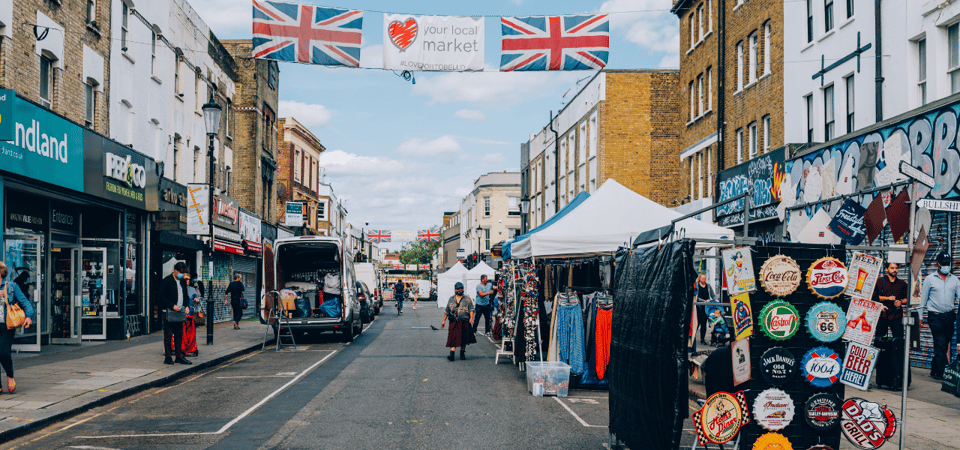
- Portobello Road + Electric Cinema for that classic Notting Hill “streets meets screen” feeling
- Crescent-by-crescent street sightseeing at Elgin Crescent and Lansdowne Crescent arches
- Photo-worthy side lanes including Ormrod Court and St Luke’s Mews
- Multiple languages in the Trippy Tour Guide app, including English, Spanish, German, French, Italian, and Chinese
Getting your bearings on Notting Hill Gate to Pembridge Crescent
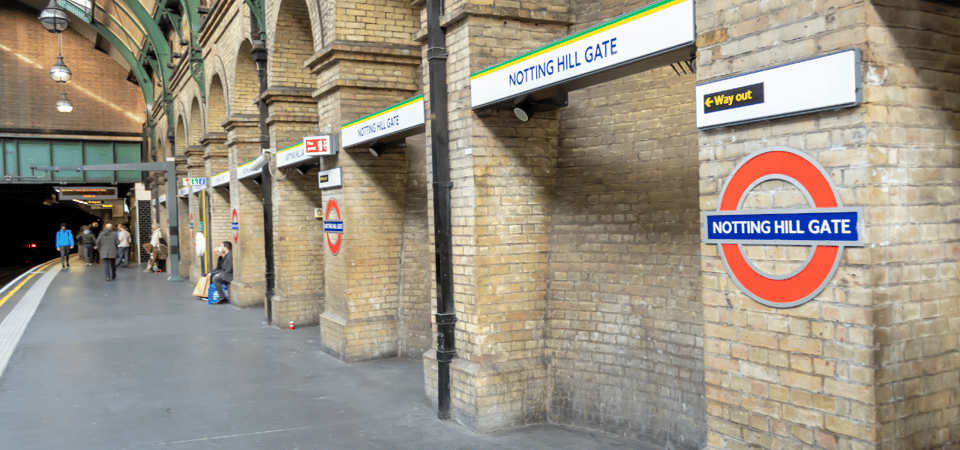
You start at Notting Hill Gate, where the neighborhood already feels like it’s been photographed forever. The tour’s structure makes that first stretch easy. Instead of wandering randomly, you follow app directions and let the narration point out what matters.
Right away, you’ll get a “why people love this area” orientation: the mix of genteel streets, shopfront energy, and those tidy residential facades. The route naturally nudges you to look up and around, not just straight ahead.
Then comes Pembridge Crescent, one of those streets that feels comfortably old-school. You’re there to slow down and take in the housefronts, the angles, and the small street texture that makes Notting Hill feel lived-in, not staged. This is a good spot to grab a first set of photos—just give yourself a minute to frame them without rushing.
You can also read our reviews of more walking tours in London



Simon Close and Denbigh Terrace: where the quiet streets do the talking
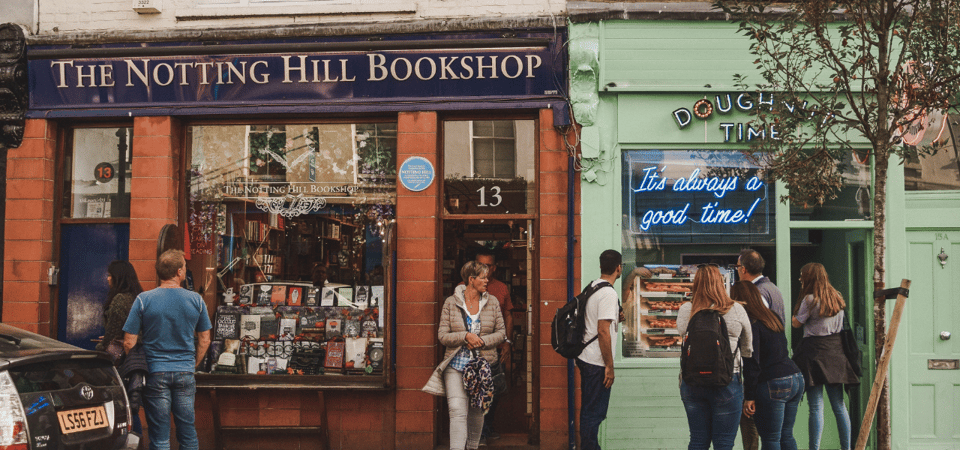
After the main motion, the tour shifts into calmer territory with Simon Close. It’s the kind of place that makes you understand why people get attached to neighborhoods like this. The app doesn’t just tell you where to look—it helps you notice the quiet rhythm of a tucked-away street.
Next is Denbigh Terrace, where the houses look proper and established, and that “I could live here” feeling starts to show. This section is especially useful if you like architecture or simply enjoy walking past beautiful doors and windows.
Practical tip: since this is self-guided, keep your phone accessible but avoid stopping in the middle of foot traffic. Step slightly to the side, start the audio if it’s not already playing, then snap photos.
Elgin Crescent and Lansdowne Crescent: crescents built for photos
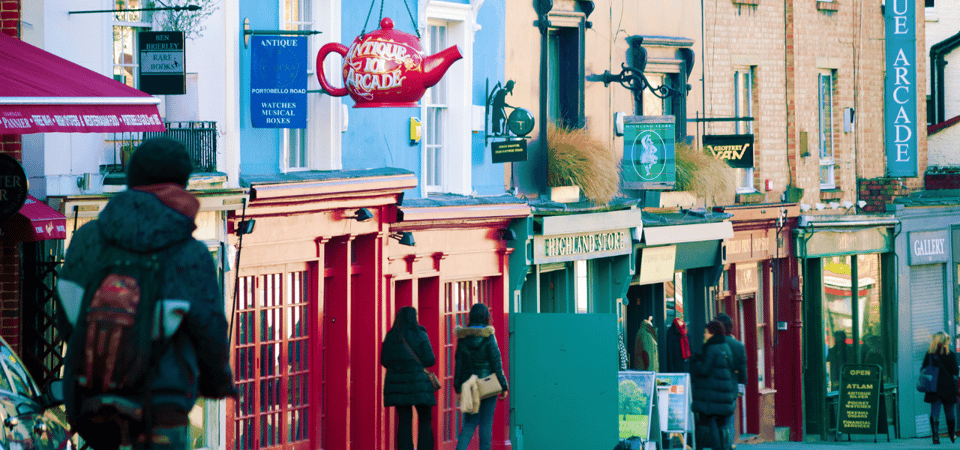
Elgin Crescent is where the tour leans into that colorful, active side of Notting Hill. It’s the part of the walk where you can feel more people around, more street life, and more opportunities for picture-perfect corners.
Then you hit Lansdowne Crescent, known for its big arches. That arch architecture is a gift for photos because it gives you a natural frame. If you like crisp compositions, aim for a spot where you can capture the arch and the line of the street at the same time.
This is one of the easiest segments to enjoy because the route keeps moving while the app narration gives you context. You’re not just looking at pretty buildings—you’re learning what to pay attention to as you go.
Ormrod Court and St Luke’s Mews: movie lore meets colorful houses
The tour’s “pause and pay attention” moment comes at Ormrod Court. The point here is the contrast: you’ve been on prominent streets, and now you’re guided toward quieter pockets. If you like small surprises—especially those tucked off the main flow—this stop is a nice payoff.
Next is St Luke’s Mews, with colorful houses and a reputation in film. This is a great section for anyone who likes connecting scenes from screen to the real geography. You’ll likely find it more fun if you take a minute to compare what you remember with what you see in person.
Also, mews streets often create natural photo angles. Don’t just take one shot. Try a wider view first, then one closer to details like doors, windows, or the color pattern. That makes your photos feel like more than a postcard.
Powis Mews, Electric Cinema, and Portobello Road: the best “Notting Hill is London” stretch

Then the tour turns toward the area’s heartbeat. Powis Mews is described as a place where history comes alive, and that fits the feel of the route: it’s not only about famous points—it’s about how these lanes and passages shape the neighborhood’s personality.
From there, you move into the film-and-streets zone with Electric (the classic cinema stop). Even if you’re not watching a show, the location itself is a real part of the neighborhood story. It’s also a handy point to collect yourself before the more active market area.
Finally, the walk includes Portobello Road, one of London’s best-known market strips. This part matters because it balances the residential charm with street-level energy—people browsing, stopping, and drifting. If you want a sensory break, this is where you get it.
Photo tip: Portobello Road is often busy, so avoid stepping into heavy foot traffic for shots. Use shopfronts and street corners as your frame. You’ll still get great images without blocking anyone.
You can also read our reviews of more guided tours in London






App-powered sightseeing: how Trippy Tour Guide keeps the story on track

This isn’t a guided group walk. The experience is built around the Trippy Tour Guide app, and you navigate on your own while the audio guides you.
Here’s what you’ll be doing:
- You launch the tour at the start location after accessing the instructions emailed to you
- The tour plays automatically as you go along, with over 20 narration points across the route
- You can start, stop, replay, or rewind whenever you need to slow down or catch up
- You’ll hear audio in English, Spanish, German, French, Italian, and Chinese
This setup is ideal if you like independent travel and don’t want to wait for everyone to gather. It also helps if you’re the type who pauses often to read signs, take photos, or just enjoy a street corner.
One caution from the quality-control side: the French audio uses generated voice, and on at least one occasion it can switch how it pronounces words when it detects an English word inside French. If you’re sensitive to audio oddities, consider testing your language choice before you commit to a long stretch.
Pricing and value: why $14 can make sense for this route
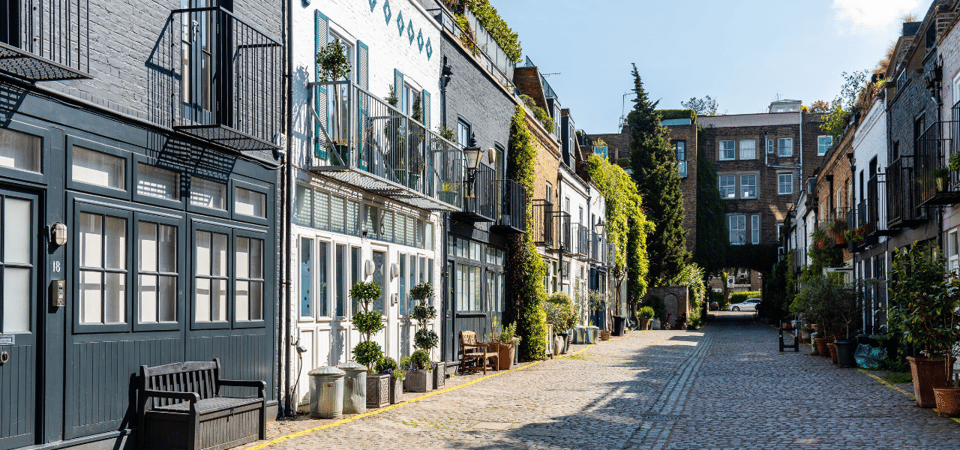
At $14 per person for about 2 hours, the value comes from what you actually get: a structured walk, clear directions, and narration tied to specific locations across Notting Hill.
You’re not paying for a person standing in front of you. You’re paying for:
- The app and audio guide content
- Detailed directions to well-known stops and quieter side streets
- A short, efficient route that fits naturally into a day of sightseeing
This is a good deal for travelers who don’t want a full-day tour, but still want more than a random stroll. If you’re already planning to spend time in the Portobello Road area and want a framework to explore the residential side properly, this tour can save you time figuring it out on your own.
Timing, stamina, and the real-world pace of the 2-hour route
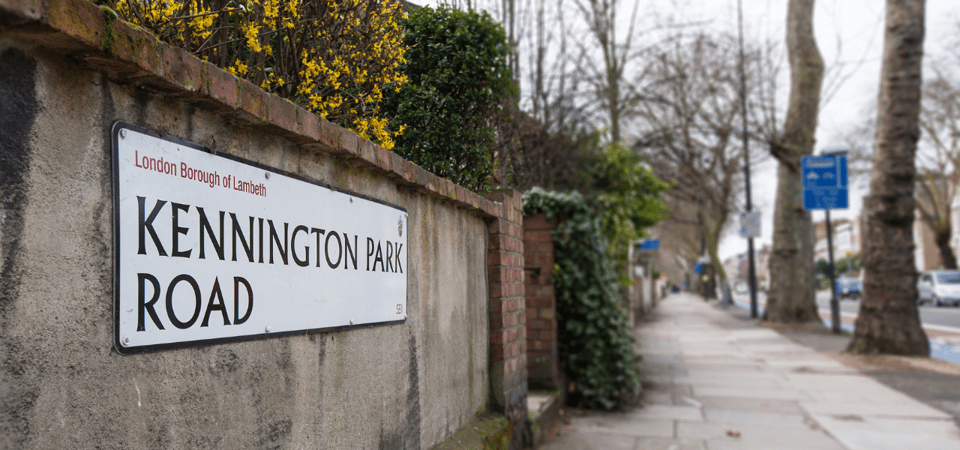
The tour is designed for a 2-hour walk, which is a key detail for planning your day. Notting Hill can be deceptively slow: pretty streets make you stop more often than you expect.
If you want the full experience—photos, a quick look around the market area, and time to enjoy crescent streets—you’ll probably find you’re using most of those two hours. If you’re fast-moving and careful with stops, you can likely wrap up in time to grab a nearby coffee afterward.
No matter what, keep in mind that the route includes both residential streets and busier zones like Portobello Road. That means you’ll feel more movement and more people around the market stretch, while earlier sections feel calmer.
What to bring so your walk doesn’t get derailed
This is one of those tours where small prep makes a big difference. Bring:
- Headphones so you can hear the audio clearly in crowds
- A charged smartphone (and ideally a power bank if you use your phone for photos)
- The downloaded app ready before you start
- Water, especially if you’re walking during warmer months
Also, follow the setup advice: install and download the tour using Wi‑Fi, then launch it when you arrive. If you arrive without that groundwork done, your start can slow down.
Who this Notting Hill app tour is best for
I’d point this toward people who:
- Like self-guided travel and prefer choosing their own pace
- Want both the famous movie vibes and the neighborhood streets around them
- Enjoy a simple structure without paying for a live guide
- Are comfortable navigating on foot and reading phone directions
It’s also a solid fit for solo travelers because the route is linear and you’re not waiting for anyone else. Couples will enjoy it too since you can take turns with photos and keep the narration synced to your walk.
If you strongly prefer a human guide to answer questions on the spot, you might feel limited by an app-only format. But if you’re happy with audio and directions, this is a smart way to experience Notting Hill efficiently.
Wrapping up at Westbourne Park Station: your final Notting Hill memory
You end at Westbourne Park Station, which is a practical finish. It gives you an easy exit from the walking loop and helps you avoid the “where do I go now?” scramble that can happen after a neighborhood stroll.
By the time you reach the station, you’ll have seen the main arc: residential streets (Pembridge Crescent, Simon Close, Denbigh Terrace), crescents (Elgin and Lansdowne), quieter pockets (Ormrod Court, Powis Mews), movie-associated streets (St Luke’s Mews), and then the screen-and-market stops (Electric and Portobello Road). That blend is the point. It’s the feeling of Notting Hill as both a neighborhood and a destination.
Should you book this London Notting Hill self-guided app tour?
Yes, if you want a low-cost, well-paced way to experience Notting Hill with built-in context. $14 for a 2-hour route with app audio, clear directions, and movie-related photo targets is a value-focused plan—especially if you’re already headed toward Portobello Road or the cinema area.
Book it if you’re comfortable handling a phone-led tour and you can do the quick Wi‑Fi download step. Skip it (or at least consider a different style of tour) if you hate dealing with apps during your vacation, or if you’re very picky about audio quality. With the right setup, this one is a fun way to turn a familiar neighborhood name into a real walk you can actually remember.
FAQ
How long is the Notting Hill walking tour with the app?
The tour lasts about 2 hours.
Where do I start the tour?
You start at Notting Hill Gate and follow the app’s directions through the route.
Do I need to bring anything?
Yes. You should bring headphones, a charged smartphone, and plan to download the app/tour using Wi‑Fi. Water is also recommended.
Is there an in-person guide?
No. This is a self-guided tour using the Trippy Tour Guide app.
What languages are available for the audio guide?
Audio is available in English, Spanish, German, French, Italian, and Chinese.
Can I cancel for a refund?
Yes. You can cancel up to 24 hours in advance for a full refund.
What if I want to change the audio while walking?
You can start, stop, replay, or rewind the audio as you like.