REVIEW · MUSEUMS
London: Household Cavalry Museum Entry Ticket
Book on GetYourGuide →Operated by Household Cavalry Museum · Bookable on GetYourGuide
Horse Guards in Whitehall isn’t just a building with uniforms on display. It’s a working Household Cavalry museum where you can watch history in motion, right inside the original 18th-century stables.
What I liked most: the real access to troopers and horses through the glazed viewing area, and the way the museum uses first-hand accounts and interactive displays to explain what training is actually like.
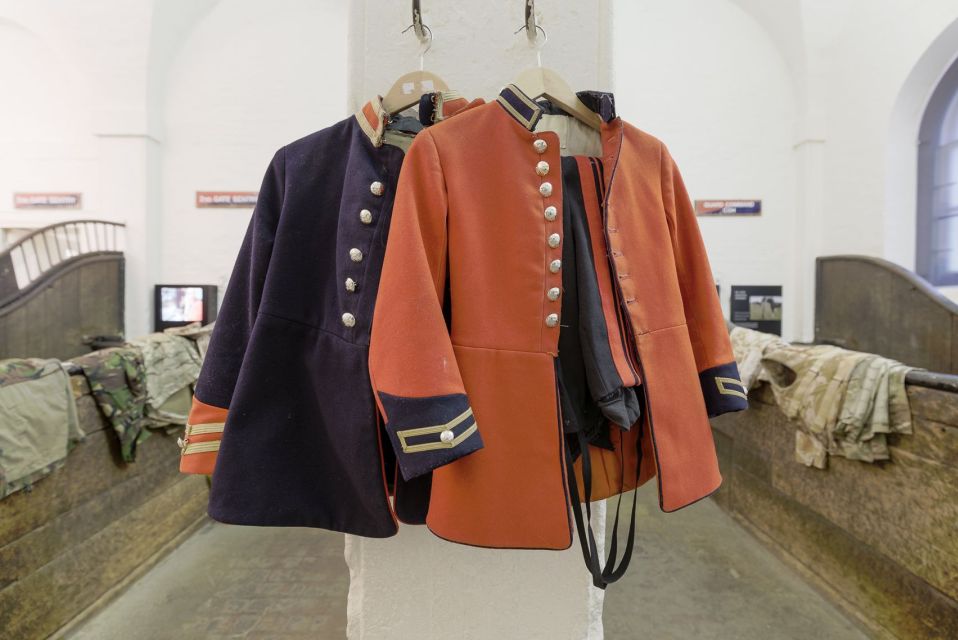
Second, the collection itself feels unusually specific and focused. You’re not bouncing through random military props—you’re getting artifacts tied to the Household Division and the two senior regiments, the Life Guards and the Blues and Royals.
One drawback to plan for: the museum is small, so if you’re expecting a huge gallery circuit, you may finish faster than you hoped.
In This Review
- Key things you’ll notice right away
- Household Cavalry Museum at Horse Guards: what you’re really seeing
- The glazed view into the 18th-century stables
- Troopers’ training stories and interactive displays that add real context
- Rare objects and the story of the Household Division
- Price and time: is $14 good value?
- What to expect from logistics (and how to avoid surprises)
- Who should book this, and who might want a different stop
- Should you book the Household Cavalry Museum ticket?
- FAQ
- How long should I plan for the Household Cavalry Museum?
- How much does the ticket cost?
- Where do I meet for entry?
- Is there a specific time slot I must choose?
- Is a tour guide included?
- Is the museum wheelchair accessible?
- Are pets allowed?
- Can I cancel for a refund?
- Is there an audioguide?
Key things you’ll notice right away
- Troopers and horses behind glass: Get a close look at daily life in the stables area.
- 18th-century stables at the center of it all: The viewing setup is part of the story, not an afterthought.
- Personal accounts + training details: You’ll hear what preparation looks like for the troopers.
- Interactive displays tied to the building: The museum turns the Horse Guards setting into part of the exhibit.
- Rare objects on public display: Some items are said to be shown for the first time to visitors.
- A headquarters that’s still used: The site remains connected to the Household Division.
Household Cavalry Museum at Horse Guards: what you’re really seeing
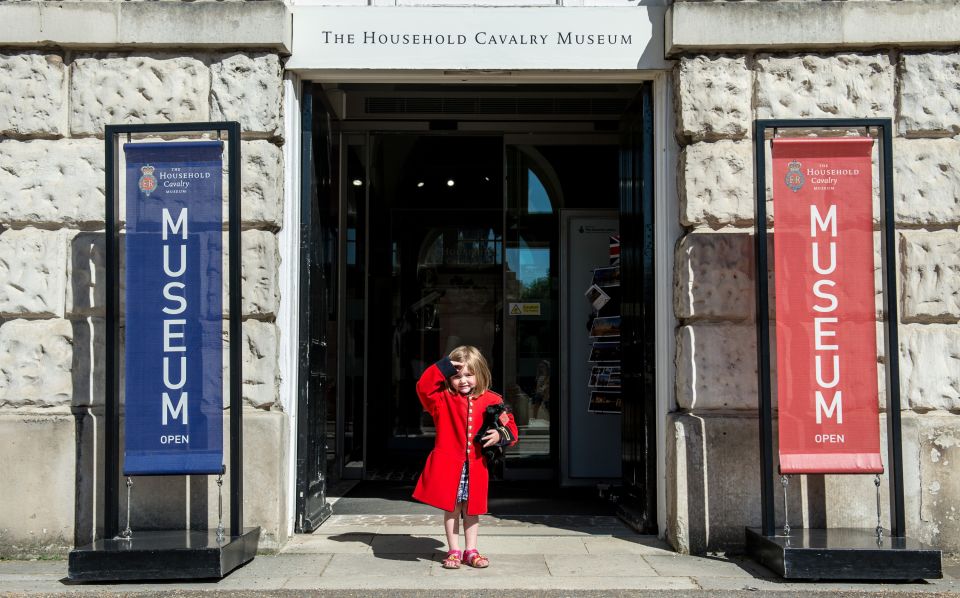
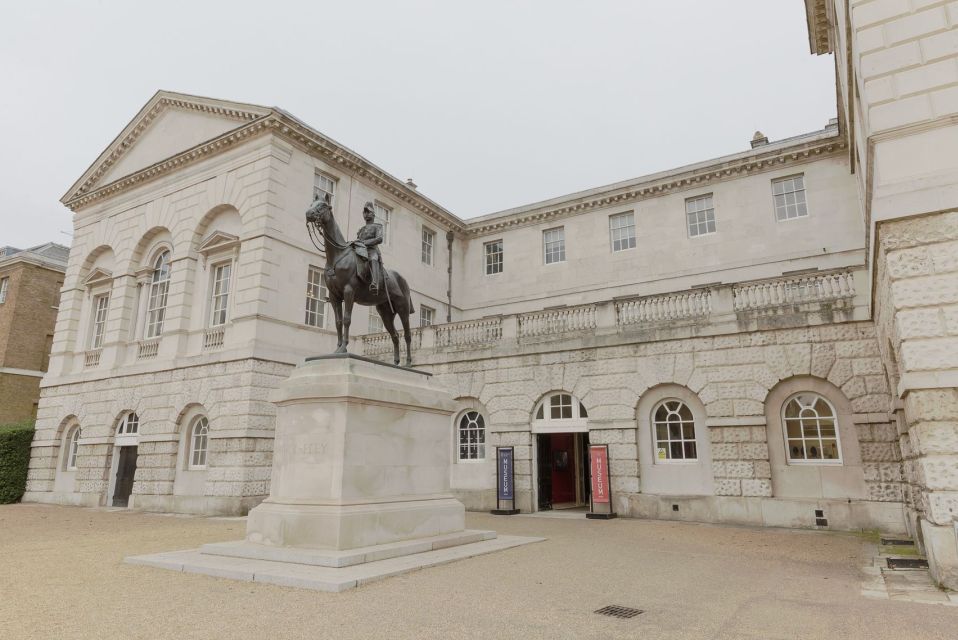
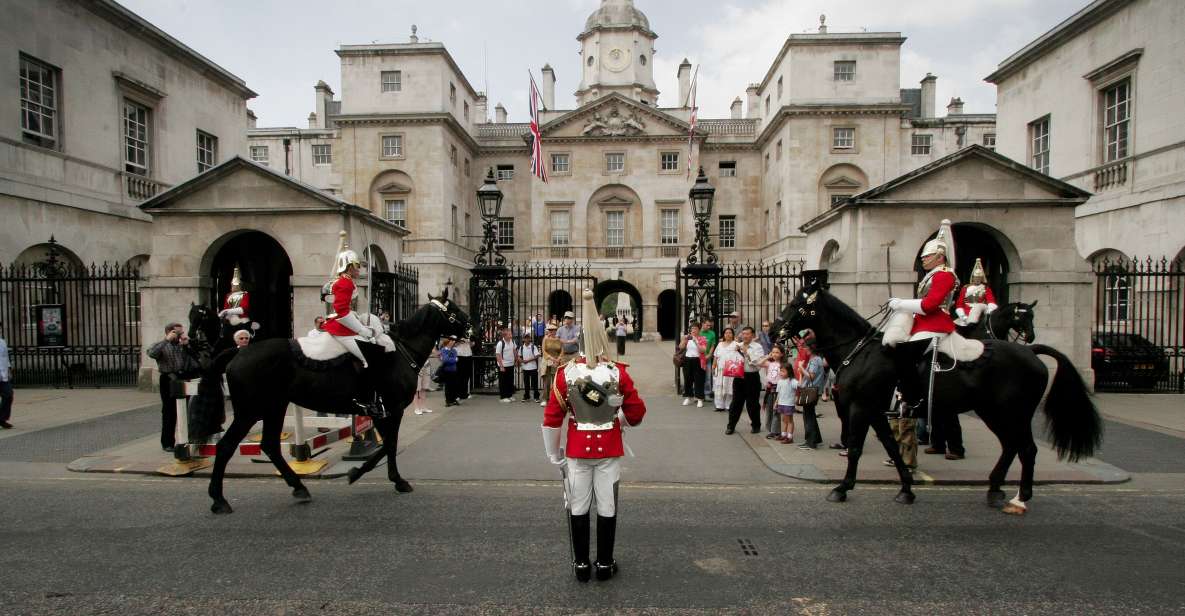
You’ll find the Household Cavalry Museum where it matters most: inside Horse Guards in Whitehall, in central London. The whole experience is built around the idea that this isn’t a “past only” museum. It’s a living setup—part heritage site, part working presence—so the atmosphere feels different from a typical indoor exhibit.
The building dates from 1750, and it still functions as the headquarters of the Household Division. That one detail changes how you read everything you see. You’re not just looking at artifacts; you’re looking at what supports a tradition that has been going for centuries.
Also, the museum’s focus is clear. You’re learning about the Household Cavalry and the House Guards, and how they connect to the broader British Army structure. If you want your military history grounded in one place, this is a strong match.
You can also read our reviews of more tours and experiences in London



The glazed view into the 18th-century stables
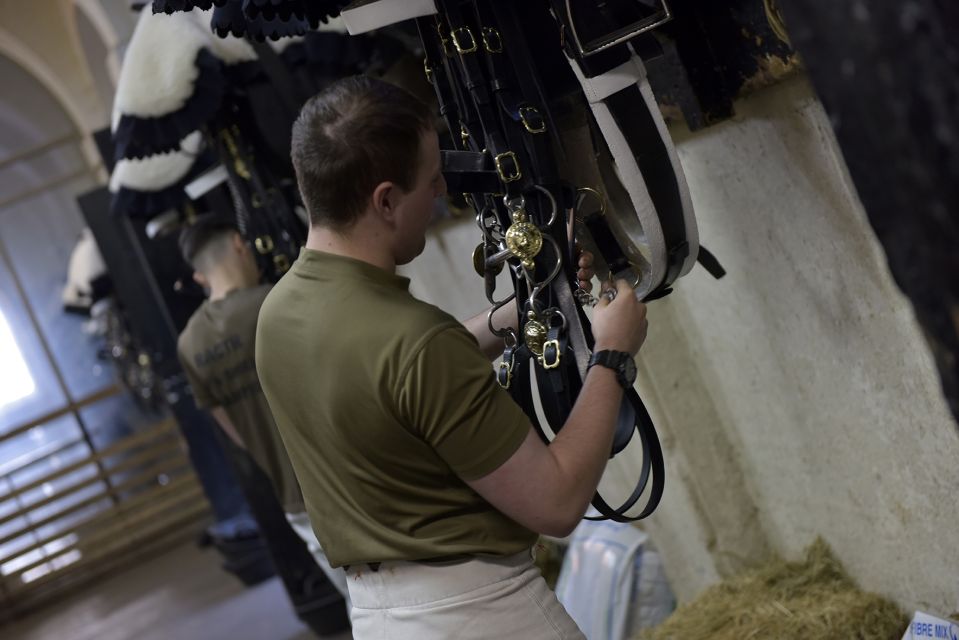
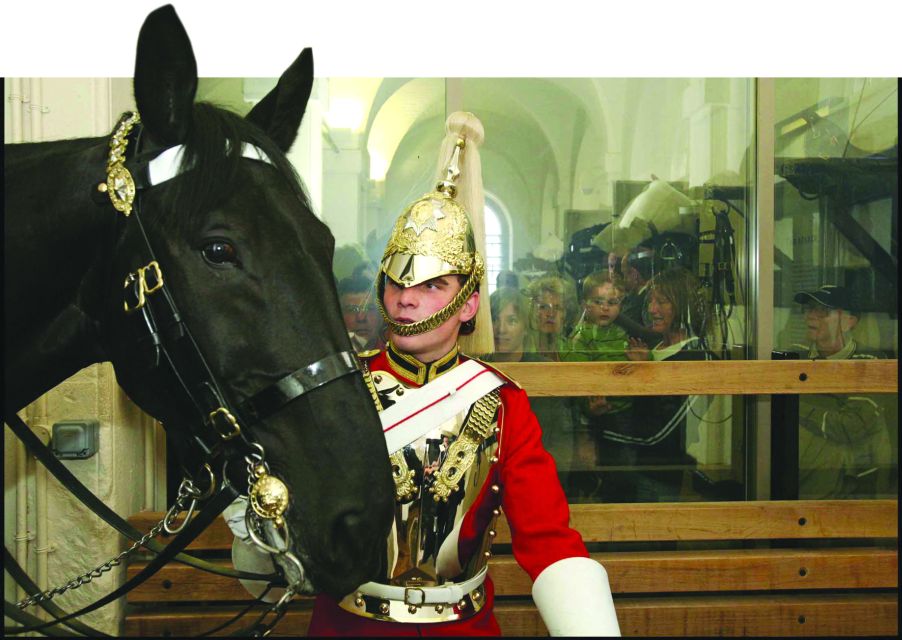
The headline moment is the stables viewing area. You’ll peer into the 18th-century stables and get a glimpse of the working troopers and horses. The key setup is a large glazed partition, so you can observe from within the museum experience without wandering into restricted areas.
Why this matters for you: it’s not only “look at a horse.” It’s a look at the working routine and the environment that shapes the troopers’ day. Even if you’re not a horse person, the stables give you context you can’t get from a flat display case.
There’s a practical rhythm to it, too. You don’t have to race. You can spend a chunk of time right there, then come back later if you want a second look once you’ve absorbed the other exhibits. The stables area works like a visual anchor for the rest of the museum.
Troopers’ training stories and interactive displays that add real context
Inside the museum, the exhibits lean heavily on human stories. Expect first-hand accounts connected to the troopers, plus details about the training they undergo. That personal angle is one of the most praised parts of the experience, because it turns uniforms and ranks into something you can understand.
You’ll also see interactive displays that help tie the building’s long life to the Household Cavalry mission. The museum doesn’t treat the Horse Guards structure like a backdrop. It treats the site like part of the narrative—what the building meant, how it functions, and why it matters that it has stayed in use.
One note if you care about audio support: one booking specifically pointed out there’s no audioguide and that the visit is in English. So if you rely on audio interpretation, plan on reading signage and taking in what’s available on-site.
Rare objects and the story of the Household Division
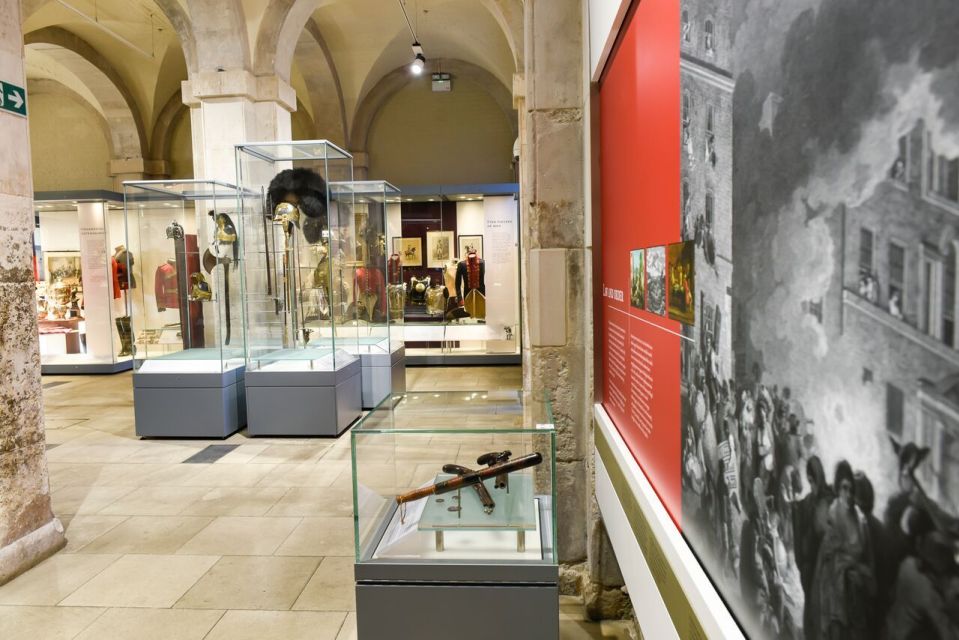
The museum does something smart with its display strategy: it highlights rare objects and emphasizes that many are on public display for the first time. That’s a big reason this place can feel fresh even if you’ve already seen other London military sites.
You’ll also learn how the Household Cavalry fits into a wider structure. The museum focuses on the two senior regiments of the British Army—Life Guards and Blues and Royals—and it connects them to the Household Division.
Then there’s the longer-running tradition tied to the site. The Horse Guards location has served as the Queen’s Life Guard for over 350 years. You don’t need to be a monarchy superfan to appreciate what that implies. It’s a long continuity of role, training culture, and public ceremonial duty—and the museum uses that continuity to make the history feel coherent.
Price and time: is $14 good value?
At about $14 per person, this is priced like a focused museum ticket rather than a full-day attraction. That can be a good thing, if your expectation is a tight, high-impact visit.
The museum encourages you to plan for at least 60 minutes. In real terms, that’s enough time to:
- watch the stables viewing area
- take in the core exhibit rooms
- read the training and trooper-focused storytelling
If you go in thinking you’ll spend two hours roaming endlessly, you might feel slightly compressed. And since there have been complaints that it’s too small or doesn’t fully match someone’s idea of a “stable experience,” it’s worth calibrating your expectations up front.
My advice: treat it like a museum stop with a strong “main scene” (the stables) plus a narrative layer (troopers’ training and Household Division context). If that matches your interests, the price feels fair. If you want a large-scale museum circuit, you may want to pair it with another nearby activity.
You can also read our reviews of more museum experiences in London




What to expect from logistics (and how to avoid surprises)
Meet directly at the Household Cavalry Museum at Horse Guards in Whitehall. The experience is designed as a self-contained visit rather than a tour with a guide. The ticket includes museum entry, and a tour guide isn’t included, so the exhibit text and interactive elements are doing the work.
One useful planning detail from a booking: there’s no specific time slot required for visiting. The reservation allows free entry during the day you choose. That’s great if your London day has shifting plans. You can also keep an eye on starting times when you reserve, but you’re not locked into a narrow appointment window.
For your visit length, aim for that 60-minute minimum. If you’re traveling with kids or you like lingering over visuals, plan closer to 75 minutes. People also report it’s a decent option for families, especially if your kids are curious about horses and uniforms.
Practical boundaries are simple:
- No pets are allowed (assistance dogs are allowed).
- The museum is wheelchair accessible.
Who should book this, and who might want a different stop
Book it if you’re interested in British military tradition, ceremonial units, or horses as working partners. You’ll likely appreciate the emphasis on training and personal accounts, plus the rare-object displays tied to the Household Division.
It also works well for families who can handle a focused museum setting. The stables viewing area gives kids something concrete to look at, and the rest of the museum is readable and story-driven rather than purely technical.
Skip it—or pair it with something else—if you want a big, full-day museum experience. Some people have felt the museum is too small or that it didn’t connect as deeply as they expected with the stable side of things. If your ideal day is broad and gallery-heavy, you may find you want more after an hour.
Should you book the Household Cavalry Museum ticket?
Yes, if you want a short London stop that’s anchored to a real place of ongoing duty. The combination of working troopers and horses viewing, the 18th-century stables, and the training-focused storytelling is exactly the kind of “one-location experience” that makes sense for a day in Whitehall.
I’d book it especially if:
- you like horses and want a structured way to see how troopers work
- you prefer museums with a clear theme and a set main viewpoint
- you’re happy with a self-guided visit (no tour guide) and a visit that’s about an hour long
I’d think twice if:
- you’re expecting a large museum complex
- you strongly want audio-guided narration
- you need a lot of time to feel satisfied with museum content
If you’re in the area of Whitehall anyway, this is one of the more direct ways to connect the Household Division story to the physical reality of the stables and the training culture behind the uniforms.
FAQ
How long should I plan for the Household Cavalry Museum?
Plan for at least 60 minutes for your visit.
How much does the ticket cost?
The ticket is listed at $14 per person.
Where do I meet for entry?
Meet directly at the Household Cavalry Museum.
Is there a specific time slot I must choose?
One booking notes there is no specific time slot and that the reservation provides access freely during the day you wish to visit.
Is a tour guide included?
No. A tour guide is not included.
Is the museum wheelchair accessible?
Yes, it is wheelchair accessible.
Are pets allowed?
Pets are not allowed, but assistance dogs are allowed.
Can I cancel for a refund?
Yes. Free cancellation is available up to 24 hours in advance for a full refund.
Is there an audioguide?
An audioguide is not indicated in the provided details, and one booking explicitly notes there is no audioguide. Plan on using the on-site exhibits and English signage.