REVIEW · WALKING TOURS
London: Guided Agatha Christie Walking Tour
Book on GetYourGuide →Operated by Brit Icon Tours · Bookable on GetYourGuide
Crime fiction starts on real London corners. This 2-hour walk on Agatha Christie’s London trail is interesting because it links street corners, institutions, and people to the plots you already know. I especially love the way you hit 10+ Christie-linked locations without feeling rushed, and I really like getting context from guides like Rory and Jonathan, who can talk story, setting, and stage with confidence. One possible drawback: this tour is not recommended for limited mobility and isn’t for wheelchair users.
You’ll roam through Mayfair, Chinatown, Theatreland, and Bloomsbury, while your guide stitches it all together with what Christie noticed around her—down to her work in a hospital dispensary and her marriage to Max Mallowen. You also get the practical stuff: a small group capped at 10, plus a clearly defined meeting point right by Euston Square.
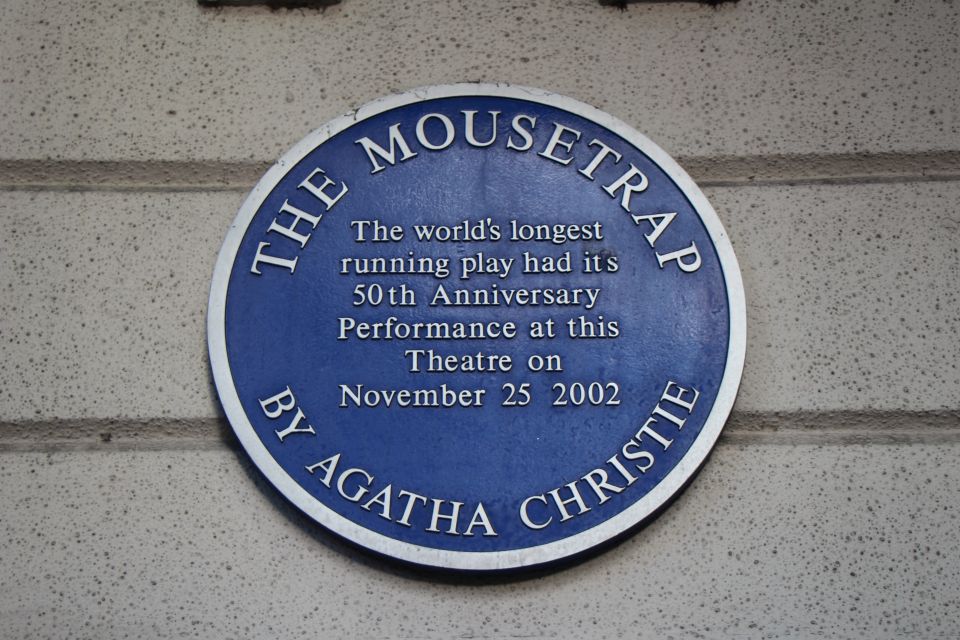
If you want a focused London intro with a literary brain turned on, this is a good bet. You’ll end with a stop outside The Mousetrap, the longest-running play in the world, and you’ll learn why it has a surprisingly royal origin.
In This Review
- Key highlights worth planning for
- Walking the Streets That Powered Christie’s Crime Writing
- Starting at Euston Square: Where You’ll Meet and How to Find It
- Mayfair, Chinatown, Theatreland, and Bloomsbury: Christie’s London in Real Locations
- Garrick Club, British Museum, and the University of London Stops
- Christie’s Life Details: Hospital Work, Max Mallowen, and the Authors She Followed
- The Mousetrap and St. Martin’s Theatre: When London Stage Becomes Plot
- Price and Value for a 2-Hour Guided Walk
- Who This Tour Fits Best (and Who Should Skip It)
- What Makes the Guides Matter: Rory and Jonathan’s Storytelling
- Should You Book This Agatha Christie Walking Tour?
- FAQ
- How long is the London Agatha Christie walking tour?
- What’s the price per person?
- Where do we meet for the tour?
- How big is the group?
- What areas and sights will we see?
- What language is the guide?
- What should I bring?
- Is the tour wheelchair accessible?
Key highlights worth planning for
- 10+ locations tied to Christie’s life and works in only 2 hours
- Small group size (10 max) for smoother questions and conversation
- West End and classic institutions like the Garrick Club, British Museum, and University of London
- Theatre stops including time near The Mousetrap and St. Martin’s Theatre
- Storytelling with real performance experience, since guides may include Jonathan (who has performed in multiple adaptations)
Walking the Streets That Powered Christie’s Crime Writing
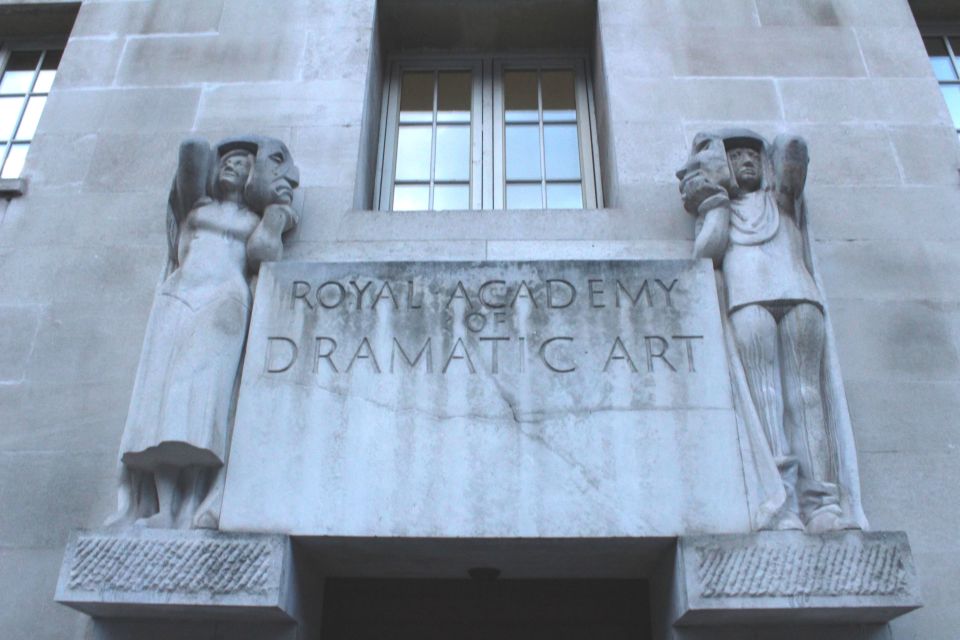
London can feel like one long list of famous places. This tour helps you read that list like a mystery. The core idea is simple: Agatha Christie didn’t just invent settings—she absorbed London’s institutions, public spaces, and human routines, then turned that material into stories.
What I like is the blend. You’re not only seeing places Christie is famous for visiting. You’re also seeing spots that influenced her life and writing, and that’s where the walking tour format works best. When you stand on the street outside a major institution or near a theatre, the background stops being abstract.
You’ll hear how Christie’s world intersected with major London landmarks and with the people she admired. The tour ties it to literary influences like Sir Arthur Conan Doyle, which is a nice reminder that crime writing has a genealogy, not just a lone genius.
The pace also matters. Two hours is long enough to feel you’ve actually gone somewhere, and short enough that you’re not trapped in a slog when the weather turns. You’ll be walking at street pace, not sprinting, with your guide doing the heavy lifting in terms of connections and explanations.
You can also read our reviews of more walking tours in London



Starting at Euston Square: Where You’ll Meet and How to Find It
This is the kind of tour that rewards showing up on time. Your meeting point is outside the exit of Euston Square Underground Station on Gower Street. It serves the Metropolitan and Circle lines.
Important detail: don’t mix it up with Euston Mainline Station. They’re not far apart, but if you walk to the wrong one, you can easily waste your first 15 minutes.
My practical tip: arrive a few minutes early and take a quick look at street level. Station signage can be clear, but London stations all love to hide their exits in small variations. If you’re coming from another line, give yourself a cushion so you’re not stressed when the group gathers.
Bring weather-appropriate clothing. This is a walking tour, so you’ll feel wind, drizzle, and sun the way London does it—without negotiating.
Mayfair, Chinatown, Theatreland, and Bloomsbury: Christie’s London in Real Locations
This tour threads through several neighborhoods that map nicely onto how Christie’s characters move. Mayfair often suggests money, manners, and the kind of social friction that makes secrets feel plausible. Chinatown brings a different flavor of city life—busy, crowded, and full of the modern London energy Christie could observe directly.
Then you hit Theatreland and Bloomsbury, and the story angle gets more fun. Theatreland is where drama, performance, and public attention live side by side. Bloomsbury is where intellectual London has long walked—writers, readers, and institutions that shape ideas.
You’ll also learn that the places Christie used weren’t random. They were linked to how she saw the city working: where people gathered, how institutions operated, and how daily life could shift into something tense or suspicious.
What makes this section genuinely useful is that it changes how you’ll look at London after the tour. You start seeing connections in plain sight—like how a building’s role in public life can mirror a plot’s function. That’s the difference between a sightseeing walk and a story walk.
Garrick Club, British Museum, and the University of London Stops
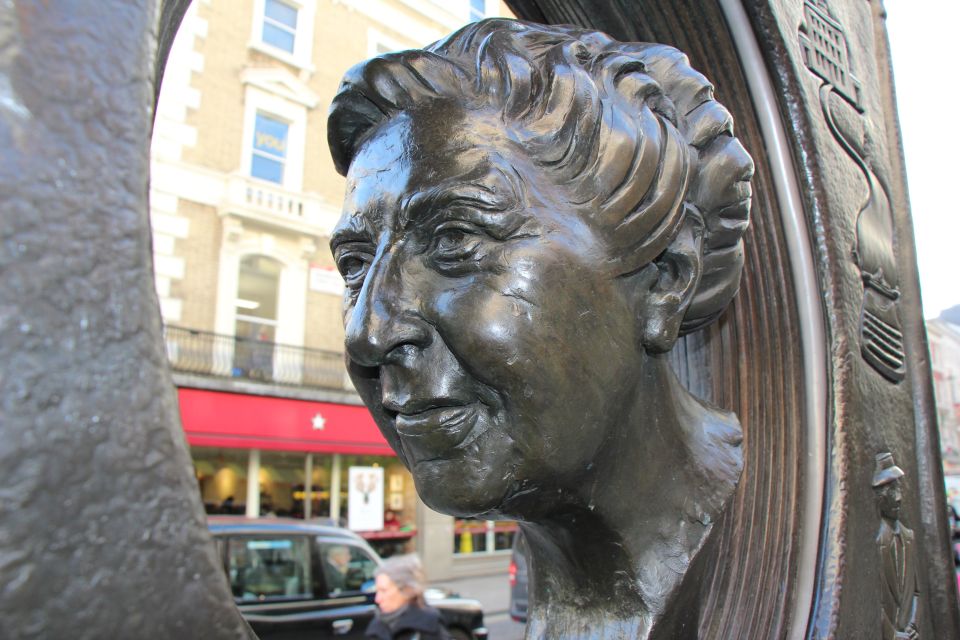
One of the strongest parts of the experience is the way it treats major institutions as story engines, not just photo backdrops. You’ll see locations tied to the Garrick Club, the British Museum, and the University of London.
Even if you’re not going inside every stop, standing close to these places gives you something you can’t get from a map. You feel the scale of the institution and the way it sits in the city. That matters because Christie’s writing often hinges on systems—social rules, institutional habits, and the way people behave when they think they’re safe.
Here’s what you can carry with you as context:
- Clubs and formal institutions help explain the social atmospheres in many crime stories, where reputation and access can be as important as money.
- A museum-world setting connects to how Christie paid attention to detail and human artifacts—objects and clues that can become part of the narrative.
- University links reinforce the idea that London is also an ideas machine. Writers and thinkers aren’t isolated; they’re part of the same city rhythm.
Your guide uses these stops to connect Christie’s observations to her writing. That’s why the tour works even if you’re not a trivia collector. You’ll learn how setting becomes plot logic.
Christie’s Life Details: Hospital Work, Max Mallowen, and the Authors She Followed
This isn’t just a list of streets with plaques. You’ll also get biography moments that explain why Christie wrote the way she did.
You’ll hear about her work in a hospital dispensary. You’ll hear it in a way that points to observation—what she saw, how people reacted under pressure, and how everyday life can turn into something dramatic when illness and stress enter the room. Even if the tour doesn’t spell everything out with lab-grade detail, it frames hospital work as real world experience, not just backstory.
You’ll also cover her marriage to Max Mallowen. That’s the kind of personal detail that helps you understand why Christie’s characters often carry emotional intensity and social complexity. Whether you know her life already or not, the tour makes those elements feel connected to her writing habits, not like a disconnected biography paragraph.
Finally, you’ll touch on writers she admired, including Sir Arthur Conan Doyle. That matters for anyone who likes the detective tradition. It’s a reminder that Christie wasn’t writing in a vacuum—she was part of a larger conversation about crime, reasoning, and storytelling.
If you care about clues and logic, this section makes the author feel more legible. You start to see how a person’s world shapes their imagination, not just their vocabulary.
You can also read our reviews of more guided tours in London






The Mousetrap and St. Martin’s Theatre: When London Stage Becomes Plot
No Agatha Christie London walk feels complete without ending near The Mousetrap. You’ll make a stop outside the theatre connected to this famous production—described here as the longest-running play in the world.
What I like is that you don’t just get a famous-title moment. You also learn that the iconic murder mystery behind The Mousetrap has a surprisingly royal origin. That twist is exactly the kind of fact that makes a walking tour worth the money. It gives you something you can’t easily guess from the popularity alone.
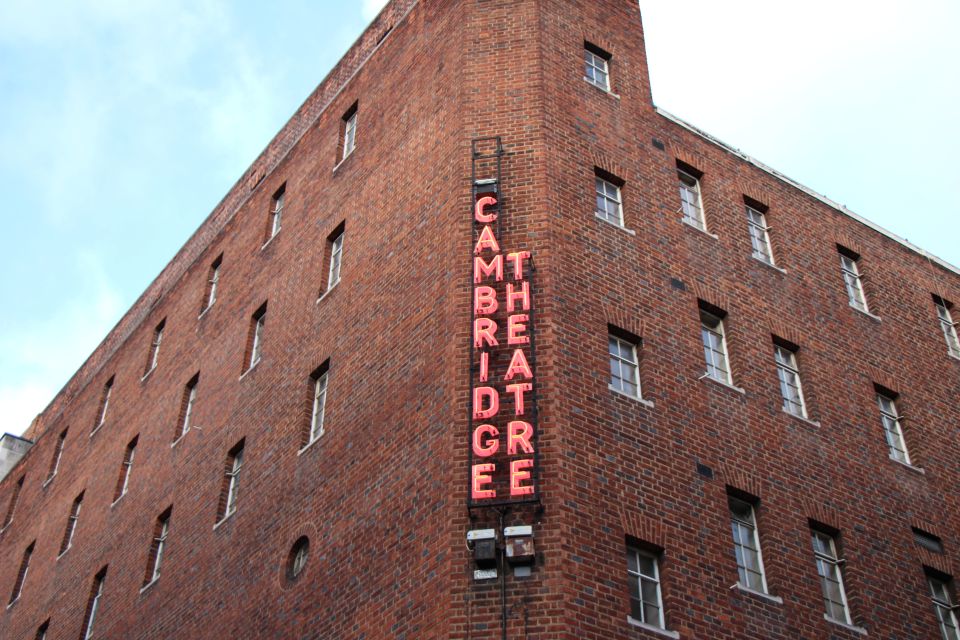
You’ll also learn about St. Martin’s Theatre and which members of the British acting elite have tread the boards there during their careers. No need to know names in advance; the point is that the stage has had serious talent passing through it, and that theatrical culture sits close to Christie’s world.
From a practical standpoint, theatre stops also change the vibe of the walk. You go from institutional and neighborhood storytelling into performance and spectacle. That shift mirrors what Christie often did on the page: turning social scenes into high-stakes rooms where everyone suddenly becomes relevant.
If you’re a fan of the classics—whether it’s mysteries, adaptations, or the idea of clue-driven storytelling—this is usually the part where the tour clicks into full enjoyment.
Price and Value for a 2-Hour Guided Walk
At $22 per person, you’re paying for a guided story built around London streets, institutions, and theatre. Two hours doesn’t sound long, but it’s a smart length for a walking format. You’re not paying for half a day of logistics; you’re paying for the guide’s ability to connect locations to meaning fast.
Value comes from three places:
- You get 10+ sites tied directly to Christie’s life and work, not generic sightseeing.
- The group stays small (max 10), which usually means you can ask follow-up questions without the guide talking to an auditorium.
- The guide can add angles you might not find on your own, including facts described as not available on other tours.
In short, the price works best if you want context. If you just want photos and streets, you could wander independently for less. But if you want the story connections—what inspired Christie and how London shaped her writing—$22 for an expert-led, tightly packed two hours is fair.
Who This Tour Fits Best (and Who Should Skip It)
This works especially well for:
- Agatha Christie fans and anyone who enjoys Poirot-style puzzle thinking
- Theatre lovers, especially if you like the intersection of stage and classic mystery
- People new to London who want a focused walk in meaningful areas like Bloomsbury and Theatreland
- Readers who want setting explained, not just named
It’s also a good choice for couples or small groups, since the maximum of 10 keeps things social without becoming chaos.
The main “skip it” note is mobility. This tour is not recommended for people with limited mobility and is not suitable for wheelchair users. Since it’s a walking route through several neighborhoods and likely includes changes in sidewalk conditions, don’t plan on it being easy to adapt.
Also note the obvious but worth repeating: wear weather-appropriate clothing. You’re outside for the duration.
What Makes the Guides Matter: Rory and Jonathan’s Storytelling
A walking tour lives or dies by the guide. Here, you’re in good hands with guides like Rory and Jonathan, who have been called out for making the experience feel like a highlight of a London weekend.
Rory is noted as an excellent guide, and the overall feel is that the tour stays organized while still leaving room for real explanation. That balance matters: you want enough structure to follow the narrative, but not so much scripting that you feel like you’re just collecting facts.
Jonathan brings another layer. He has performed in multiple adaptations of Christie stories, which means he can talk about her work from both sides—page and performance. If you like seeing how a novel becomes a stage moment (or how an iconic mystery lands differently through acting), that background can make the theatre stops more vivid.
Even with different guides, the goal stays the same: you’re meant to leave understanding how Christie’s London shaped the stories people still love.
Should You Book This Agatha Christie Walking Tour?
Book it if you want a fast, story-focused London walk with real named locations, theatre connections, and a guide who can explain how Christie’s observations became crime writing.
Skip it if you need wheelchair-friendly or step-free access, or if you prefer unguided sightseeing where you control the pace completely. Two hours is tight; it’s not designed for slow strolling.
If your idea of a perfect London day involves neighborhoods like Bloomsbury and Theatreland plus the thrill of tracing inspiration in real place, this tour is a solid choice—and at $22, it’s a practical way to get more meaning per hour than most standard city tours.
FAQ
How long is the London Agatha Christie walking tour?
The tour runs for 2 hours.
What’s the price per person?
It’s $22 per person.
Where do we meet for the tour?
Meet outside the exit of Euston Square Underground Station (Metropolitan and Circle Lines) on Gower Street. Make sure you don’t confuse it with Euston Mainline Station.
How big is the group?
The group is limited to 10 participants.
What areas and sights will we see?
You’ll explore areas including Mayfair, Chinatown, Theatreland, and Bloomsbury, plus major places such as the Garrick Club, the British Museum, and the University of London. You’ll also stop outside The Mousetrap and learn about St. Martin’s Theatre.
What language is the guide?
The live tour guide speaks English.
What should I bring?
Bring weather-appropriate clothing since it is a walking tour.
Is the tour wheelchair accessible?
No. It’s not recommended for people with limited mobility, and it’s not suitable for wheelchair users.