REVIEW · EVENING EXPERIENCES
London : Royal Westminster By Night Walking Tour
Book on GetYourGuide →Operated by The Sights of London Tour · Bookable on GetYourGuide
Westminster looks better after dark. I love the gas-lit streets and the lighter crowd feel of the evening, which makes big sights like Buckingham Palace and Parliament Square actually enjoyable. The one thing to watch is that this is a mostly outside walking tour, so you’ll want good shoes and to be ready for night air and sidewalk time.
You meet your historian guide at 7:30pm at Green Park (by the Goddess Diana fountain, near the tube’s southern step-free exit). I like that guides such as Mike and Mick bring the royals and the power-politics story together, with lots of room for questions—and the practical bonus that they also help with photo moments as you go.
It’s a tight 2-hour loop with short stops (think quick “look, learn, move” segments) from Green Park to Trafalgar Square. If you’re hoping to go inside major attractions, plan on doing that separately, since entrance to buildings isn’t included.
In This Review
- Key points before you go
- Why a Westminster night walk beats daytime crowds
- Green Park meeting point and how the 2-hour route works
- Buckingham Palace and Clarence House under gaslight
- St James’s Palace and St James’s Park: calm views with a wildlife break
- Horse Guards Parade and Westminster Abbey: ceremony and centuries
- Parliament Square and Big Ben: learning the 900+ year story
- Whitehall’s Corridor of Power: Downing Street, the Cenotaph, and Banqueting House
- Trafalgar Square finish under Nelson’s Column
- Photo moments and comfort: what to bring for night walking
- Price and value: what $24 really gets you
- Who this tour fits best (and who should look elsewhere)
- Should you book the Royal Westminster By Night walk?
- FAQ
- FAQ
- Where does the London Royal Westminster By Night tour start?
- What time does the tour begin?
- How long is the tour?
- How much does it cost?
- What’s included in the price?
- Are the main stops mainly outside?
- Is the tour wheelchair accessible?
- What language is the tour guide?
- What should I bring?
- Where does the tour end?
Key points before you go
- Fewer crowds at night: you trade daytime crush for a calmer walk around Westminster’s showpieces
- Expert historian guide: you get context, not just postcard facts
- A “royal to power” route: palaces, parks, Parliament, Downing Street, and war memorials
- Great photo angles after dark: gas lamps and illuminated facades make even quick stops look good
- Comfort-focused tour: bring comfortable shoes; expect a lot of walking on sidewalks
- Wheelchair accessible: the meeting point uses a step-free tube exit, and the tour is listed as wheelchair accessible
Why a Westminster night walk beats daytime crowds
Daytime Westminster is a machine: tour groups, school visits, and people who are just trying to cross the street. This Royal Westminster by Night walking tour is built to avoid that pressure. By starting in the evening, you get a slower rhythm and better sightlines to the buildings themselves—plus the added magic of lamps and evening light.
And it’s not just scenery. The tour is guided by an experienced historian, which matters in an area where the same street corners hold centuries of shifting roles: royalty, government, war, and ceremony. When you know what you’re looking at, the stone stops feeling random.
The best part for me is the practical balance. You get a lot of landmarks in a short time, but you’re not stuck in a long queue or “museum voice” lecture. It’s walking with story, with enough pauses to look up, take pictures, and actually absorb the place.
You can also read our reviews of more walking tours in London

Green Park meeting point and how the 2-hour route works
The tour starts at 7:30pm at the Goddess Diana fountain in Green Park. You’ll find it by the southern (step-free) exit of Green Park Tube Station (postcode W1J 9DZ). It’s a smart meeting spot because Green Park feels like a buffer before the Westminster intensity begins.
From there, the route moves in a logical flow: palaces first, then parks and ceremonial sites, then Parliament and the government corridor, and finally the big symbolic finish at Trafalgar Square. Even though the itinerary hits major names, the stops are short. That’s a feature, not a flaw, because it keeps energy up and helps you fit Westminster into a tight travel schedule.
If you’re someone who likes to get oriented early on, this kind of night route can work like a map you can remember. You’ll connect Buckingham Palace, St James’s, Horse Guards, Westminster Abbey, and Whitehall into one clear mental picture.
Buckingham Palace and Clarence House under gaslight
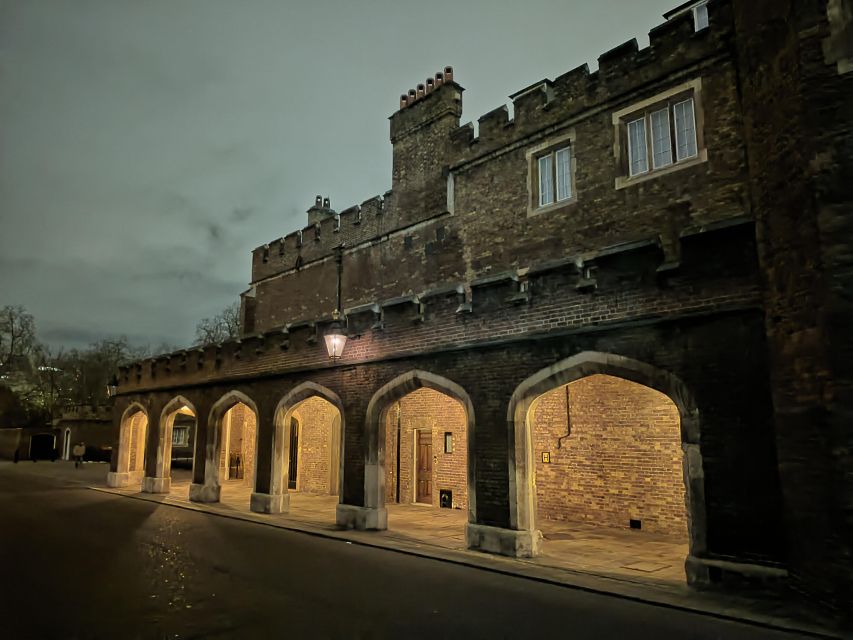
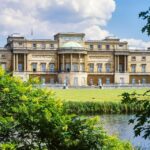
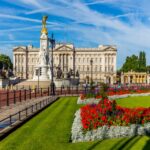
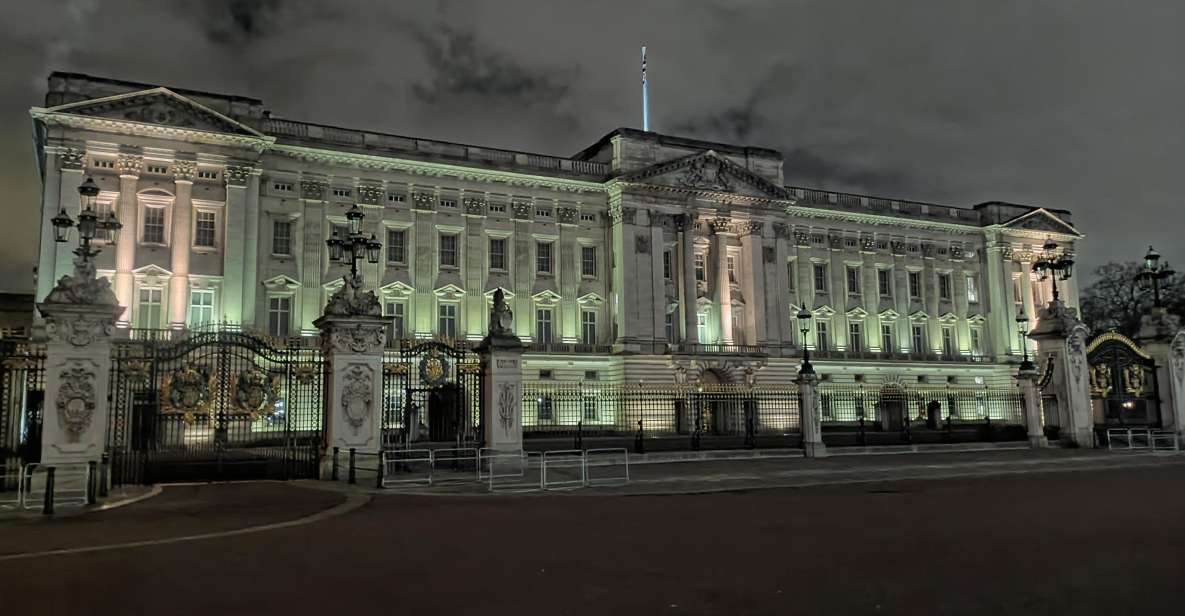
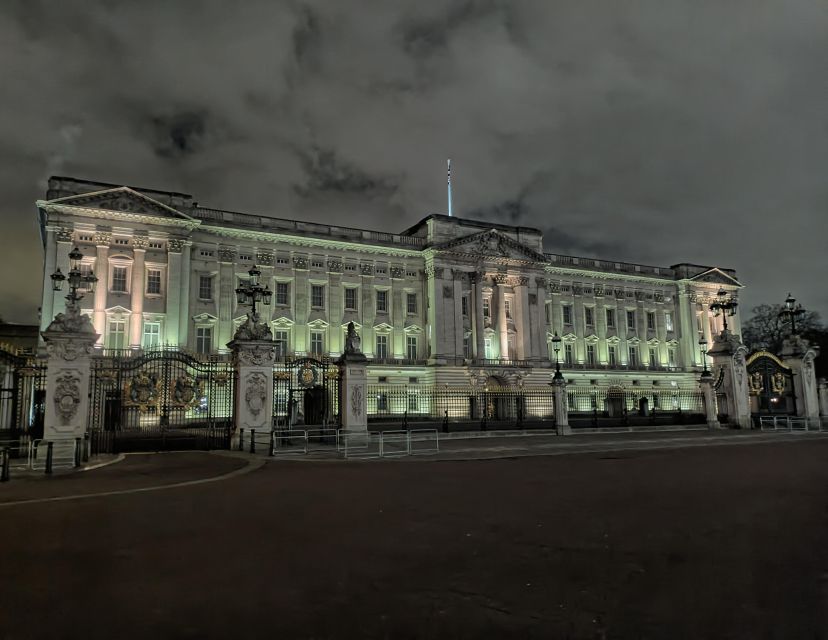
The first “wow” is the royal belt line starting near Buckingham Palace. In daylight, the palace is mostly about scale. At night, it’s about mood—clean lines, illuminated facades, and the softer street glow that makes the area feel more like a royal neighborhood than an attraction hub.
The tour also includes Clarence House, which is useful because it rounds out the royal-street story. You’re not only seeing the famous residence everyone knows. You’re also learning the broader royal presence in the same area—who is where, and how the royal landscape is arranged.
A quick note on expectations: you’ll get guided context and time to look, but not an indoor visit. If you want to tour rooms and interiors, you’ll need separate tickets elsewhere. Here, the value is in understanding why these buildings matter and how they connect.
St James’s Palace and St James’s Park: calm views with a wildlife break
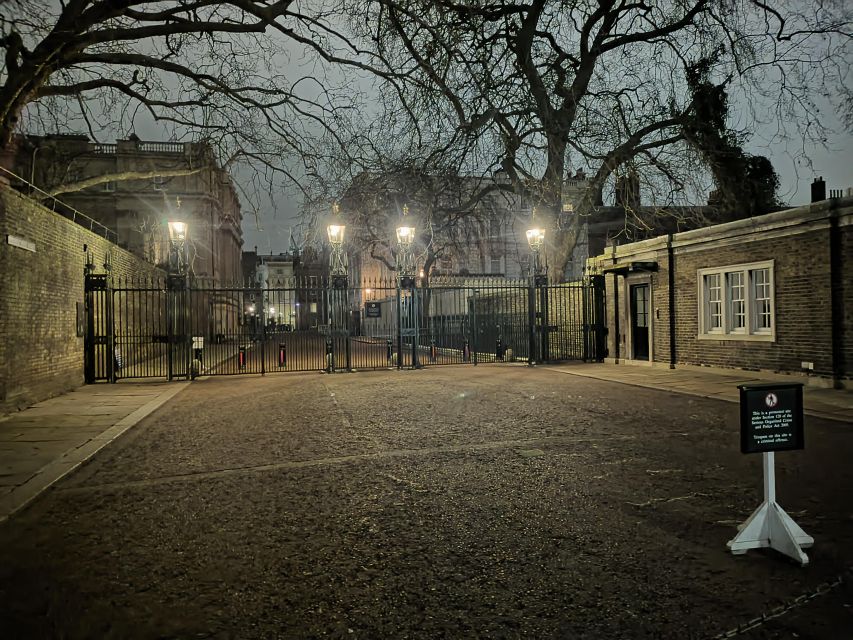
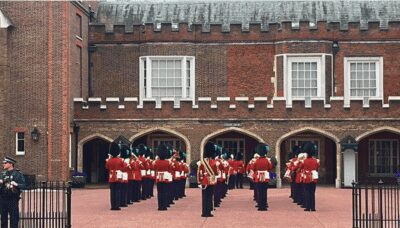
Next up is St James’s Palace, followed by St James’s Park. The palace stop helps you understand how far back the royal connections in this corner of London go—especially because the area ties into the stories of major monarchs linked to the palace and the surrounding grounds.
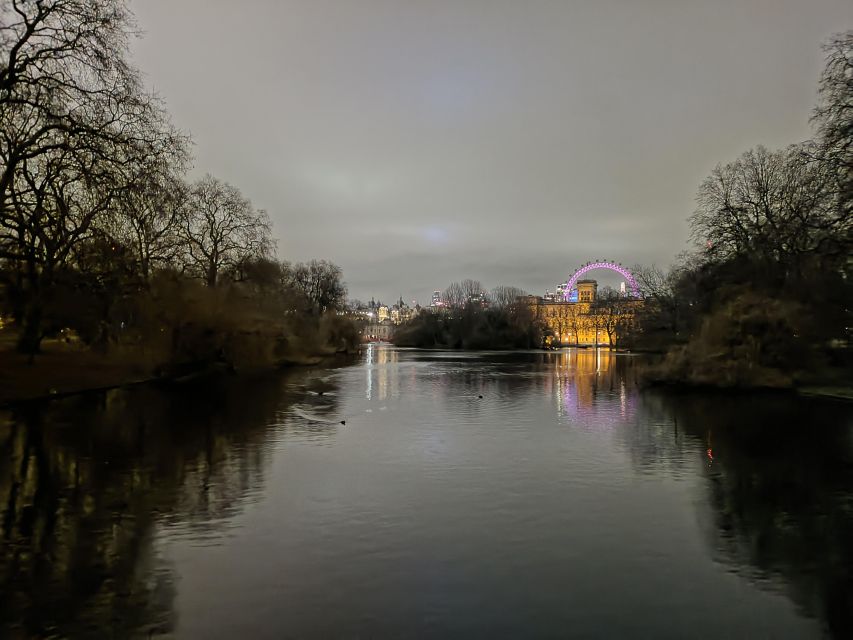
Then St James’s Park gives you a breather. This is where the tour shifts from “architecture and power” to “space and atmosphere.” You’ll get beautiful views and wildlife time while the lamps make the park feel gentler than the rest of Westminster at night.
I like this pacing because it prevents fatigue. Westminster is packed with monuments, but St James’s Park gives you a visual palate cleanser before the tour swings back into the ceremonial parade spaces and Parliament-side buildings.
Horse Guards Parade and Westminster Abbey: ceremony and centuries
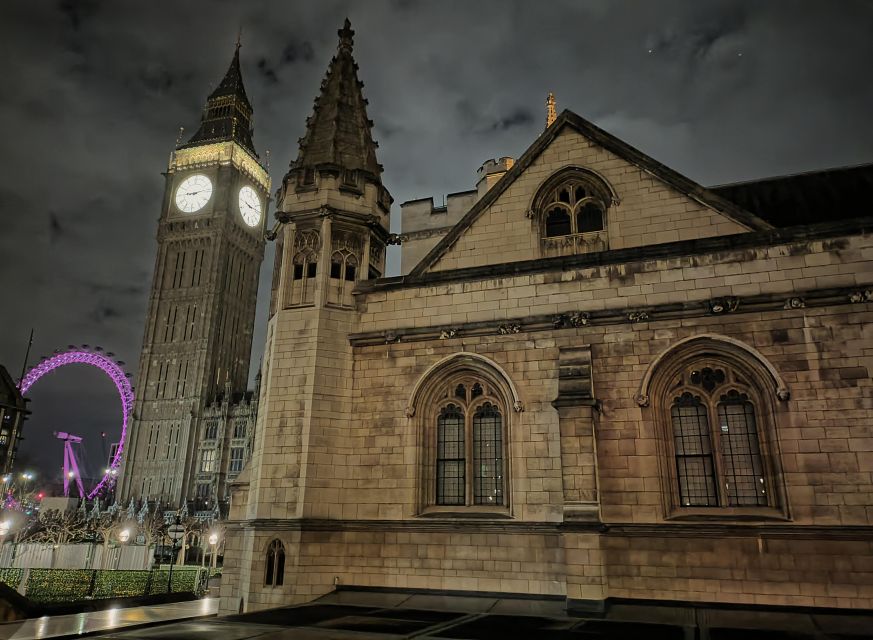
Horse Guards Parade is one of the best transitions in the entire route. The reason is simple: it’s both historical and watchable. You learn the background of the parade grounds—from the 1500s to today—which gives you a framework for why this space has remained important.
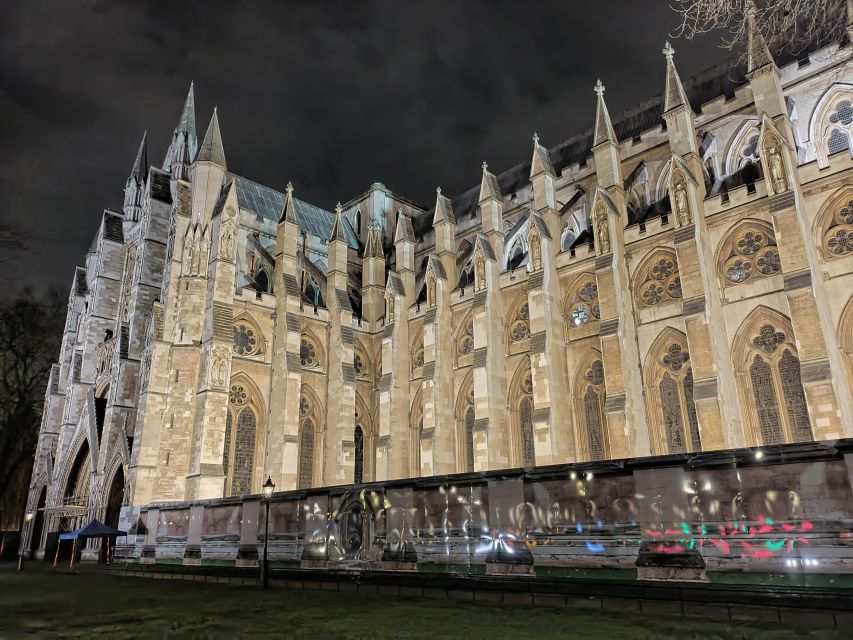
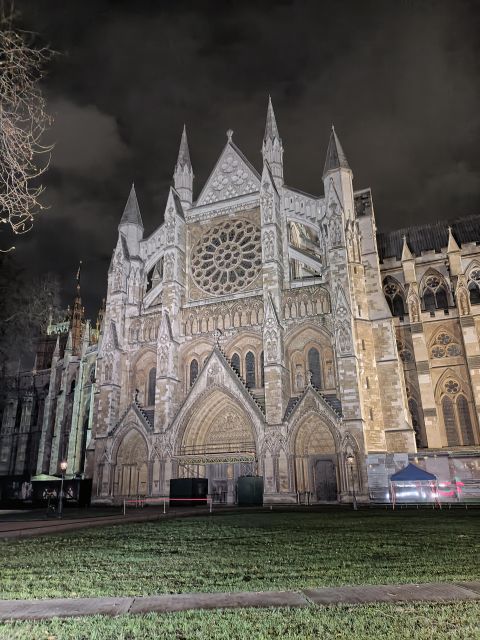
From there, you reach Westminster Abbey. This stop is more than a “pretty exterior.” The tour connects the Abbey to major royal moments, including the fact that it has hosted sixteen Royal weddings since 1100. It’s also presented as the final resting place of countless monarchs, historical figures, and heroes.
If you’ve only seen the Abbey from a distance, this kind of stop can change your mental picture. You start to see it less like a famous church and more like a long-running stage where England’s national story kept happening.
A practical tip: night photographs at the Abbey can be tricky because light is uneven. Keep your camera ready, but don’t treat every stop like a photo shoot. A few steady shots plus listening beats frantic picture-taking.
You can also read our reviews of more evening experiences in London

Parliament Square and Big Ben: learning the 900+ year story
Parliament Square puts you right at the emotional center of modern British politics. It also works as a “translation point.” You move from royal spaces into government spaces, and the tour makes the shift understandable.
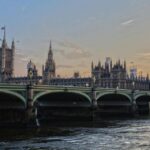
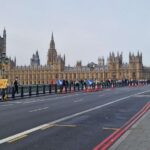
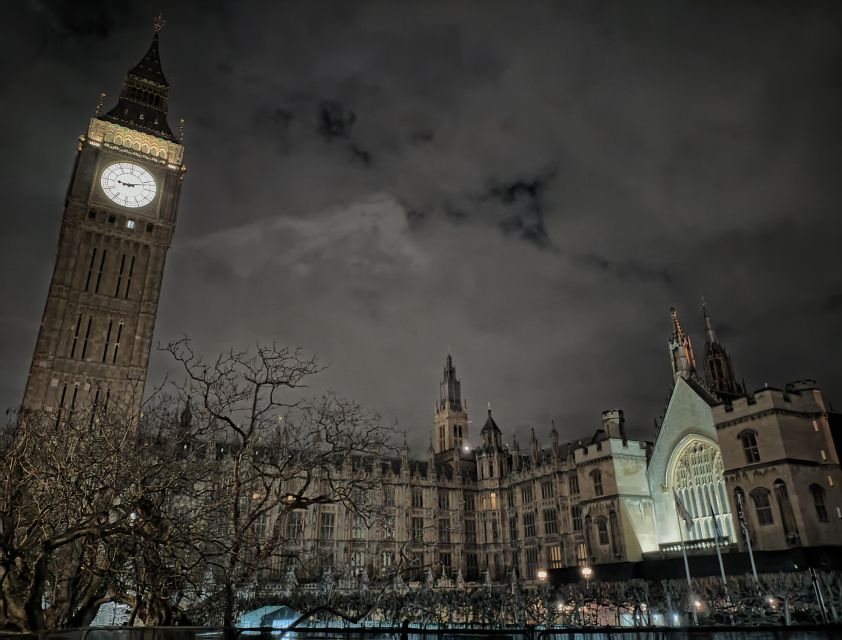
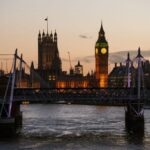
Then you’re close to the Palace of Westminster, including time by the famous Big Ben clock tower area. The key detail here is the building’s age: you get a sense of its 900+ year history and what that long timeline means for today’s institutions.
One thing I appreciate is that Big Ben is treated as more than a landmark photo spot. The guide links it to the setting and the continuity of the place. That helps you understand why this corner of London feels both permanent and constantly changing.
As with other stops, there are no indoor entries here. But you still get the “why” behind what you’re seeing—often the missing piece for first-time Westminster visits.
Whitehall’s Corridor of Power: Downing Street, the Cenotaph, and Banqueting House
After Parliament Square, the tour moves along Whitehall, often described as London’s Corridor of Power. This is where the streets start to feel like a map of decision-making.
Downing Street comes next. Seeing it at night is a surreal experience: familiar from headlines, but far more human in real life when you’re standing there and hearing how it fits into the political geography of London.
You also stop by the Cenotaph war memorial, which grounds the whole area in a different kind of national story—one about sacrifice and remembrance rather than ceremony and governance.
Then there’s Banqueting House, a 17th-century building that adds a strong historical jolt to the route. The tour also points out the site of King Charles I’s infamous 1649 public execution. That detail can feel heavy compared to the palace-and-park tone earlier in the walk, and that’s part of why this tour works: it doesn’t flatten London into only royal pretty pictures.
If you’re sensitive to darker history, you’ll want to know this stop is included. But the way it’s folded into the wider “power corridor” story helps it make sense instead of feeling random.
Trafalgar Square finish under Nelson’s Column
The tour ends in Trafalgar Square, near the fountains and the memorial to King Charles I. Then you get time beneath Nelson’s Column to wrap up the evening with one of London’s most recognizable visual anchors.
This finish location is practical for you. Trafalgar Square is easy to navigate for onward plans, and it gives your brain a clear endpoint after an intense stretch of Westminster landmarks.
At night, Trafalgar Square can feel a bit more cinematic than you expect. The lighting is strong, the monument shapes are crisp, and the space helps you decompress after processing the long timeline of royals, Parliament, and national events you’ve been walking through.
Photo moments and comfort: what to bring for night walking
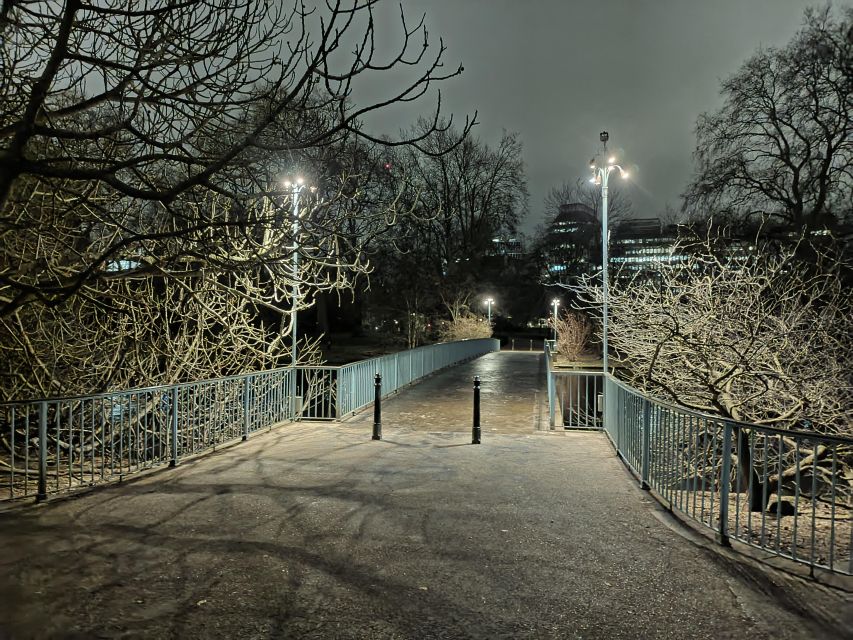
This tour’s built for cameras, and the evening lighting genuinely helps. One guide (Mike) and another (Mick) are mentioned as particularly good at taking great pictures and helping you get them at the right moments. So bring your camera and think less about perfect shots and more about clear compositions.
For gear, the advice is simple and correct: comfortable shoes. You’re walking between major sites, and even if the tour stops are short, the total time on your feet adds up fast.
I’d also recommend dressing in layers. The tour is outdoors and runs in the evening, so temperature shifts are common. If it’s breezy, your hood and a light jacket become more important than you might think.
Price and value: what $24 really gets you
At about $24 per person for a 2-hour experience, the value is strong if you want a guided overview of Westminster without spending your whole day in queues. You’re paying for three things that are hard to replicate on your own:
- A historian guide who ties the landmarks to specific stories
- A route that prioritizes prime sights with minimal daytime crowd friction
- The convenience of having the timing and order handled for you
The main trade-off is that entrance to inside attractions isn’t included. So if your dream is to tour interiors—chapels, palace rooms, or ticketed exhibitions—this won’t replace those plans.
But for the traveler who wants to understand the area and see the key buildings up close, this is a smart way to spend a compact evening. Especially if it’s your first time in London or your first time in Westminster.
Who this tour fits best (and who should look elsewhere)
This is a great match if you:
- want Westminster landmarks at night with fewer people
- like history when it’s told in a walking format, not a classroom lecture
- want an easy evening plan that doesn’t require advance attraction tickets
It may not be ideal if you:
- only enjoy experiences with paid indoor access
- hate cold-weather outdoor walking
- need long sitting time at each stop (this tour is made for motion and short stops)
Should you book the Royal Westminster By Night walk?
If you’re deciding between doing Westminster on your own versus using a guide at night, I’d choose this style of tour for most first-timers. You get a calm evening feel, real context for what you’re looking at, and a route that strings together palaces, parks, Parliament, and power sites into one coherent evening.
Book it when you want the city to feel close up—gas-lit streets, recognizable landmarks, and a guided path that helps you connect the centuries without getting lost or overwhelmed.
FAQ
FAQ
Where does the London Royal Westminster By Night tour start?
The tour meets at the Goddess Diana fountain in Green Park, by the southern (step-free) exit of Green Park Tube Station. The postcode is W1J 9DZ.
What time does the tour begin?
The guide meets you at 7:30pm.
How long is the tour?
The tour lasts 2 hours.
How much does it cost?
The price is $24 per person.
What’s included in the price?
You get an experienced historian tour guide. Entrance to inside attractions is not included.
Are the main stops mainly outside?
Yes. The tour focuses on exterior sightseeing at landmarks like Buckingham Palace, Big Ben, Westminster Abbey, Downing Street, and Nelson’s Column.
Is the tour wheelchair accessible?
Yes. The tour is listed as wheelchair accessible, and the meeting point uses a step-free tube exit.
What language is the tour guide?
The live tour guide speaks English.
What should I bring?
Wear comfortable shoes, and bring a camera if you want photos.
Where does the tour end?
The tour ends in Trafalgar Square.