REVIEW · BRITISH MUSEUM TOURS
London: British Museum Guided Tour Private Group
Book on GetYourGuide →Operated by My tour London · Bookable on GetYourGuide
Ancient objects, explained with energy. A licensed guide leads you through the British Museum’s biggest ideas, not just rooms, and it starts strong with ancient Egypt and the Rosetta Stone. You also get a tight, story-driven route that pulls in Greek art, Roman-era context, and the famous debates around the Parthenon sculptures known as the Elgin Marbles.
The private-group format is a real plus, especially if you want questions answered on the spot. The only watch-out is that 2 hours moves fast, and one guest noted the visit felt a bit more expeditious than expected.
In This Review
- Key points worth your time
- Meeting the guide and getting into the museum fast
- Egypt first: Rosetta Stone meaning you can actually use
- Ancient Greece and the Parthenon legacy you’ll recognize later
- Ancient Rome: power, gods, and engineering-made visible
- Sutton Hoo: the early England detour that feels personal
- Easter Island’s Hoa Hakananai’a and the spiritual angle
- Finishing with artifacts around the globe: what the route teaches you
- Price and value for a private group up to five
- What it’s like in real life: guide energy and pace
- Who this private British Museum tour suits best
- Should you book this tour?
- FAQ
- How long is the British Museum guided tour?
- What is the price for the private group?
- Where should I meet the guide?
- When will I receive the tickets?
- What languages are available for the live guide?
- Is the tour wheelchair accessible?
- Can I cancel and get a refund?
Key points worth your time
- Licensed guidance that connects artifacts to the bigger story of human culture
- Rosetta Stone focus and how Egypt’s writing became readable
- Parthenon and Elgin Marbles context tied into wider Greek thought
- Ancient Rome, including mosaics and myth-and-power style sculpture
- Sutton Hoo treasures for a jump into early English life
- Hoa Hakananai’a (Easter Island) for a spiritual, far-away perspective
Meeting the guide and getting into the museum fast
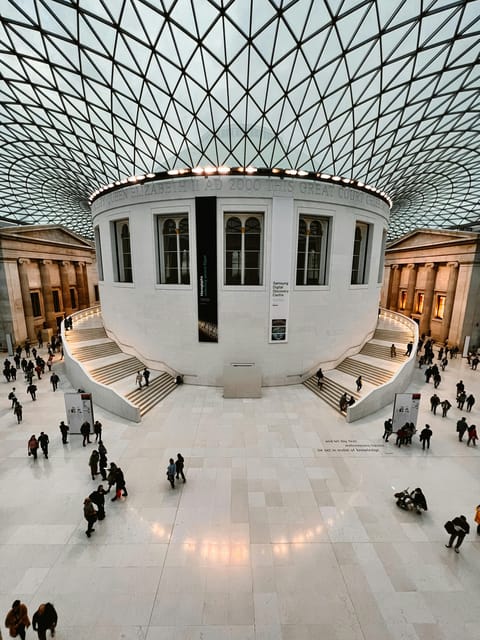
Your tour experience starts at the British Museum portals on the stairs, near the pillars, after you pass security. Not outside the gates, and not across the street. Once you’re through, you’ll be in the right place to meet your guide and keep your time tight.
Tickets are sent ahead by WhatsApp about 1 hour before the tour. If you don’t use WhatsApp, you’ll need to email so the entry tickets can be sent another way. This matters because it shifts the planning load onto you earlier than a same-day ticket swap. Still, it’s a sensible system for a guided meeting that happens at a specific spot.
What I like about this setup is that it removes the usual stress of figuring out where a group is gathering. You’re already lined up where security ends and museum entry begins, so you can focus on the actual experience: walking, listening, and looking.
If you’re the type who needs a little extra time to orient yourself in museums, wear comfortable shoes and plan on standing and walking. A 2-hour private tour inside a world-class museum means you’ll cover a lot of ground, but not at a slow, browse-everything pace.
You can also read our reviews of more guided tours in London



Egypt first: Rosetta Stone meaning you can actually use
Most museum tours either point at objects or drown you in dates. This one starts with ancient Egypt, which is a smart choice because it gives you a hook fast: the Rosetta Stone and how people learned to read Egyptian hieroglyphs.
You’ll get to see the kind of breakthrough that changes everything. Hieroglyphs weren’t just decoration; they were a writing system that carried names, rituals, and records. The Rosetta Stone is famous because it helped unlock the script. In a good guide-led explanation, it stops being a single iconic stone and becomes a story about language, translation, and the work needed to make the past legible.
From there, the route moves through pharaoh-era relics, keeping Egypt grounded in real objects instead of turning it into a vague “ancient times” vibe. That matters because the British Museum is huge. A themed start like this helps you form a mental map quickly.
A practical note: when tours begin with Egypt, it’s easy to think it will all be artifacts of the same style. Instead, you’re learning different cultural skills, like reading systems in addition to appreciating art. That makes the whole tour feel more like understanding than sightseeing.
If you care about how knowledge spreads and how scholars interpret artifacts, you’ll enjoy this part a lot.
Ancient Greece and the Parthenon legacy you’ll recognize later
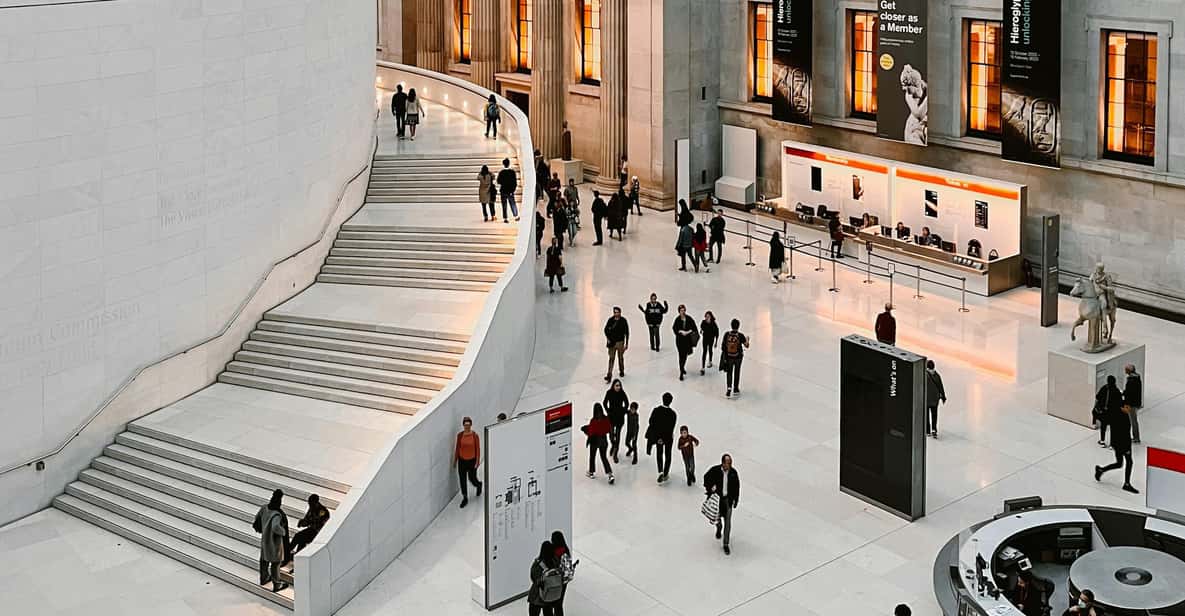
After Egypt, the tour shifts to ancient Greece, where the big themes are philosophy and art. This is where you’ll start hearing names and ideas that show up again and again in Western culture, even if you didn’t realize it.
You’ll spend time looking at the iconic sculptures associated with the Parthenon and you’ll also hear about the marble inscriptions and what they contributed to thinking over time. That’s a key point: the Parthenon is not only a building. It’s a symbol of civic values, ideas about beauty, and a place where art and public life intersect.
The tour also includes discussion around the Elgin Marbles. The wording matters here: these sculptures are controversial, and your guide’s job is to place them in context. Even without turning it into a debate club, this is a valuable moment because it helps you understand why museum collecting, display, and interpretation can be complicated. You’ll walk away with more than just a wow factor. You’ll have a better sense of how the conversation around these pieces continues.
I especially like that this isn’t treated as a one-room stop. It’s connected to what came before and what comes after in the tour, so Greek influence feels like a thread rather than a standalone exhibit.
Ancient Rome: power, gods, and engineering-made visible
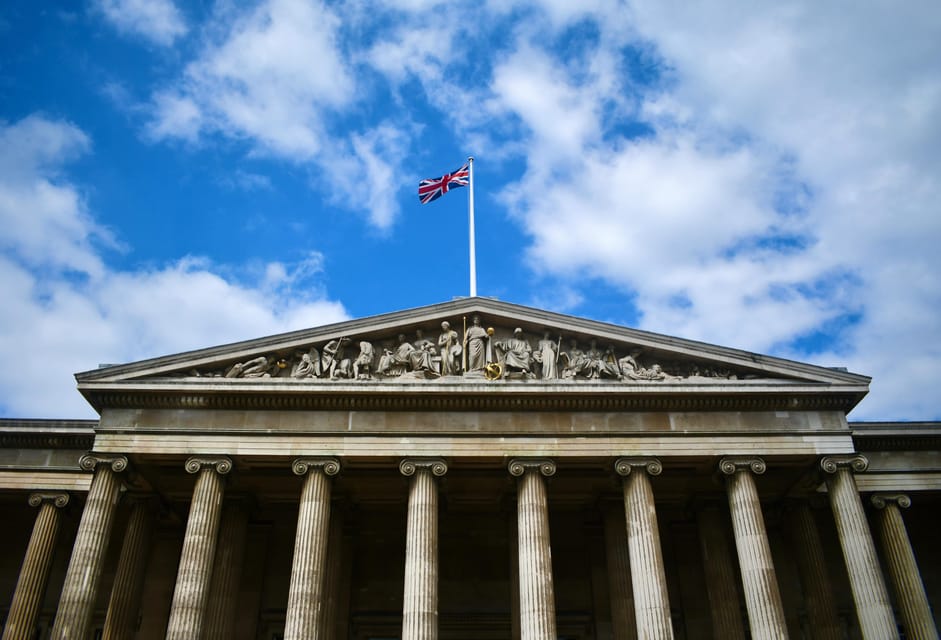
Next comes ancient Rome, and the tone changes. Where Greece often feels like ideas, Rome often feels like systems: rulers, infrastructure, and public spectacle.
You’ll see relics tied to emperors and you’ll get a look at Roman engineering as it shows up through art and objects. You’ll also admire mosaics and statues depicting gods and heroes. This is one of those museum moments where objects can look decorative at first, but the guide helps you notice how they communicate authority, belief, and identity.
Roman mosaics are a great example. Up close, they’re not just pretty patterns. They’re carefully planned images that can signal taste, wealth, and cultural links to older traditions. The guide-led explanation helps you decode that.
Also, Rome is where “myths” and real politics often overlap. Statues of gods and heroes aren’t just for storytelling; they’re ways of attaching legitimacy and meaning to leadership and daily life.
One thing to consider: if you’re expecting the Roman section to focus heavily on a single blockbuster object, it may feel more like a highlight reel of different categories. The upside is that you’ll get a balanced sweep in a short time.
Sutton Hoo: the early England detour that feels personal
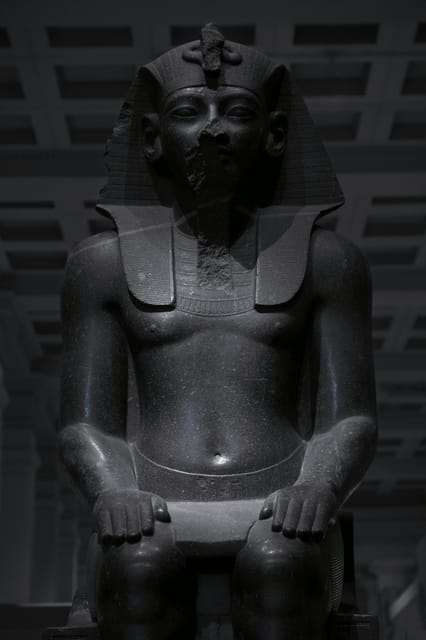
Then the tour makes a smart change of direction with Sutton Hoo, an area that’s often overlooked compared to ancient Mediterranean civilizations. Here, Anglo-Saxon treasures bring you into early English life.
Sutton Hoo is powerful because it’s not just another “ancient art” stop. It’s a window into burial culture, status, and craft. And it connects to place. If you’re in London, seeing an artifact-linked story that reaches toward England’s early past adds a different kind of meaning. It turns your museum visit from purely global history into something tied to the country you’re standing in.
In a private tour, this section can feel especially good because the guide can tailor emphasis based on what you seem most interested in. If you like cultural transitions and “how a region becomes itself,” this part is worth paying attention to.
You can also read our reviews of more private tours in London





Easter Island’s Hoa Hakananai’a and the spiritual angle
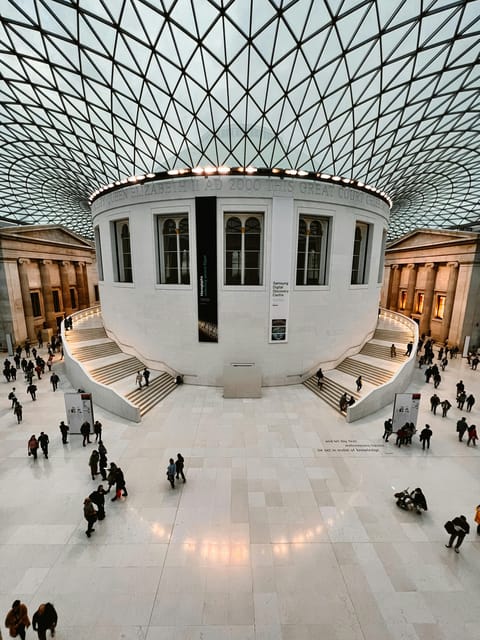
The tour doesn’t stop at Europe and North Africa. You also get to see a moai from Easter Island: Hoa Hakananai’a.
This is a standout stop because it shifts the scale of the story. You go from empires and writing systems to an island culture with its own spiritual and artistic language. A good guide helps you see the spiritual essence rather than treating the moai as just a big sculpture for tourists to take photos with.
This part is valuable for two reasons. First, it reminds you that human creativity is global, not centered on one region. Second, it adds a layer of meaning to what you’re seeing later when you look back at the earlier sections. You start thinking in terms of ceremony, identity, and belief systems across time.
If you like when museum tours include at least one object that’s truly outside the usual “top ten,” you’ll appreciate this.
Finishing with artifacts around the globe: what the route teaches you
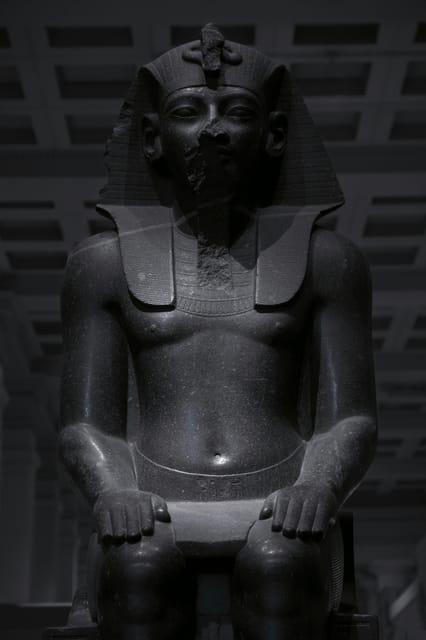
By the end, you get artifacts from around the world, which is where the tour earns its value. The idea isn’t to cover everything. It’s to help you notice that every culture leaves traces, and those traces can be read in different ways depending on the questions you bring.
So what do you take home?
You’ll leave with a framework: Egypt’s writing and symbolism, Greece’s public ideas and art, Rome’s power through images and craft, Sutton Hoo’s place-based early English story, and Hoa Hakananai’a’s spiritual presence. Those are five different “ways of being human,” shown through objects.
This is also where a private guide helps. Even in a short 2-hour window, if you ask smart questions, the guide can make connections you might miss if you’re just walking on your own. And because the group is private, there’s less pressure to move at the exact same speed as everyone else.
Price and value for a private group up to five
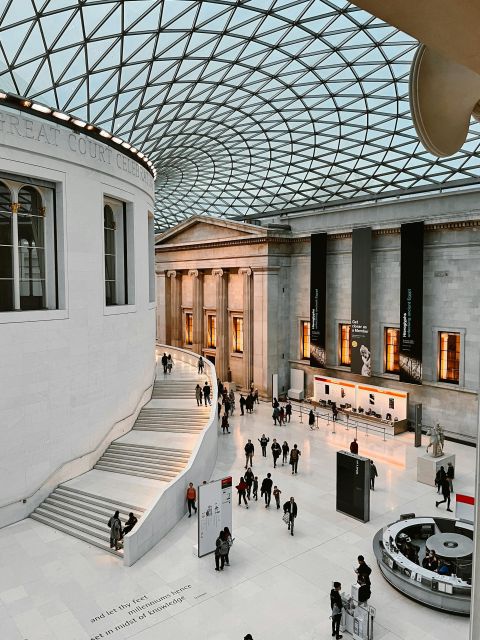
The price is $331 per group, up to 5 people, for a 2-hour tour. That pricing structure matters. If you fill the group, the cost works out to about $66 per person. If you go with fewer people, your per-person share rises.
Where this tour can feel like good value is in what you’re buying: licensed guidance plus a tailored route through major highlights. A museum guide in a place this large can save you from wasting time guessing what matters. And because the tour is private, you get language options (English, French, Italian) and a chance to ask questions without competing for the guide’s attention.
If you’re traveling as a small family or a couple who likes to understand what you’re seeing, this can be a very efficient way to get meaning out of the British Museum without spending an entire day planning.
If you’re traveling solo and you’re okay with a self-guided museum experience, you might decide the cost is higher than you need. But if you want structure and interpretation, the private format is the point.
What it’s like in real life: guide energy and pace
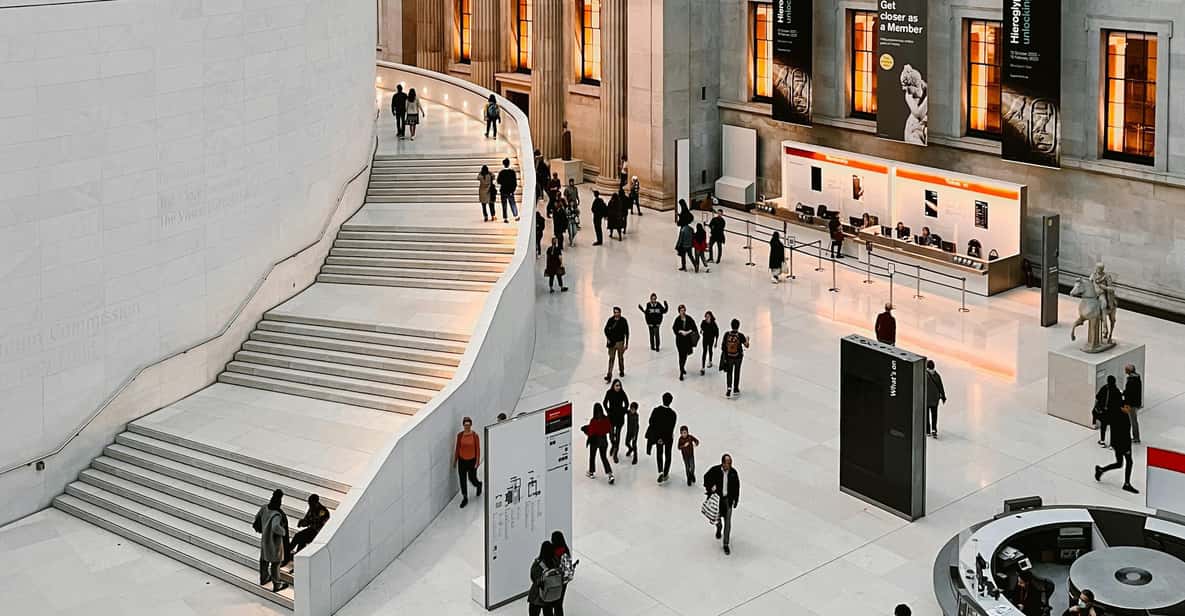
The strongest praise from past guests is about the guides themselves. One guide named Filomena stood out for enthusiasm that made the tour feel alive, and another guest called their guide amazing. That’s exactly what you want here: a museum can feel overwhelming, and a strong guide energy helps the story stick.
There’s also a fair balance note. One guest felt the tour was a bit shorter than expected, which lines up with the reality of a 2-hour time slot in a museum the size of the British Museum. You’ll see major stops, but you won’t linger for long.
If you’re the type who likes to spend 20 minutes drawing every detail in your favorite sculpture, this tour might feel too timed. If you want a fast, smart overview with interpretation at key moments, you’ll likely feel satisfied.
Who this private British Museum tour suits best
This experience fits best if you:
- Want a structured highlights route through major civilizations
- Prefer a licensed guide who can explain context, not just point
- Travel with up to four others and want a private pace
- Like the crossover of art, writing systems, and cultural meaning (Egypt to Greece to Rome)
- Appreciate seeing global artifacts like Hoa Hakananai’a and Sutton Hoo, not only famous European classics
It may not suit you as well if you:
- Want a slow “look at everything” museum visit
- Need long stops at each object
- Don’t like moving between multiple sections in a short period
Should you book this tour?
If you want a high-impact British Museum visit in 2 hours with a licensed guide and a route that connects Egypt, Greece, Rome, Sutton Hoo, and Easter Island, I think this is a smart booking. The price works well when you fill up to five, and the guide-led storytelling seems to be the real strength.
Book it if you like understanding what you’re looking at, not just checking off exhibits. Skip it if your dream museum day is slow, silent, and fully self-directed.
If you go, wear comfortable shoes and arrive ready to listen. This is the kind of tour that turns a giant museum into a clear story you can actually remember.
FAQ
How long is the British Museum guided tour?
It lasts 2 hours.
What is the price for the private group?
It is $331 per group for up to 5 people.
Where should I meet the guide?
Meet in front of the British Museum portals on the stairs near the pillars after you pass the security check. The meeting point is not outside of the gates.
When will I receive the tickets?
Tickets are provided 1 hour before the tour via WhatsApp. If you don’t have WhatsApp, contact the provider by email so entry tickets can be sent another way.
What languages are available for the live guide?
The guide is available in English, French, and Italian.
Is the tour wheelchair accessible?
Yes, it is wheelchair accessible.
Can I cancel and get a refund?
Yes. Free cancellation is available up to 24 hours in advance for a full refund.