REVIEW · WALKING TOURS
City of London Mystical and Dragons Walking Tour
Book on GetYourGuide →Operated by Dragon Lore Tours · Bookable on GetYourGuide
London hides dragons in plain sight. This 2.5-hour City of London walk turns dragon lore into a practical way to read the streets, from sacred sites to street-level symbolism, guided with real storytelling craft (Arjun’s style shows up in the feedback). I also like how it links architectural symbolism to archaeology and myth, so you’re not just looking at buildings, you’re learning how people have explained this city for centuries.
One thing to consider: the tour moves at a steady walking-and-stopping pace, with many brief visits (often around 5–15 minutes each). If you want unbroken museum-style time at one site, this may feel a bit myth-focused and fast.
A dragon-led route through key City landmarks
Small group of just 8 people for easier questions and pacing
Ley lines and ancient mounds as recurring themes you’ll see in context
Roman London meets medieval London through sites like the London Mithraeum
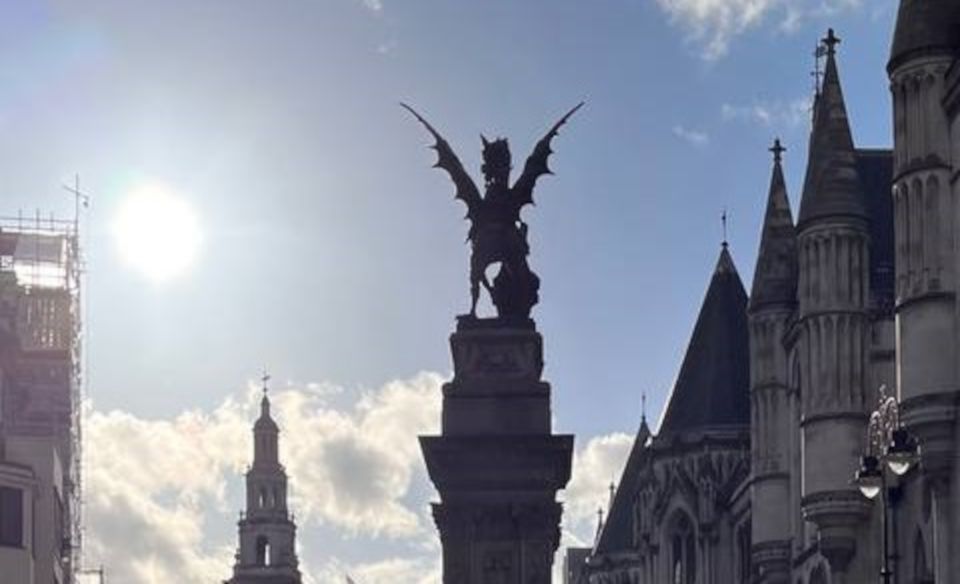
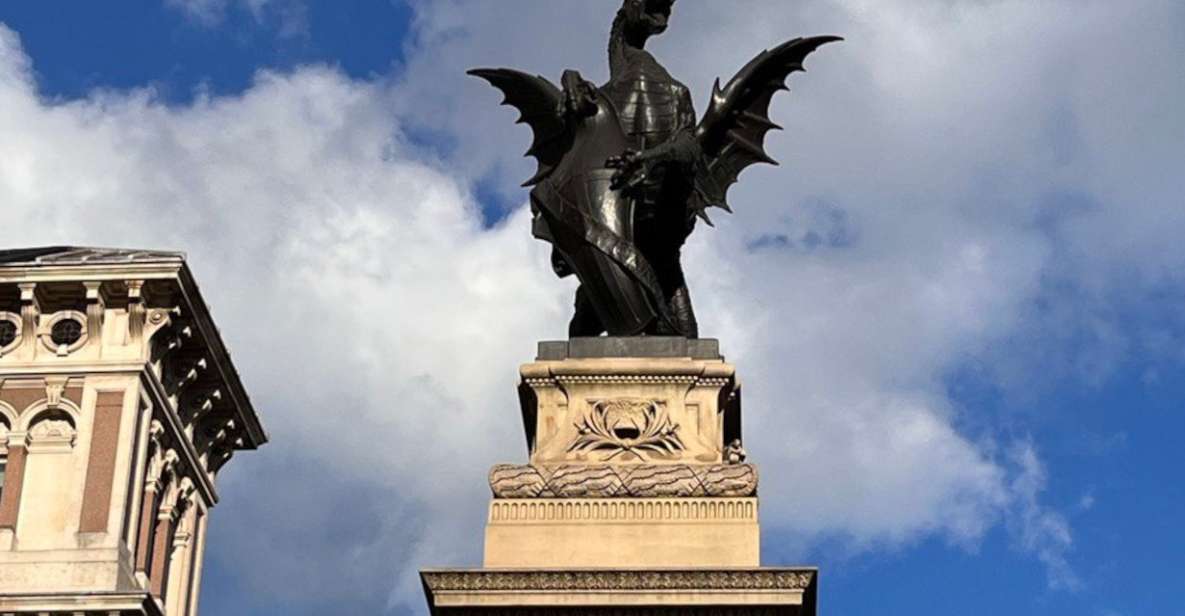
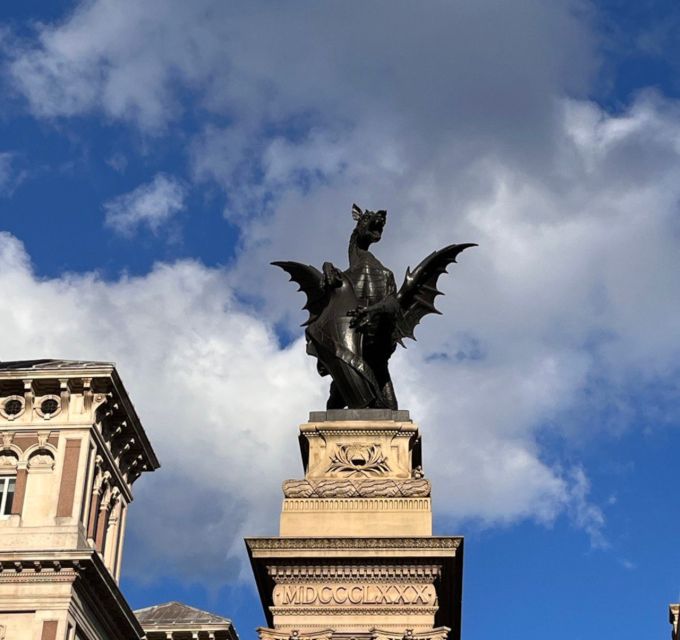
A clear walk ending at Temple Bar Memorial, with a final mythic landing point
In This Review
- London Stone to Temple Bar: How This Dragon-Themed Walk Changes What You Notice
- Starting at Joe and the Juice: Easy Meeting, Personal-Guide Vibe, Small-Group Perks
- London Stone and Forgotten Streams: Prehistoric Clues and Waterways You Can Almost Hear
- London Mithraeum and the Bank of England: Roman Myth, Symbol Systems, and City Power
- St Mary-le-Bow, the Oldest Tree, and St Paul’s: Reading Religion, Reading Continuity
- St Martin Ludgate, Ludgate Circus, St Bride’s, Fleet Street’s Church-to-Church Story
- St Dunstan-in-the-West to Temple Church: Knights Templar Energy and the Dragon Lore Finish
- What the Tour Actually Teaches: Ley Lines, Ancient Mounds, and Symbolic Architecture
- Price and Time: Is $25 for 2.5 Hours Good Value?
- Who This Tour Fits Best (and Who Might Want Something Different)
- Should You Book the City of London Mystical and Dragons Walking Tour?
- FAQ
- How long is the City of London Mystical and Dragons Walking Tour?
- How much does the tour cost?
- Where does the tour start?
- What is the tour end point?
- Is the tour guided, and what language is it in?
- Is it a small group?
- Is the tour wheelchair accessible?
- Do you get anything after the tour?
- Is there free cancellation?
London Stone to Temple Bar: How This Dragon-Themed Walk Changes What You Notice
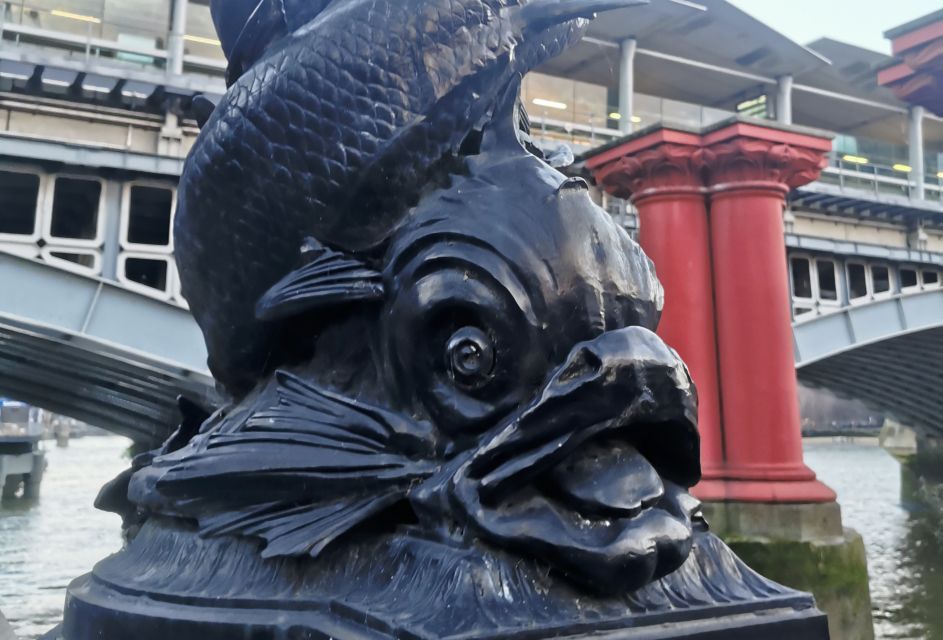
The City of London can feel like a place you either rush through or get lost in. This tour nudges you into the second mode. You start with a few stone-and-street anchors, then the guide connects them into a story about sacred spaces, forgotten waterways, and the way London’s image-makers used symbols to explain power, protection, and belonging.
The “dragon” angle isn’t just a costume idea. It’s used as a lens—one that helps you pay attention to what’s carved, aligned, preserved, or repeated across centuries. You’ll hear how dragons show up in London’s lore over “millennia,” and you’ll also track the city’s evolution from earlier spiritual ideas up through landmarks like St. Paul’s Cathedral. In other words, you’re learning London’s layout and iconography through a mythic framework, not a straight lecture.
I especially like that the walk is grounded in places you can actually reach on foot. That matters. London’s history doesn’t live only in books; it’s embedded in doorways, churches, arches, and the odd survival of something old right in the middle of finance and crowds.
Starting at Joe and the Juice: Easy Meeting, Personal-Guide Vibe, Small-Group Perks
You’ll meet outside Joe & the Juice. The meeting description is very specific: you can spot the guide with longish hair and a beard, and a felt image of a green dragon on their backpack. That’s a small detail, but it reduces the usual morning stress of matching faces and outfits.
This is a small group limited to 8 participants, which is a big part of the value. You can hear the guide clearly on busy sidewalks, and you get room to ask questions without feeling like you’re interrupting a machine. The tour is also wheelchair accessible, which is useful to know if you need a flatter route and more predictable stops.
Timing is reasonable: 2.5 hours overall. Many stops are short, but the schedule keeps you moving and prevents the tour from turning into one long queue. It’s the kind of format that works well in the City, where getting stuck outside a landmark can eat up your day fast.
You can also read our reviews of more walking tours in London



London Stone and Forgotten Streams: Prehistoric Clues and Waterways You Can Almost Hear
The route begins at London Stone (remaining part). Even with only a remnant left, London Stone is one of those places that makes you rethink the scale of time. You get a guided moment here (about 10 minutes) that sets the tone: this isn’t just a walking tour of famous addresses. It’s a tour of the city’s underlying “bones,” including early layers of meaning that people attached to this spot.
Then comes Forgotten Streams in the Bloomberg Arcade. This is where the tour’s “mystical” side starts to feel practical. Forgotten waterways sound abstract until a guide points you toward what’s actually been built over, redirected, or hidden. A short stop (around 5 minutes) keeps it snappy, and it sets up a recurring theme: the City isn’t just old buildings—it’s also old routes for water, movement, and connection.
What I like about these early stops: they teach you to look down and around, not just up at façades. That’s a real skill in London. If you get that habit early, the rest of the tour becomes easier to follow.
Possible drawback: if you’re expecting each stop to be a deep-dive into one topic, you’ll notice the early pace is brisk. It’s designed to build a bigger picture quickly.
London Mithraeum and the Bank of England: Roman Myth, Symbol Systems, and City Power
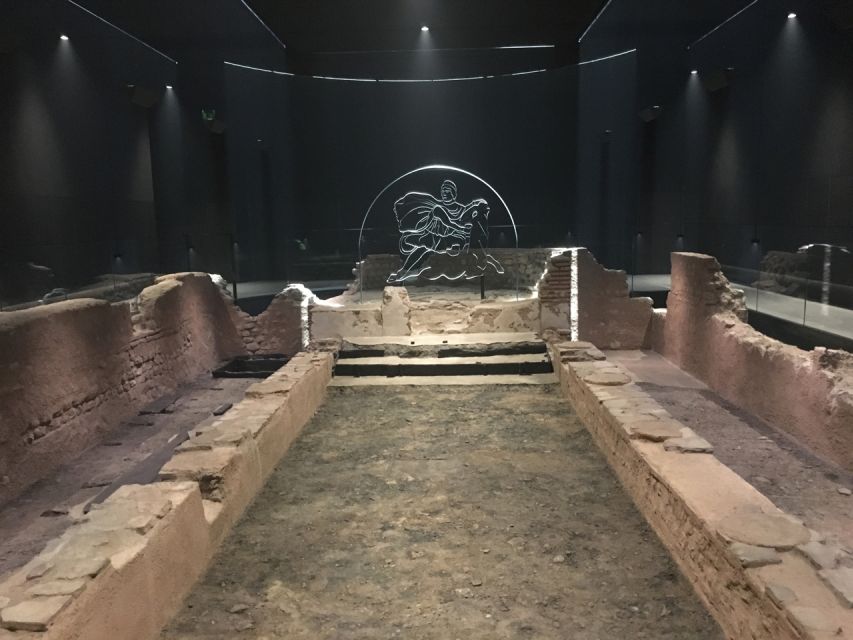
Next you’ll visit the London Mithraeum (at Bloomberg SPACE). This stop is only about 5 minutes, but it carries major weight in the story. The tour uses it to bridge mythic thinking across eras—Roman religious spaces, later Christian city structures, and the way symbolism gets reused or reinterpreted over time.
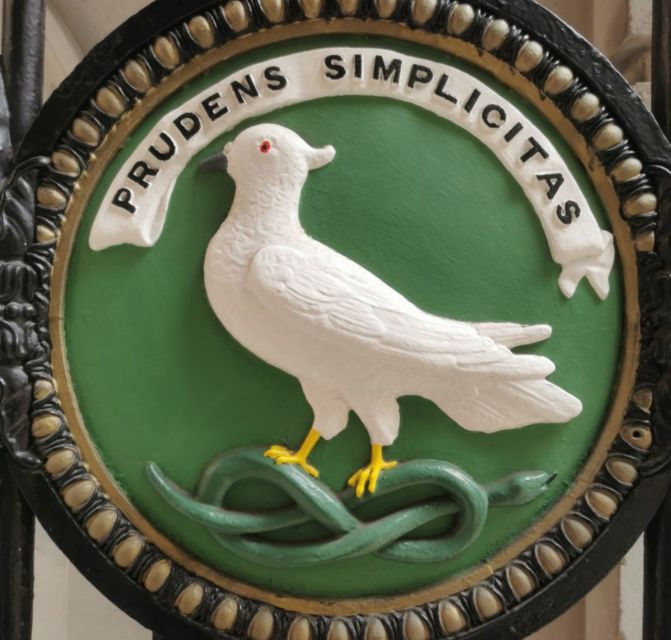
After that, you check out the Bank of England (another brief guided segment, about 5 minutes). This part may surprise you. Instead of treating the Bank as purely financial architecture, the guide frames it as part of the City’s symbolic language. You’ll learn how to notice signifiers in design and how myth-friendly interpretations can show up in stonework, layout, and public-facing style.
Why this pairing works: the Mithraeum gives you the ancient “myth space” reference point, and the Bank gives you a modern power reference point. Even if you’re not buying every mythic interpretation as literal truth, you’ll still come away understanding why people have always used symbols to manage meaning—especially in a place like the City.
St Mary-le-Bow, the Oldest Tree, and St Paul’s: Reading Religion, Reading Continuity
At St Mary-le-Bow, you get a longer guided stop (about 15 minutes). Church architecture is one of the easiest ways to see how London’s belief systems changed while still keeping pieces of older habits. The tour doesn’t treat the churches as separate islands. It uses them to explain continuity: how the city keeps redefining what is sacred.
Then you’ll pause for the oldest tree in the City of London (around 5 minutes). That might sound like a small break, but it’s a clever reset. When you’re learning about dragons, ley lines, and ancient mounds, your brain needs one real, physical anchor that isn’t a carving or a legend. A living landmark is a reminder that time isn’t only historical—it’s ongoing.
After that comes St. Paul’s Cathedral with about 10 minutes of guided attention. This is where the tour leans into the timeline idea. You’ll trace the city’s evolution through different spiritual and cultural frames, ending up at St. Paul’s as a major marker of London’s identity. Even if you know St. Paul’s already, the tour makes you consider why it matters as a symbol—power, permanence, and the city’s self-image.
What you’ll feel here: you’re not just collecting stops. You’re watching the guide train you to see how London narrates itself.
St Martin Ludgate, Ludgate Circus, St Bride’s, Fleet Street’s Church-to-Church Story
The route then moves to the Church of St Martin Ludgate (about 10 minutes). The tour uses these City churches as waypoints in the broader theme of sacred sites and layered symbolism. You’re learning how to spot meaning in details, even when the story is partly mythical.
Next is Ludgate Circus (about 5 minutes). This is a good reminder that street geometry can feel like lore. City planning and intersections become part of the tour’s “map of meanings,” linking location to story. You’ll likely get a better sense of how the city’s layout supports long-running narratives.
Then you’ll head to St Bride’s Church on Fleet Street (about 15 minutes). Fleet Street is famously associated with media energy and historic institutions, but this stop reframes it through the lens of symbols and sacred space. It’s another place where short visits work because the guide connects the dots instead of making you memorize disconnected facts.
Why this middle section matters: it’s where you start to understand the tour method. The guide isn’t asking you to accept a single story. They’re showing you how London’s iconography can be read in layers—religion, myth, archaeology, and the city’s habit of reusing symbolic language.
You can also read our reviews of more city tours in London





St Dunstan-in-the-West to Temple Church: Knights Templar Energy and the Dragon Lore Finish
You’ll then visit St Dunstan-in-the-West (about 5 minutes). Again, it’s short, but it contributes to the rhythm of the walk. Each church is a chapter; the tour uses the sequence to reinforce that the City is full of small anchors you can’t see from a bus window.
From there, you reach Temple Church (about 10 minutes). This is where the tour names the Knights Templars directly as part of the story. Whether you’re a big fan of medieval history or you just like how legends add color, this stop gives dragon lore a more grounded-feeling edge: organized groups, protective symbols, and the way power often leaves architectural traces behind.
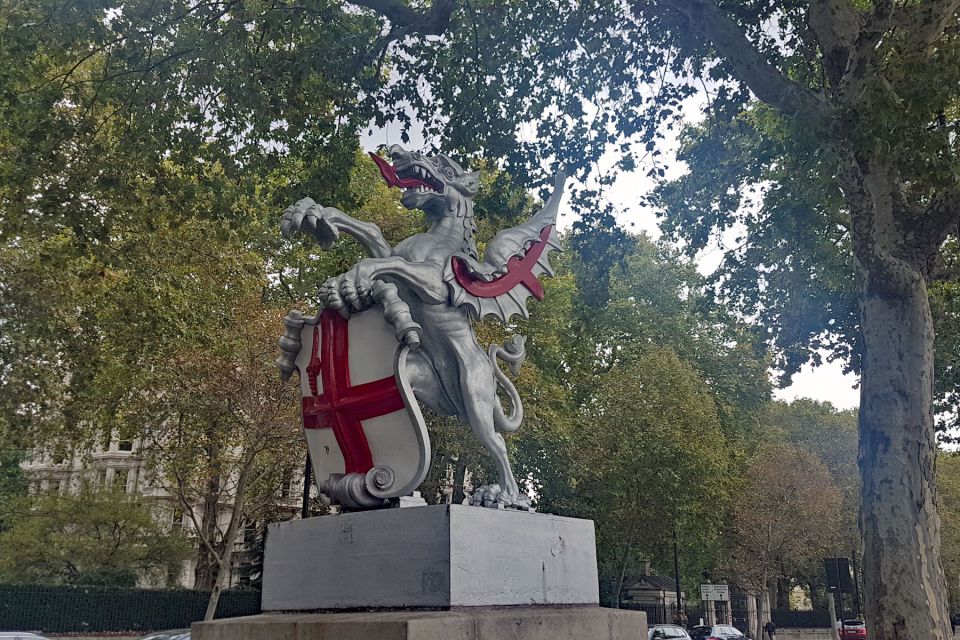
Finally, you finish at the Temple Bar Memorial. This last stop feels like a deliberate landing. Instead of ending at a random point, the tour closes the loop at a notable boundary marker—another clue that the City loves thresholds: lines between old and new, legend and stone, myth and street.
What the Tour Actually Teaches: Ley Lines, Ancient Mounds, and Symbolic Architecture
The tour’s headline themes are ley lines and ancient mounds, plus the idea that dragons shaped London’s lore for centuries. You should treat these as the tour’s interpretive framework. The value isn’t whether every single claim is literal; the value is that you’ll start noticing patterns and meaning-making across the city.
Here’s what you’ll likely gain that you can use immediately after:
- A habit of looking at iconography and symbolism instead of skimming past it.
- A better sense of how myths can act like a map, guiding people to “important” places.
- A feel for how sacred meaning shifts over time, while locations stay powerful.
- The ability to connect archaeology and architecture without needing a classroom setting.
And the guide’s approach—story, myth, and symbol—turns London’s stone into something readable. That’s where the magic lives: not in flying dragons overhead, but in the human urge to turn the built environment into a story you can live inside.
Price and Time: Is $25 for 2.5 Hours Good Value?
At $25 per person for about 2.5 hours, this is priced like a thoughtful experience, not a heavy-duty day commitment. You’re paying for an organized route, a live guide, and a tight storyline that links multiple sites that you’d otherwise visit in isolation.
The small-group limit (8 people) helps justify the price. In London, getting individual attention in a walking format can be harder than it should be, and here you’re not stuck in a large crowd.
You also get a post-tour PDF with an overview of tour locations and themes. That’s not a luxury add-on; it’s practical. When you leave a City walk, you’ll forget half the street names. The PDF helps you keep your mental map from collapsing.
Who This Tour Fits Best (and Who Might Want Something Different)
This is a great match if you like:
- mythology mixed with real places
- symbolic architecture and the way churches and civic buildings send messages
- archaeology-adjacent sightseeing that doesn’t require a museum entry to work
It may be less satisfying if you want:
- long stops and lots of time inside one site
- a purely academic history lecture with no mythical framework
Think of it as a guided way to experience the City’s imagination—through stone, streets, and the stories London keeps telling about itself.
Should You Book the City of London Mystical and Dragons Walking Tour?
If you’re the type who gets bored on straight sightseeing loops, I’d book it. The tour’s format trains you to see connections: London Stone to hidden waterways, Roman myth spaces to City power architecture, churches to templar legends, ending at Temple Bar with a strong final point.
With an overall rating of 4.9 out of 5 and a run of very positive feedback about the guide’s ability to weave story, myth, and iconography into a coherent route, you’re unlikely to feel like you paid for a random walk. Just go in knowing it’s story-led. If you want stories that make London’s layout feel meaningful, this is a smart use of a morning or early afternoon.
FAQ
How long is the City of London Mystical and Dragons Walking Tour?
It lasts about 2.5 hours.
How much does the tour cost?
The price is $25 per person.
Where does the tour start?
You meet outside Joe & the Juice. The guide can be identified by longish hair and beard and a felt green dragon on their backpack.
What is the tour end point?
The tour finishes at the Temple Bar Memorial.
Is the tour guided, and what language is it in?
Yes, it’s a live guided tour in English.
Is it a small group?
Yes. The group is limited to 8 participants.
Is the tour wheelchair accessible?
Yes, it’s wheelchair accessible.
Do you get anything after the tour?
Yes. You receive a post-tour PDF with an overview of tour locations and themes.
Is there free cancellation?
Yes. You can cancel up to 24 hours in advance for a full refund.