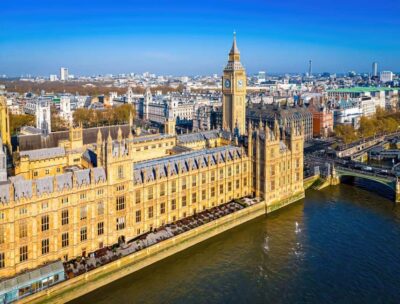
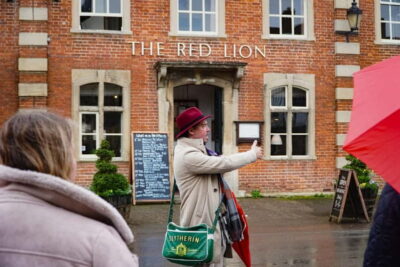
London’s layers show fast on foot. This City of London tour strings together big landmarks—St Paul’s Cathedral, the Monument to the Great Fire of London, and the Tower—along with some smaller, more surprising stops. I like that you also get included entry to London Mithraem or The Guildhall, plus access to the viewing platform at 120 the Garden. The one drawback: 140 minutes is tight, so you’ll want comfortable shoes and a pace that matches brisk sightseeing.
My favorite part is the human one: the live guide. In one verified booking, the guide Nick came through as a true fan of the route, and the explanations made the city feel logical instead of random. Another nice touch is that the walk mixes headline sights with places like Leadenhall Market, so you’re not just repeating the same postcard angles.
In This Review
- Key things I’d circle before you book
- The City of London, explained like a proper story
- What the 140-minute format gets right (and where it might feel rushed)
- St Paul’s Cathedral: your first landmark and a strong orientation
- The Monument to the Great Fire of London: seeing a turning point
- Bank of England: power, money, and architecture you can read
- Leadenhall Market: the stop that keeps it human
- Tower of London: the payoff landmark
- The included entries that make this tour feel like more than a walk
- The guide matters: when the person behind the mic loves it
- Who this tour is best for
- Price and value: why $24 can work here
- Should you book the City of London tour?
- FAQ
- How long is the Hidden Gems Tour of the City of London?
- How much does the tour cost?
- What are the main stops on the tour?
- Is there a live guide, and what language do they speak?
- What is included with the tour ticket?
- Is the tour wheelchair accessible?
- Who is the tour not suitable for?
- What is the cancellation policy?
- Can I reserve without paying right away?
Key things I’d circle before you book
- A focused 140-minute loop through the City’s most story-rich corners
- St Paul’s Cathedral and the Monument are handled as part of one connected narrative
- Bank of England context that helps you read the power behind the buildings
- Leadenhall Market included so the tour has texture, not just statues and stone
- Included entry to London Mithraem or The Guildhall for an actual “inside” moment
- Viewing platform at 120 the Garden to cap it with a clear, high-up perspective
The City of London, explained like a proper story

There’s a way London can feel overwhelming: you see famous landmarks, then you step away and forget what connects them. This tour avoids that problem by building a route that moves through the oldest part of the City and keeps the explanations tied to what you’re seeing right now.
I also like that the experience isn’t only “big name, big name, big name.” Yes, you’ll hit the major headlines—St Paul’s Cathedral, the Monument, and the Tower of London—but the route is designed to connect those scenes to earlier chapters, including ancient Roman remains. That structure matters because it turns the City from a grab bag of sights into a timeline you can follow.
You can also read our reviews of more city tours in London



What the 140-minute format gets right (and where it might feel rushed)

A 140-minute tour is just long enough to get momentum and short enough to keep your attention. You’ll spend enough time at key stops to learn what you came for, but you’re unlikely to feel trapped in a slow-moving museum crawl.
The practical question is whether you’re the type who likes to linger. If you prefer long pauses, careful sketching, or lots of quiet time for photos, the timing may feel a touch compressed. If you’re the type who wants a guided route with smart stops—then a tight schedule is actually a plus.
Also, because it’s a walking experience, bring footwear you trust. London surfaces can be slick or uneven in parts, and with multiple landmarks on the plan, comfort matters more than you think.
St Paul’s Cathedral: your first landmark and a strong orientation
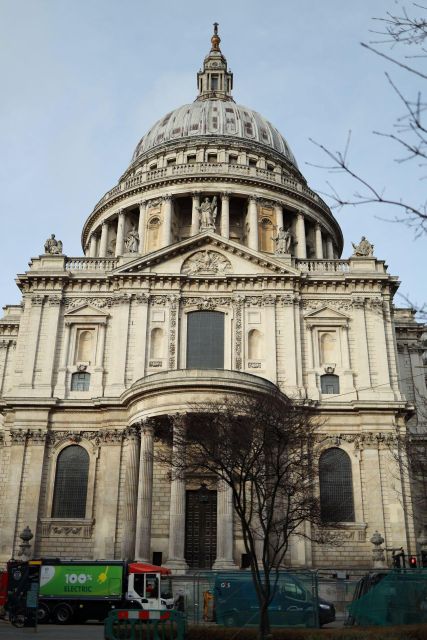
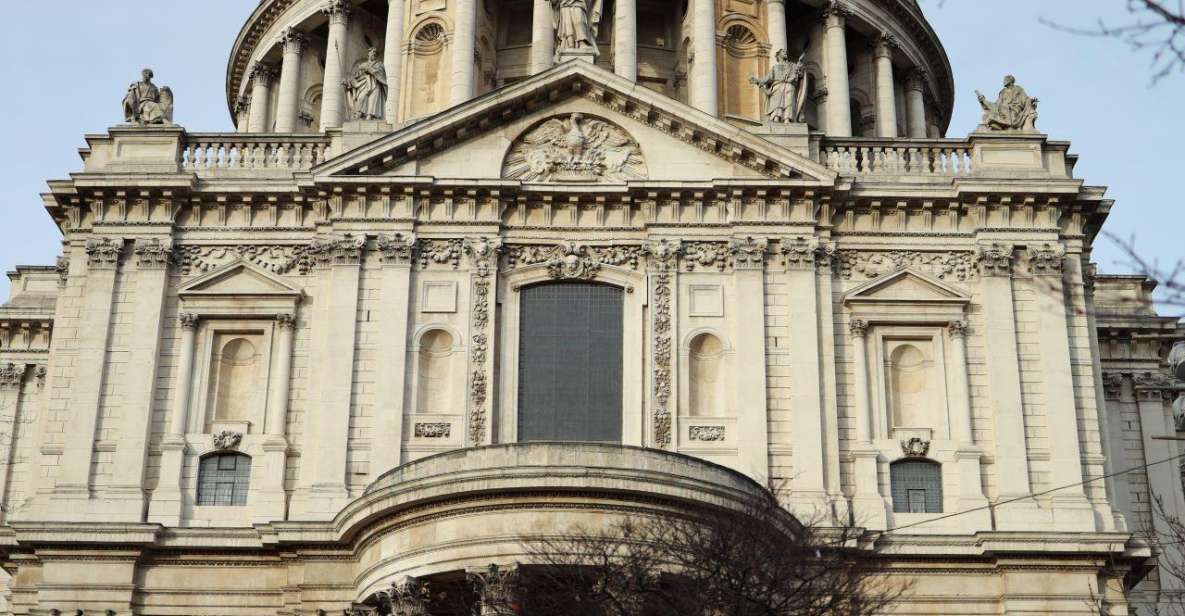
St Paul’s Cathedral is one of the City’s signature stops for a reason. On this tour, it’s not just a “stand here and look up” moment. You’re using it as an anchor point—one place that helps you get bearings while the guide explains how the City’s layers show up over time.
What I like about using St Paul’s Cathedral early (or at least as a major mid-route highlight) is that it gives you a frame. Once you’ve got a mental “center,” the later stops—especially the ones tied to major historic events—hit harder. Even if you’ve seen photos before, being there in person changes the scale and makes the stories feel more grounded.
The Monument to the Great Fire of London: seeing a turning point
The Monument to the Great Fire of London is a landmark that’s instantly recognizable. It’s also a strong choice for a guided tour stop because it signals a turning point in the City’s development.
On this route, the value is in the explanation, not in the object alone. You get the Monument as a hub for understanding how one event can ripple through a city, shifting what gets rebuilt, which routes matter, and how people think about the future. The guide’s job here is to make the Monument feel less like a standalone photo spot and more like a story engine.
One small tip: take a couple of minutes to look for angles that show the surrounding streets. That helps you connect what you see on the ground to what the guide is describing.
Bank of England: power, money, and architecture you can read
Bank of England is one of those places that many visitors pass by quickly. This tour treats it as more than a backdrop. The point is to help you recognize that buildings like this don’t exist in a vacuum—they sit in the middle of decisions, trade, and public life.
I like this stop because it balances the emotional weight of the Monument and major historical sites with a very practical theme: the City’s ongoing role as a center of institutions. If you’re curious how London works beyond the tourist highlights, this is the kind of stop that gives you the “oh right, this is why the City looks this way” feeling.
The route also gives you contrast. You go from the Monument’s event-driven symbolism to a setting tied to ongoing systems. That shift makes the tour more interesting than a simple highlight reel.





Leadenhall Market: the stop that keeps it human

Leadenhall Market is the kind of location that instantly adds texture. Big landmarks can feel dramatic but also distant. Markets bring you closer to everyday city life—scale, corners, and the sense that people actually use these spaces.
On this tour, it’s a welcome change of pace. Even without any special extra claims, having a market stop helps you reset your brain between heavier historical scenes. It’s also useful for photos, because you can capture streets and storefront angles without needing to face a single giant monument.
If you tend to get restless on tours, Leadenhall Market is one of the best reasons to pick this one. It breaks up the itinerary so the story stays lively.
Tower of London: the payoff landmark
You finish with one of the most famous settings in London: the Tower of London. This is the stop that turns your route from “interesting facts” into a memorable experience.
The key benefit on a guided walk is context. Instead of viewing the Tower as just an impressive structure, you see it as part of the City’s broader evolution, connected to earlier chapters the guide has been pointing out along the way. That way, the Tower feels like the end of a storyline, not just the last item on a checklist.
And yes, it’s a crowded magnet at times. If you want photos without chaos, keep moving as the guide signals the best moments to look, then give yourself a couple of seconds to step away from the densest spots.
The included entries that make this tour feel like more than a walk
This is where the tour’s value stands out. You’re not only walking past sights.
You get included entry to London Mithraem or The Guildhall. That means at least one stop goes beyond street-level viewing and into an actual interior experience. It’s a smart add because interiors often slow the pace naturally, giving your guide a chance to explain details that you can’t catch from outside.
You also get entry to the viewing platform at 120 the Garden. A viewing platform is a practical tool for understanding the shape of the area. Once you’re up, you can mentally connect the landmarks you’ve just seen to how they sit relative to one another.
If you’re comparing this to other City-of-London walks that are mostly exterior, the included entry stops are a big part of why the price can make sense.
The guide matters: when the person behind the mic loves it
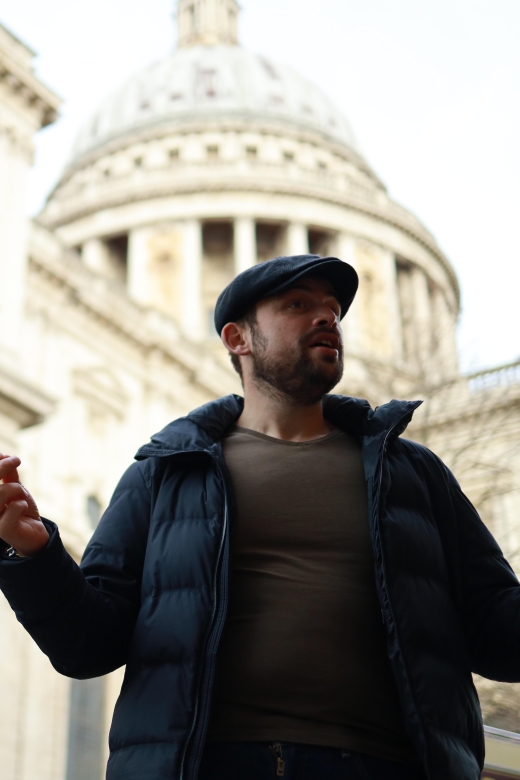
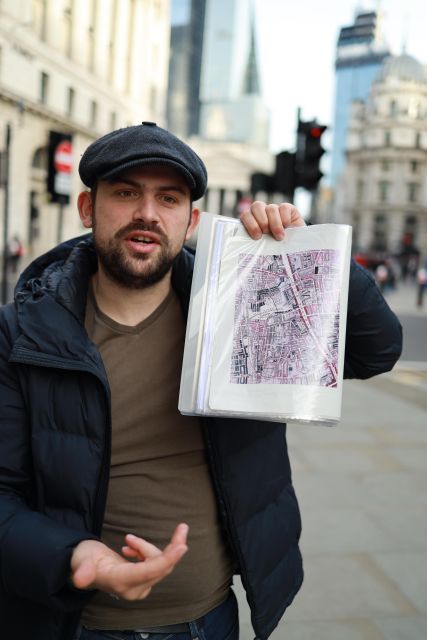
This tour uses a live English guide, and that’s more important than it sounds. A good guide turns landmarks into clues. In one verified booking, the guide was named Nick, and the feedback highlighted his enthusiasm and the way that enthusiasm translated into clearer learning.
Even if you’ve been to London before, a fan-guide approach can make the difference between “I saw places” and “I understand what I saw.” When the guide is genuinely engaged, you get better pacing, more helpful storytelling, and answers to the questions you’re already thinking.
Who this tour is best for
This one fits best if you like guided walking, clear explanations, and a route that prioritizes recognized landmarks plus a couple of quieter, more interesting stops.
You’ll probably enjoy it if:
- you want a guided route through St Paul’s, the Monument, Bank, Leadenhall Market, and the Tower in one go
- you like a plan that gives you context, not just directions
- you’re okay with a 140-minute schedule that keeps things moving
It’s not a match if:
- you’re traveling with a baby under 1 year
- you’re over 95 years (there’s an age limit listed)
It’s also wheelchair accessible, which is a meaningful plus if you need a route designed for mobility needs.
Price and value: why $24 can work here
At $24 per person for 140 minutes, the price isn’t just about “someone leads you around.” You’re also getting included entry to London Mithraem or The Guildhall, plus access to the viewing platform at 120 the Garden.
That combination matters for value because it reduces the number of things you’d otherwise need to pay for separately or line up on your own. Even if you don’t think about the dollar amount in advance, included entry tends to make the whole day feel less fiddly and more complete.
One more practical angle: the tour is offered in English with a live guide, so you’re paying for interpretation, not only transportation. That’s usually where guided experiences feel worth it.
Should you book the City of London tour?
If you want one focused guided walk that covers St Paul’s, the Monument, the Bank, Leadenhall Market, and the Tower—plus included interior time and a viewing platform—then I’d say this is a strong yes.
Book it if you like:
- guided context at major landmarks
- a manageable 140-minute commitment
- an itinerary that mixes famous and less-obvious stops
Consider passing if you need lots of extra time per stop or you’re the type who dislikes brisk pacing. For everyone else, this is a practical way to get the City of London’s main story beats without building your own route from scratch.
FAQ
How long is the Hidden Gems Tour of the City of London?
The tour duration is 140 minutes.
How much does the tour cost?
The price is $24 per person.
What are the main stops on the tour?
The highlights include St Pauls Cathedral, the Monument to the Great Fire of London, Bank of England, Leadenhall Market, and the Tower of London.
Is there a live guide, and what language do they speak?
Yes, there is a live tour guide, and the tour is in English.
What is included with the tour ticket?
Entry is included to London Mithraem or The Guildhall, plus entry to the viewing platform of 120 the Garden.
Is the tour wheelchair accessible?
Yes, the tour is listed as wheelchair accessible.
Who is the tour not suitable for?
It is not suitable for babies under 1 year and people over 95 years.
What is the cancellation policy?
You can cancel up to 24 hours in advance for a full refund.
Can I reserve without paying right away?
Yes. The offer includes Reserve now & pay later, so you can book and pay nothing today.