REVIEW · LONDON
Burnings, Butchery & Black Death: London’s Bloody Past
Book on GetYourGuide →Operated by Historic London Tours · Bookable on GetYourGuide
Smithfield’s past hits hard. This 2-hour walking tour turns London’s gruesome middle ages and Dickens-era streets into a clear, story-driven route. You’ll focus on one tight area, learn how the city handled unimaginable death, and see how a place of slaughter slid into slum life.
I especially love the way the tour keeps the facts readable while still leaning into the darker characters and campfire-style storytelling. The route around Smithfield hits multiple eras in quick hits, from public punishment to plague-era problem-solving.
One consideration: this is not a fluffy history stroll. If you’re sensitive to grim details or want something kid-friendly, the subject matter (and the warning that it’s not suitable for under-13s) may be a mismatch.
In This Review
- Key things to know before you go
- Smithfield’s Bloody Backstory: Why This 2-Mile Walk Matters
- What the Guide Does Best: Dark Stories, Clear Explanations
- Start at Barbican: Finding the Tone Before You Hit Smithfield
- Charterhouse Square to Smithfield Market: The City’s Hunger and Its Cost
- St John’s Gate, Cloth Fair, and the Medieval Execution Trail
- St Bartholomew the Great and St Bartholomew’s Hospital: When Care and Power Coexist
- The William Wallace Memorial: Braveheart in the Real World
- Golden Boy of Pye Corner and London Central Markets: Symbols After Plague
- Ely Place Finish: How Slaughter Became a Slum Setting
- Price and Value: Is $26 Worth Two Hours of Dark London?
- Who This Tour Fits Best (And Who Might Skip It)
- Quick Practical Tips for a Comfortable Walk
- Should You Book Burning, Butchery & Black Death?
- FAQ
- FAQ
- How long is the tour?
- What distance do we walk?
- Where do I meet the guide?
- Where does the tour end?
- How much does it cost?
- Is it suitable for children?
- Is the tour in English?
- Are church visits included?
- How big is the group?
- Is there free cancellation?
Key things to know before you go
- Smithfield, in full context: You connect animal slaughter, human execution, plague disposal, and later slum conditions in one walk.
- The guide’s rhythm: Short stops mean you’re never stuck in one spot, and questions get welcomed.
- Black Death handling, not just dates: The tour explains how London disposed of tens of thousands of corpses in the 1300s.
- Medieval execution methods explained: You’ll learn what was used in the Middle Ages, with practical clarity.
- Literature shows up in real streets: Dickens and Oliver Twist come into focus through the area’s decline into slum life.
- Small group feel: Tickets are limited to 15 people, which helps the tone stay personal.
Smithfield’s Bloody Backstory: Why This 2-Mile Walk Matters
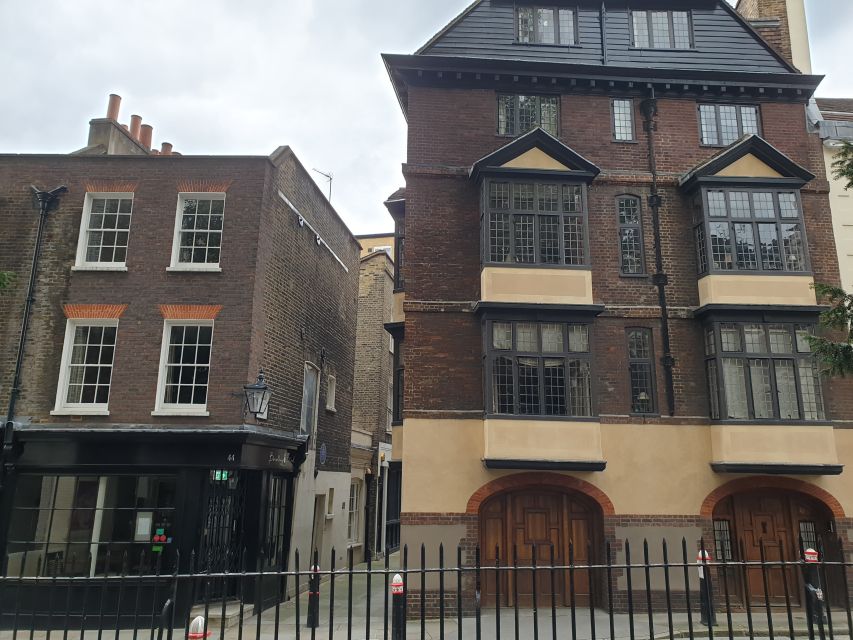
Smithfield is one of those London areas where the modern streets feel calm, but the past was anything but. This tour uses that contrast on purpose. You start by seeing the exact zones tied to mass death and public punishment, then you watch how the same ground gets reused, rebranded, and eventually remembered in literature.
What makes it compelling is the chain of cause and effect. The tour doesn’t just list events like a timeline. It connects slaughter (animals and people), then the Black Death crisis, then the methods used for punishment, and then the way the area developed a reputation that Dickens later used in Oliver Twist.
The walk itself is short: about two miles total. That matters because the subject is heavy. You get all the context without spending half a day trudging across town.
You can also read our reviews of more tours and experiences in London.


What the Guide Does Best: Dark Stories, Clear Explanations
The biggest quality here is the guide’s delivery. On the tours I’ve seen like this, the danger is getting either overly dry or overly sensational. Here, the balance lands closer to helpful and entertaining than academic and remote.
You’ll hear the story through scenes and characters: kings, body snatchers, Charles Dickens, and even an eighteenth-century ghost thread. That structure makes the middle ages feel like a living setting instead of a distant textbook.
Also, the guide’s approach is interactive. The best part is that questions are encouraged, and answers are given in a way that keeps you moving rather than stalling the group. If you’re the type who likes to check details as you go, this style works well.
Start at Barbican: Finding the Tone Before You Hit Smithfield
The tour begins outside Barbican Station on Aldersgate Street. Your guide is easy to spot, standing just outside the exit with a Historic London Tours sign. It’s a practical starting point, and it also gives you a clean “start line” before the tour heads into the darker core of the story.
In the first stretch, the tour sets expectations for what you’re about to learn. You get a framing of London’s brutal past that isn’t just shock value. You also learn what kind of history you’ll be hearing: executions, plague disposal, and how whole neighborhoods got reshaped by violence and illness.
It’s short-form history at first, which helps your brain switch gears quickly. You won’t spend long in one place before you’re moving again.
Charterhouse Square to Smithfield Market: The City’s Hunger and Its Cost
Charterhouse Square is the first guided stop. It’s brief, but it helps you orient the story before you reach the area tied to centuries of slaughter. From there, you head into the Smithfield Market area, where the tour’s central theme becomes impossible to ignore.
Smithfield is presented as a working hub for a long time, not a museum display. The tour highlights that it was tied to both animal and human slaughter for centuries. That dual-purpose reality is the key insight. It shows you how public violence and everyday commerce could occupy the same geography.
Then the tour pivots into the Black Death crisis of the 1300s. You learn how London disposed of tens of thousands of corpses. The takeaway isn’t just that plague was deadly. It’s how the city managed mass death with the tools and systems it had, which helps you understand the scale of the catastrophe.
St John’s Gate, Cloth Fair, and the Medieval Execution Trail
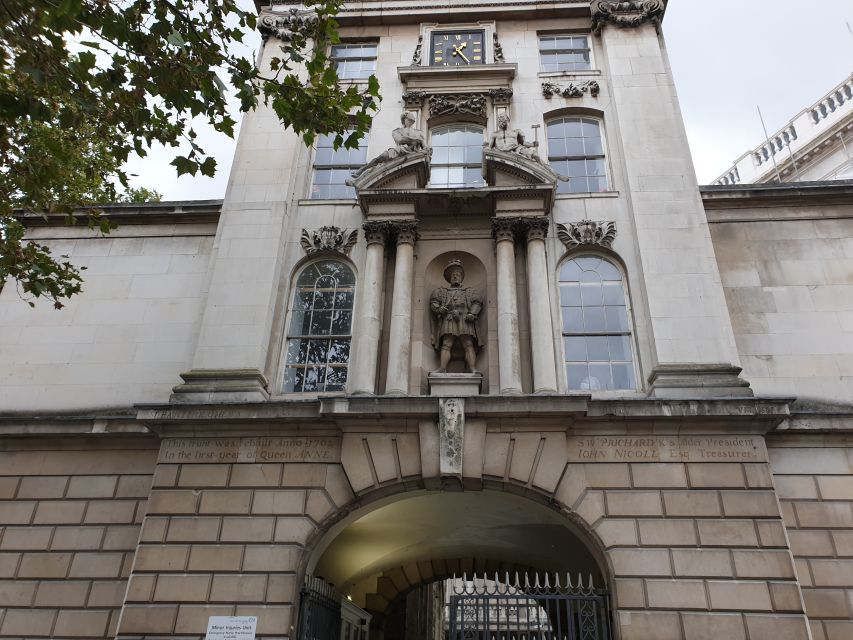
Next comes a set of stops that feel like a walk through layers. St John’s Gate is one of them, followed by Cloth Fair. You’ll notice the tour keeps returning to the idea of repurposing space, year after year.
At this stage, the tour focuses more on the mechanisms of punishment. You learn about execution methods used in the Middle Ages. Rather than treating executions as vague horror, the tour gives you enough detail to understand what made them public, what they signaled, and how punishment fit into the city’s power structure.
This is also where the “why” becomes clearer. Once you’ve heard about plague disposal and medieval executions, you can better see how brutal systems can shape neighborhoods. That sets up the later part of the story, where Smithfield becomes tied to slum life.
The stop structure matters here. Each location gets only a short guided moment, so you keep momentum and don’t feel trapped listening. If you’re the type who gets restless on long history monologues, this pacing helps a lot.



St Bartholomew the Great and St Bartholomew’s Hospital: When Care and Power Coexist
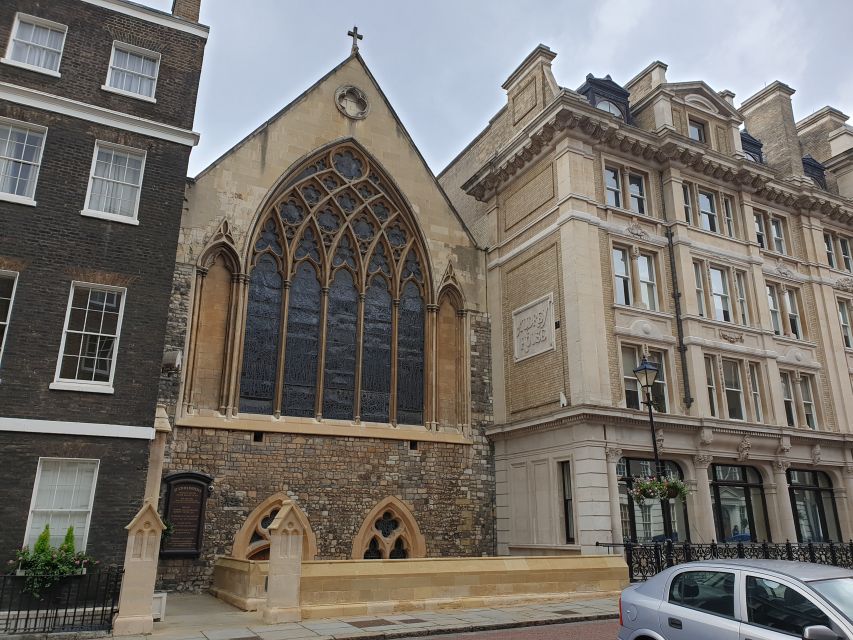
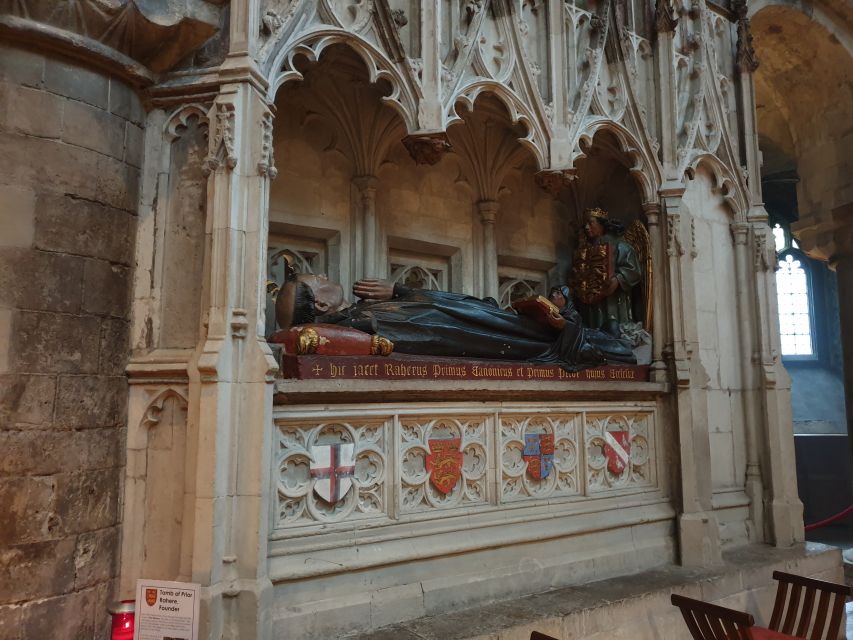
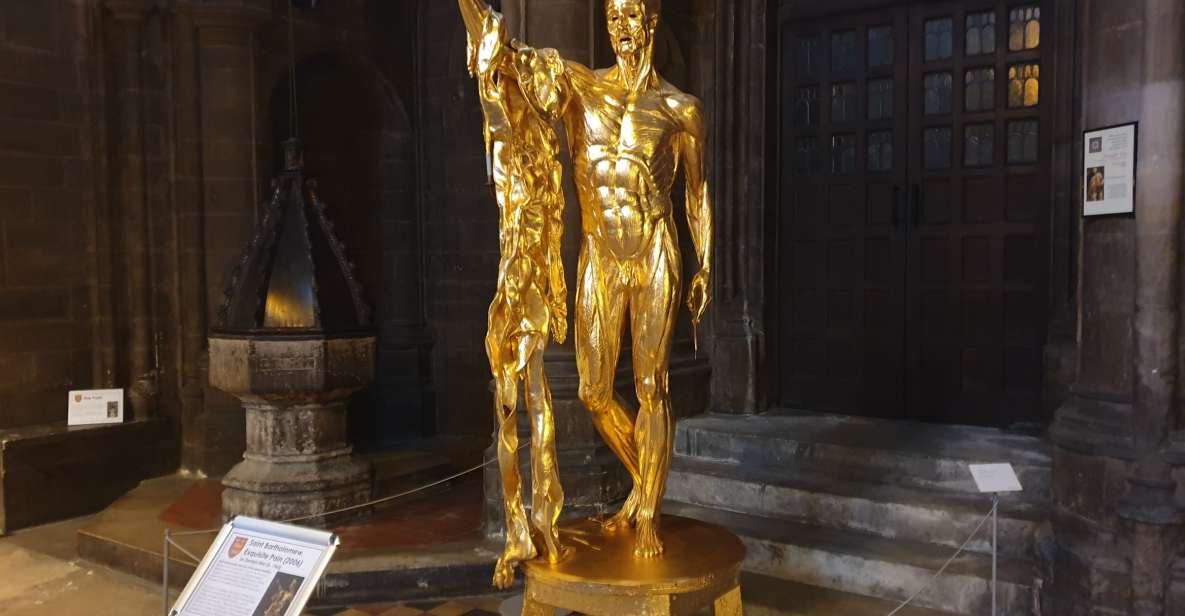
You also visit major church and hospital landmarks along the route. St Bartholomew the Great and St Bartholomew’s Hospital are included, and you may be able to enter churches on the walk if there are no services in progress.
That “subject to no services” detail is worth planning around. If you’re hoping for interior time, go in with flexible expectations. Even when you don’t get inside, the exterior context still supports the story the guide is telling.
This part of the tour is useful because it adds contrast. You’re looking at places linked to community and institutions while still hearing about execution methods and plague-scale death. The juxtaposition helps you grasp a grim truth: cities don’t stop building, organizing, or caring during disaster. They often intensify routines and infrastructure, even as the outcomes become horrific.
So you end up with a more realistic mental picture of medieval London. Not just one mood, not just one atrocity. A whole system under extreme pressure.
The William Wallace Memorial: Braveheart in the Real World
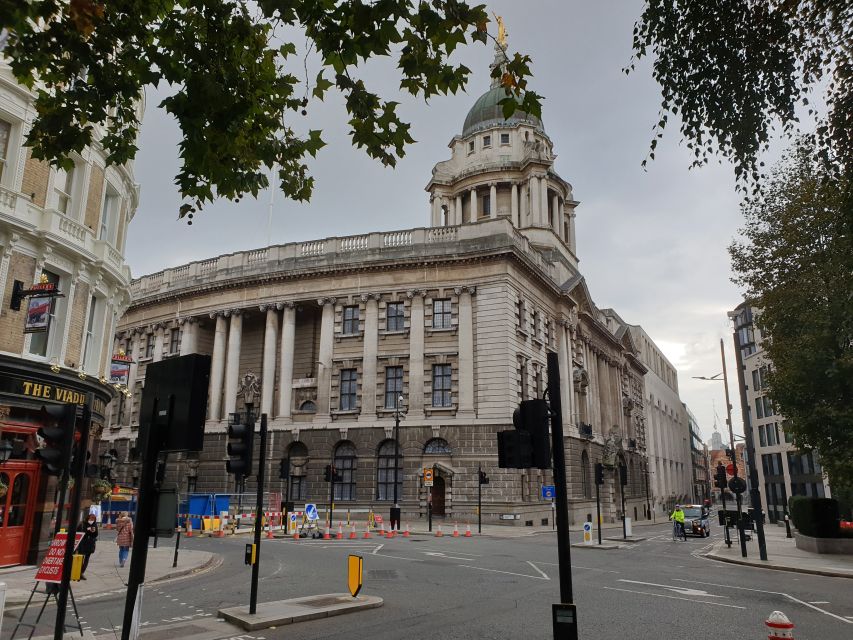
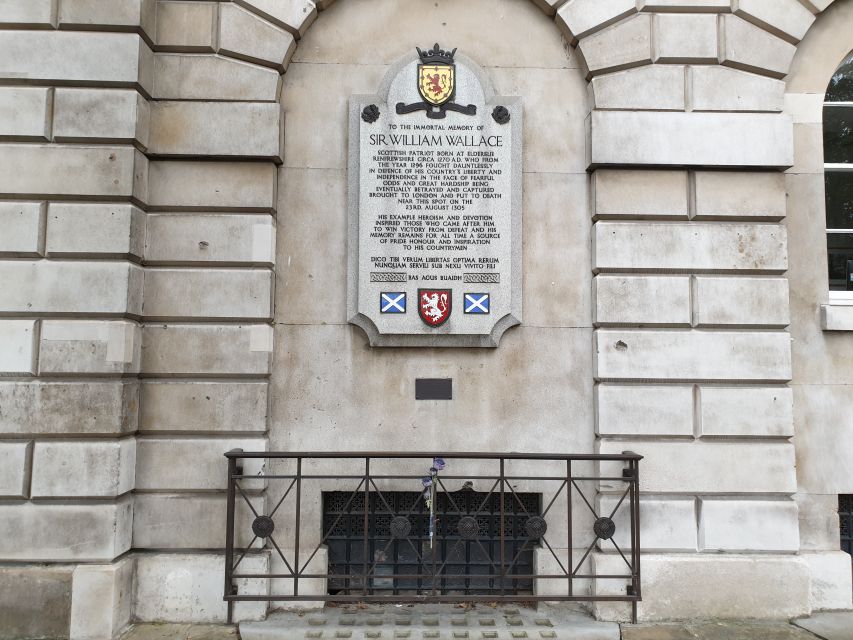
One of the standout emotional moments is the Sir William Wallace Memorial stop. The tour ties William Wallace to his execution and also plays with the popular imagination.
You’ll hear how Wallace’s real execution context doesn’t match the clean cinematic idea of a dramatic last cry for freedom. The point isn’t to mock history. It’s to put flesh on the fact that execution day wasn’t a movie script. It was a brutal event with real physical and social constraints.
This stop also helps the tour with pacing and mood. After heavier plague and execution details, the Wallace story gives you a human reference point and helps the guide keep the narrative engaging without losing accuracy.
Golden Boy of Pye Corner and London Central Markets: Symbols After Plague
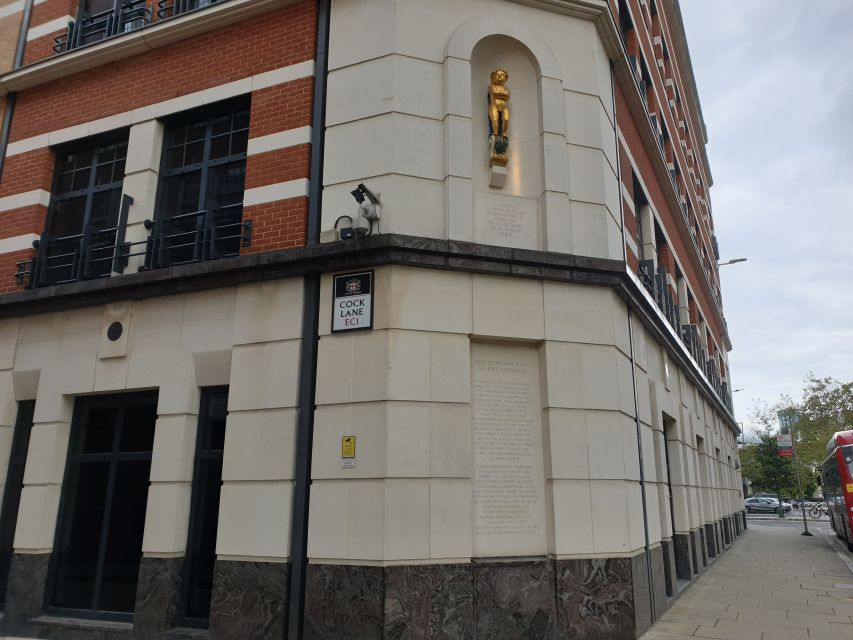
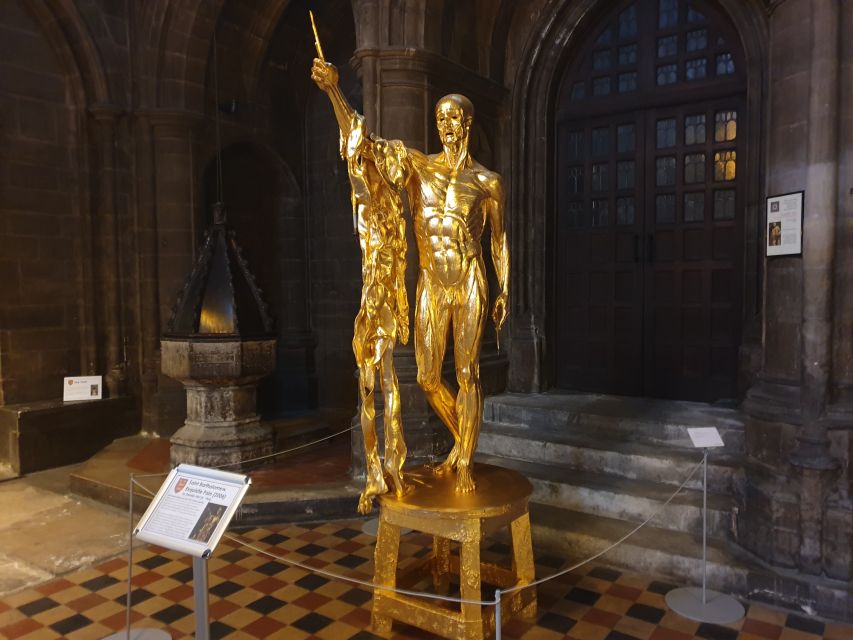
As you move along the route, the tour brings in the Golden Boy of Pye Corner and the London Central Markets area again. These are stops that help explain how cities leave marks after outbreaks and repeated shocks.
You learn how Smithfield’s reputation changed over time, and you start seeing how memorial signals and street life can coexist. That matters because it shifts your perspective from purely “event history” to “place history.”
This is also where the Oliver Twist thread begins to feel more grounded. Dickens didn’t invent slum life from nowhere. He leaned on places people recognized. Seeing these streets in the context of past disposal and punishment helps you understand why that literary connection is plausible.
If you enjoy connecting literature to real geography, this is one of the best phases of the tour. The walk becomes a map of themes, not just a sequence of stops.
Ely Place Finish: How Slaughter Became a Slum Setting
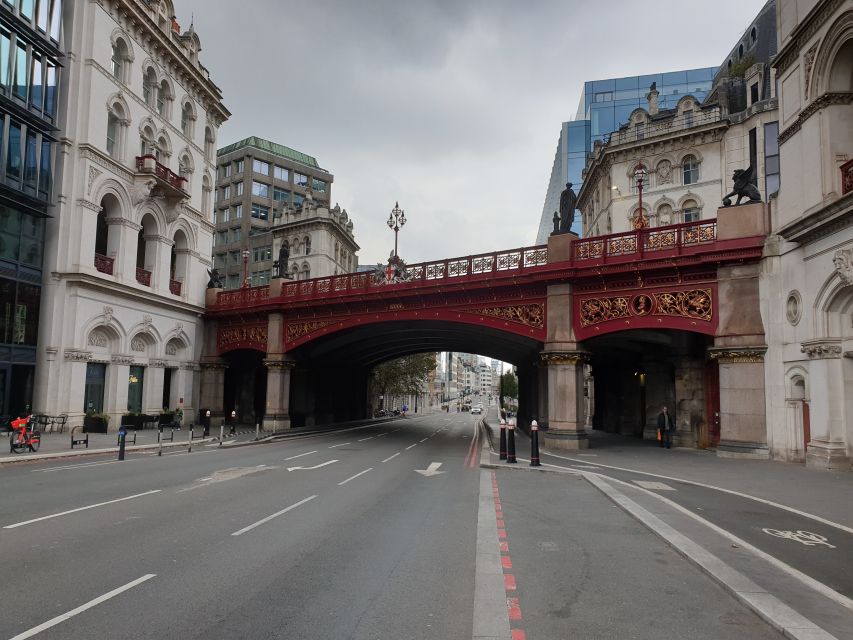
The walk finishes at Ely Place, and it’s conveniently near Farringdon. That makes it easy to keep your day moving without a long return trip.
By the end, the tour’s central transformation clicks into place. You learn how Smithfield became a notorious slum, memorialised by Dickens in Oliver Twist. That’s the final emotional note: a place once linked to slaughter and execution becomes remembered through poverty, crowds, and the harsh realities of urban life.
For me, the value is how the story ends. Not with a grim cul-de-sac, but with an explanation of how reputation sticks. Places get labeled, and labels persist—first in lived experience, then in novels, then in your own mental map when you walk by years later.
Price and Value: Is $26 Worth Two Hours of Dark London?
At about $26 per person for a 2-hour walk, you’re paying for three things: a tight route, live guiding, and an interpretive approach that keeps heavy material understandable.
A generic walking tour might show you buildings and give dates. This one spends its time on specific themes: Smithfield’s centuries of slaughter, the Black Death disposal challenge in the 1300s, and the Middle Ages execution methods that shaped public life. Those are not themes you can easily piece together from a standard guidebook in the same time window.
Also, the cap of 15 attendees is a real value-maker. It supports discussion and helps the guide manage the tone. For darker history tours, small groups matter because the story can easily become either rushed or awkward in big crowds.
If you’re the type who enjoys “one neighborhood, many eras,” this is a strong deal. If you want only light entertainment and no graphic historical detail, you’ll likely feel the price is irrelevant—because the mismatch with your taste will be the issue, not the cost.
Who This Tour Fits Best (And Who Might Skip It)
This tour suits you if you like history that has consequences. You’ll enjoy it if you want to understand how cities worked under extreme stress, not just how famous people are pictured in textbooks.
It also fits well if you enjoy storytelling formats. The tour explicitly mixes characters and time periods in a way that keeps attention. Charles Dickens shows up as part of the explanation, not as a random name drop.
It may not fit if you want kid-friendly sightseeing. The tour is not suitable for children under 13. That’s an important signal that the content leans grim, and it’s best respected.
Quick Practical Tips for a Comfortable Walk
You’ll walk about 2 miles over roughly 2 hours. That’s manageable, but London sidewalks aren’t always gentle, and the tour keeps moving between stops.
If you’re sensitive to dark themes, mentally prepare for a heavier topic before you arrive. It helps you settle in and listen better, rather than hoping the mood will soften.
For church interior time, remember entry is subject to services. If you arrive during a service, you’ll still learn outside, but you might not get the full interior experience you hoped for.
Finally, bring comfortable shoes. Even though the distance is short, the route is timed so you don’t get long breaks.
Should You Book Burning, Butchery & Black Death?
Book it if you want a focused neighborhood tour that ties together Smithfield, the Black Death, medieval punishment, and Dickens-era slum life in one coherent story. The small group size, quick pacing, and a guide who can keep the tone entertaining and clear make it easy to stay engaged.
Skip it if you’re after a gentle overview of London sights. This is dark history with real-world details, and it’s not aimed at lighthearted curiosity. Also, if you’re traveling with kids under 13, this one’s a no.
FAQ
FAQ
How long is the tour?
The tour lasts about 2 hours.
What distance do we walk?
The total walking distance is about 2 miles.
Where do I meet the guide?
Meet just outside Barbican Station on Aldersgate Street. The guide will be standing there with a Historic London Tours sign.
Where does the tour end?
The tour ends near Ely Place, and it’s also close to Farringdon Station.
How much does it cost?
The price is listed as $26 per person.
Is it suitable for children?
It’s not suitable for children under 13.
Is the tour in English?
Yes, the live tour guide speaks English.
Are church visits included?
Church entry is included, but it’s subject to there being no services in progress.
How big is the group?
Ticket sales are limited to 15 attendees.
Is there free cancellation?
Yes, you can cancel up to 24 hours in advance for a full refund.