REVIEW · FILM & TV LOCATION TOURS
London: Harry Potter Filming Locations Sightseeing Tour
Book on GetYourGuide →Operated by Empire Tours and Productions LLC (United Kingdom) · Bookable on GetYourGuide
Magic lives on real London streets. This 2-hour walking tour strings together famous movie moments and their real-world lookalikes, from Leadenhall Market to Borough Market. What makes it fun is the way the guide ties Harry Potter filming locations to London landmarks, so you’re not just taking photos, you’re reading the city like a script.
I especially like the story focus and the practical pacing. Guides such as Becky, Yassine, and Eugene bring film details to everyday corners of the City, with plenty of stops that work for pictures, including moments tied to the Knight Bus, the Leaky Cauldron entrance, and the darker beats around the Thames.
One possible drawback: it’s short and mostly exterior. You’ll see a lot, but you won’t get long hangs inside buildings unless the stop naturally allows it, so you’ll want comfortable shoes and a quick-walk mindset for weather and foot traffic.
In This Review
- Key things I’d circle before you go
- Leadenhall Market to Diagon Alley: start where the magic looks real
- Bank of England and the City of London stops that sharpen the backdrop
- St Paul’s Cathedral and the Geometric Staircase moment
- City of London School: the real-life thread to the Boy Who Lived
- Millennium Bridge to Shakespeare’s Globe: where the Thames adds meaning
- Clink Prison Museum: switching to the darker mood without slowing down
- Borough Market finale: Leaky Cauldron and the Knight Bus drop-off
- Price and time value: $19 for a tight, guided highlight run
- What you should bring so the walk feels easy
- Who this tour suits best (and who might feel it’s too narrow)
- Should you book this Harry Potter filming locations tour?
- FAQ
- Where does the tour start?
- What is the duration of the tour?
- How much does it cost?
- What places do you visit on the way?
- Is there a guide, and what languages do they speak?
- What should I bring?
- Is the tour walking only?
- Can I get a refund if my plans change?
- Can I reserve without paying right away?
Key things I’d circle before you go
- Leadenhall Market as your Diagon Alley starting point, right where the look and feel matches the films
- A guide-led mix of London history and Hogwarts lore, not just location spotting
- Photo-friendly stops at major landmarks like St Paul’s and the Millennium Bridge
- The St Paul’s Geometric Staircase connection, plus the Daniel Radcliffe school link
- A mood shift at Clink Prison Museum, where the Azkaban vibe makes sense quickly
- Borough Market as the Leaky Cauldron finale, a very satisfying ending point
Leadenhall Market to Diagon Alley: start where the magic looks real
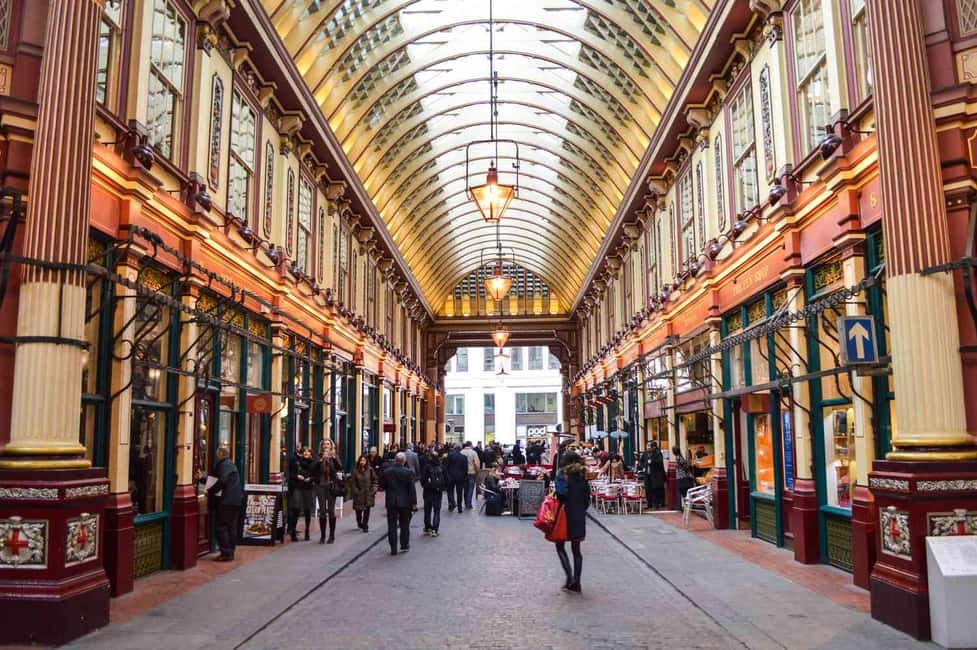
The tour begins at 31 Leadenhall Market, outside Barbour. That matters because Leadenhall Market isn’t some vague “nearby landmark.” It’s a proper Victorian passage with that old-time London geometry that film crews love, and it’s the starting point used to bring Diagon Alley to life on screen.
In a place like London, it’s easy to feel like you’re just sightseeing. Here, you’re walking with a purpose. You get to orient your brain fast: the guide points out the visual cues the movie used, and you’ll understand why the setting reads as wizarding even when you’re standing in the middle of the City.
Plan on taking your first good photos early. Leadenhall Market is the kind of spot where the best shots come from the angles of the arches and the walkway lines. If you wait until later, you may still get pictures, but you’ll miss that clean start-of-tour “this is the real thing” feeling.
You can also read our reviews of more tours and experiences in London.


Bank of England and the City of London stops that sharpen the backdrop
After Leadenhall Market, you move through the historic City of London. You’ll hit a photo stop at the Bank of England, plus a stop at the Reflection Garden. These pauses are more than filler. They give you context for how the films borrow gravitas from real buildings.
The Bank of England stop is the kind of place where the movie-making logic is obvious: the setting looks powerful, formal, and built for important transactions. Even if you’re not chasing a specific spell in that moment, you’ll start connecting how the wizarding world borrows atmosphere from real London institutions.
The Reflection Garden is also a smart inclusion. Between movie locations, it gives your eyes a calmer scene. It’s easier to reset your focus and keep your feet moving when the walk alternates between busy streets and places where you can stop, look, and breathe.
You’ll also notice how the tour balances “stand still and shoot” with “walk and connect.” That keeps you from feeling dragged, and it helps the locations stick in your memory.
St Paul’s Cathedral and the Geometric Staircase moment
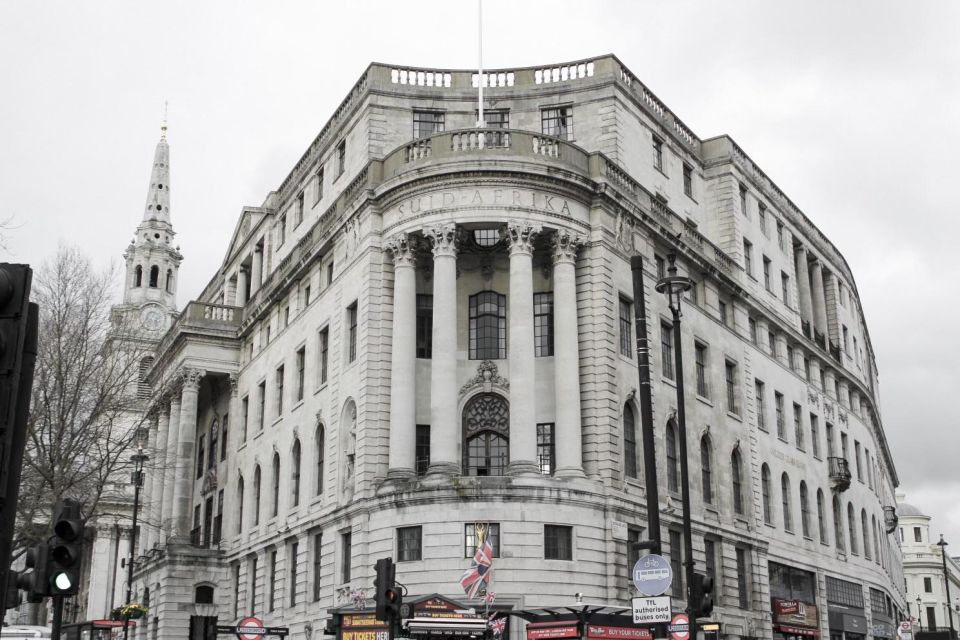
Next comes St Paul’s Cathedral, where you get a photo stop and a guided look. The key reason this stop earns its place: St Paul’s is linked to the Geometric Staircase shown in Harry Potter and the Prisoner of Azkaban.
If you’ve seen the movies, this is one of those locations that triggers instant recognition. Even from the outside, you can understand why the filmmakers went after bold, structured geometry. It’s the kind of visual language that looks like it belongs in a magical building because it already has that “designed for dramatic movement” feel.
A practical tip: bring your steady-shooting mindset. St Paul’s is a major London landmark, so you’ll be working around crowds and shifting viewpoints. Keep your camera ready for quick angles rather than expecting one perfect, quiet photo.
This is also a good spot to ask your guide questions. The tour is built on guide storytelling, and St Paul’s is the type of place where the explanation can turn a landmark into a scene you can picture.
City of London School: the real-life thread to the Boy Who Lived
Then you reach City of London School for a photo stop plus guided discussion and free time. This stop has a very specific connection: it’s where Daniel Radcliffe once studied.
This is one of the best kinds of “I didn’t expect that” inclusions. It’s not about pretending a school becomes Hogwarts. It’s about showing how the real people behind the films existed right here, in ordinary academic spaces.
If you’re traveling with kids, this is the kind of detail that clicks fast. If you’re an adult Potter fan, it adds a human layer. You’re not just chasing sets; you’re seeing where the actors’ everyday London life intersected with the story that took over the world.
Use the free time thoughtfully. Don’t scatter your attention. Take a few good photos, then stand where the guide can still point out what the area is known for. That’s how you get the most out of the time without feeling rushed.
Millennium Bridge to Shakespeare’s Globe: where the Thames adds meaning
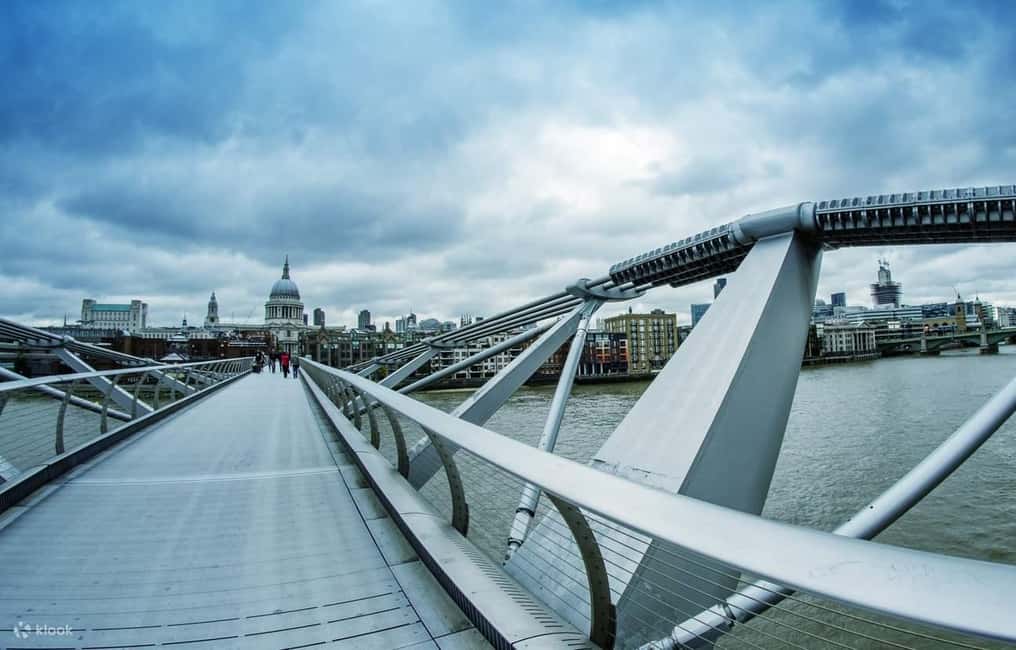
The tour crosses the Millennium Bridge next. This is another stop built for movie recognition, because it’s tied to the bridge moment destroyed by Death Eaters in Harry Potter and the Half-Blood Prince.
The bridge is also a smart geography lesson. Standing here, you can see why the scene works visually: it has that clean line across the river, and it reads as important and exposed. When a movie wants danger to feel immediate, bridges are a natural choice.
After that, the walk continues along the Thames toward Shakespeare’s Globe Theatre, with photo stop and guided tour/sightseeing along the way. This part may surprise people who think they signed up for only wizarding references. But the literature link makes sense. London’s storytelling tradition is older than the movies, and Shakespeare’s Globe helps you see the city as a long-running stage for dramatic tales.
You won’t need to be a literature scholar to enjoy it. You just have to let the connection work on you. It turns the tour into more than a fan walk. It becomes a London walk with a Hogwarts-shaped filter.



Clink Prison Museum: switching to the darker mood without slowing down
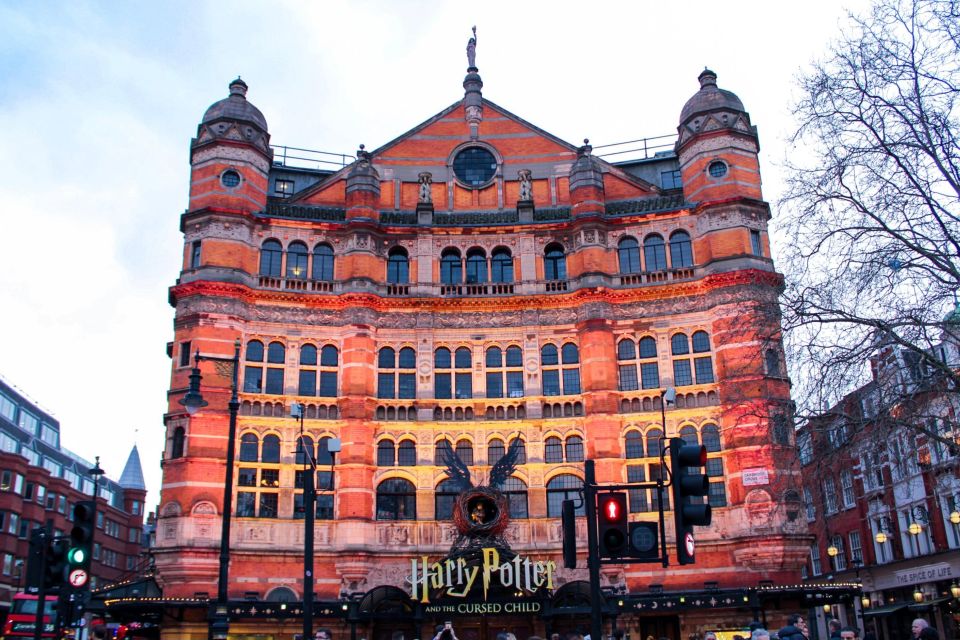
Next is Clink Prison Museum for a photo stop and guided visit. This stop brings the atmosphere down. The medieval prison setting evokes Azkaban vibes, and that “darker wizarding lore” shift happens naturally once you’re in the right mood.
Even if you’re not deep into the backstory, this stop is useful because it gives your brain a contrast point. So much of Harry Potter is built on wonder, but the series also needs fear and consequence. Clink helps you feel that change, and it does it without needing special effects.
This is also a nice “hands-on imagination” moment. Prison spaces tend to make you think about confinement and movement, which mirrors how the films treat certain characters and locations. It’s not the same story, but the emotion is legible.
If you’re traveling with people who get bored at long explanations, this is the place where the setting can hold attention even when the talk gets heavier.
Borough Market finale: Leaky Cauldron and the Knight Bus drop-off
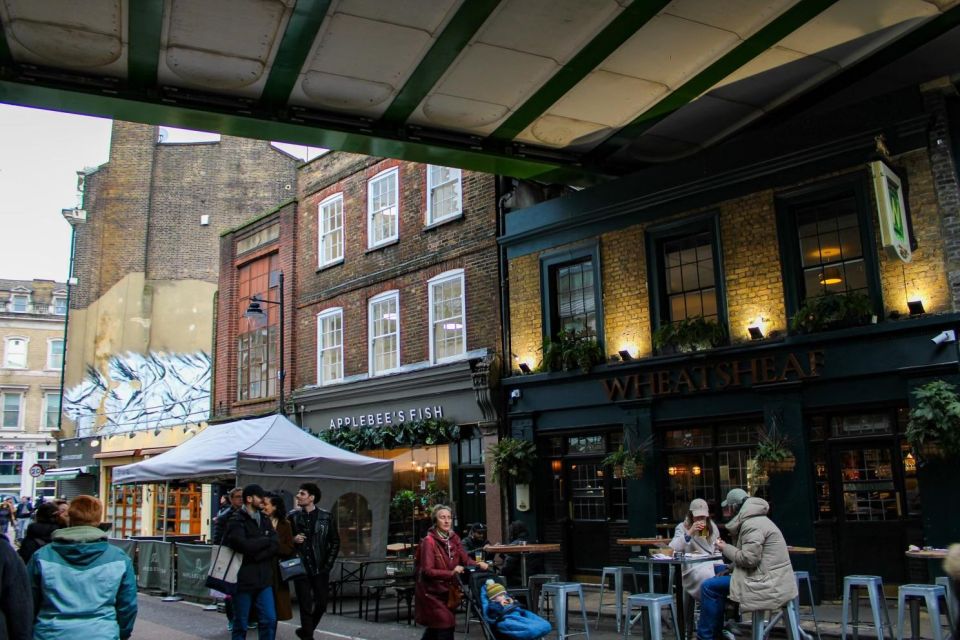
The tour ends at Borough Market, with the stop as the finish point. This is where it all clicks for many fans because Borough Market was used as the location for the entrance to the Leaky Cauldron in Prisoner of Azkaban, including the moment where Harry is dropped off by the Knight Bus.
Ending at Borough Market is a great choice for two reasons. First, the market feel makes the wizarding moment believable: lots of movement, lots of people, lots of real-world energy. Second, it gives you an easy way to extend the day after the tour.
If you want to make this work best, plan to hang around after. You’ll already be in a place that looks like it belongs in stories, and you can keep your fan mood going while you grab a snack or meal. This is also a good location to compare everyone’s photos and favorite angles.
Price and time value: $19 for a tight, guided highlight run
At $19 per person for 2 hours, this is the kind of tour that competes with self-guided walking, but only if you want more than photos. If you just want to point at buildings and say that looks like the scene, you could do it alone. The value here is the guide’s links between filming details, J.K. Rowling lore, and what you’re standing near in real life.
Two hours is also a sweet spot for London. You get enough time to cover major stops like St Paul’s, the Millennium Bridge area, Clink Prison Museum, and the Borough Market finale without turning your day into a full-day walking marathon. If you have limited time or you’re mixing this with other London highlights, this format is practical.
Group size can also make the experience feel more personal. In at least one described timeslot, there were only two tourists, turning the walking portion into a more private style of attention. Even when groups are larger, the stop-by-stop structure means you’re never far from the guide’s context.
What you should bring so the walk feels easy
This is a walking tour, so your comfort matters more than your fashion.
Bring comfortable shoes and weather-appropriate clothing. London weather can change fast, and you’re stopping outdoors for photo moments and street views. Also keep your phone or camera charged, because the photo stops are a big part of why people book this in the first place.
Finally, bring your curiosity. You don’t have to be an expert on every book or movie. The tour works even if you’re not the biggest Potter fan, because London history and film locations still land as interesting on their own.
Who this tour suits best (and who might feel it’s too narrow)
This tour is a strong fit if you fall into one of these buckets:
- You want real filming locations without traveling outside central London
- You like film details and the behind-the-scenes feeling of “this is the street they used”
- You’re visiting London for a short window and want a compact plan
- You enjoy a guided story more than a DIY scavenger hunt
It might feel narrow if you’re hoping for a deep, multi-hour production walk with lots of time spent inside multiple venues. Here, the emphasis is on moving between key scenes, getting the connections, and using the time for photos and guided context.
The good news: it still works for non-hardcore fans. The structure ties in London landmarks and the actor connection at City of London School, so you can enjoy it even if you only know a few scenes.
Should you book this Harry Potter filming locations tour?
I’d book it if you want the best kind of fan experience: the kind that’s grounded in real London. The tour gives you a clear chain of recognizable places, and the guide-driven explanations make those places feel like scenes instead of random buildings.
It’s also a good choice for value. $19 for a 2-hour guided walk is easier to justify than bigger ticket tours, especially if you’re already planning to see St Paul’s, the Thames area, and Borough Market anyway. You’re paying for connections you’d likely miss on your own, plus photo stops that are timed for maximum payoff.
If you’re deciding last-minute, use this rule of thumb: if you’d enjoy hearing how movies turned London corners into Hogwarts-adjacent magic, this tour fits. If you mostly want to stare at places and skip the stories, you may feel underwhelmed.
FAQ
Where does the tour start?
Please meet your guide at 31 Leadenhall Market, outside Barbour.
What is the duration of the tour?
The tour lasts 2 hours.
How much does it cost?
The price is $19 per person.
What places do you visit on the way?
You’ll stop at places including Leadenhall Market, the Bank of England area, Reflection Garden, St Paul’s Cathedral, City of London School, Millennium Bridge, Shakespeare’s Globe, Clink Prison Museum, and end at Borough Market.
Is there a guide, and what languages do they speak?
Yes, there is a live guide. Languages listed are French and English.
What should I bring?
Bring comfortable shoes and weather-appropriate clothing.
Is the tour walking only?
Yes. It’s a walking tour, with stops that include photo moments and guided sightseeing.
Can I get a refund if my plans change?
The tour offers free cancellation up to 24 hours in advance for a full refund.
Can I reserve without paying right away?
Yes. It offers Reserve now & pay later, meaning you can book your spot and pay nothing today.