REVIEW · WALKING TOURS
London: Best Landmarks Walking Tour
Book on GetYourGuide →Operated by Vox City Walks · Bookable on GetYourGuide
London’s top sights, stitched into one walk. This 2-hour London landmarks walking tour is built for first-time orientation: you start at Trafalgar Square, hit the big-ticket exteriors like Big Ben and Westminster Abbey, then work your way through Whitehall, the West End, and ending in Soho. I like that it’s story-driven rather than just sightseeing—your guide keeps the walk moving with names, context, and street-level details you can actually use.
Two things I especially like are the live guide commentary (it often comes with humor and fun facts; I saw guides like Lou, Jess, Sebastian, and Matt praised for it) and the fact that your ticket also includes a complimentary mobile app for more walking afterward. One consideration: it’s a walking overview, so attraction entry tickets aren’t included, which means you’ll admire famous places from the outside and plan interiors separately if you want them.
In This Review
- Key highlights at a glance
- Trafalgar Square Start: Nelson’s Column and quick National Gallery views
- Westminster Abbey and the royal story you’ll actually remember
- Big Ben and the Houses of Parliament: architectural drama with real context
- Whitehall stops: Horse Guards Parade and Churchill War Rooms from the outside
- The Mall to Buckingham’s doorstep: classic London streets and serious photo angles
- Regent Street, Burlington Arcade, and Piccadilly Circus: shopping glamour meets theatrical London
- Soho finish: where your guide’s recommendations can save you time
- Your included app: keep walking after the two hours
- Where the tour really delivers value for $20
- Pace, timing, and photo opportunities (and how to use them well)
- Should you book this London landmarks walking tour?
- FAQ
- How long is the London landmarks walking tour?
- Where does the tour start?
- Where does the tour end?
- What’s included in the ticket price?
- Are attraction tickets included?
- Is the tour guided or self-guided?
- Do I need to bring my own phone for the app?
- What language is the tour guide?
- Is free cancellation available?
- Can I reserve now and pay later?
Key highlights at a glance
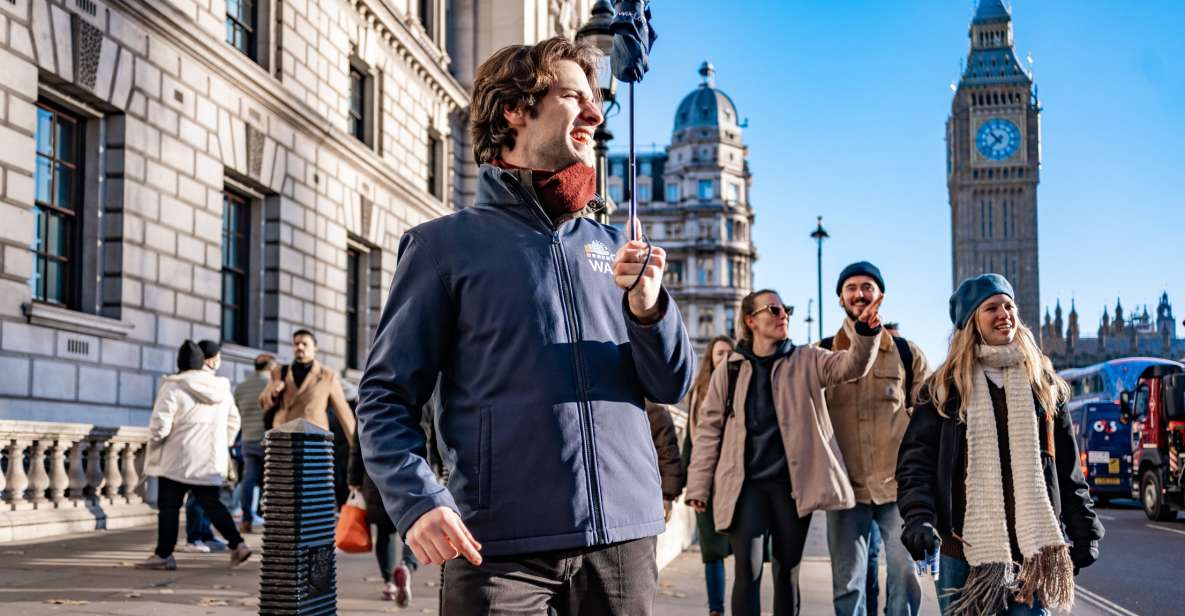
- Trafalgar Square start with quick views toward the National Gallery and Nelson’s Column
- Royal landmarks sequence: Westminster Abbey, St James’s Park, St James’s Palace, and Buckingham Palace
- Big Ben and Parliament focus: Palace of Westminster exteriors plus commentary on royal history and coronations
- West End theatre stops along Pall Mall, Piccadilly Circus, and Apollo Theatre area
- Whitehall + Churchill War Rooms photo-friendly contrasts on the way to Soho
- App included: scan your voucher QR code and continue with self-guided routes after the tour
Trafalgar Square Start: Nelson’s Column and quick National Gallery views
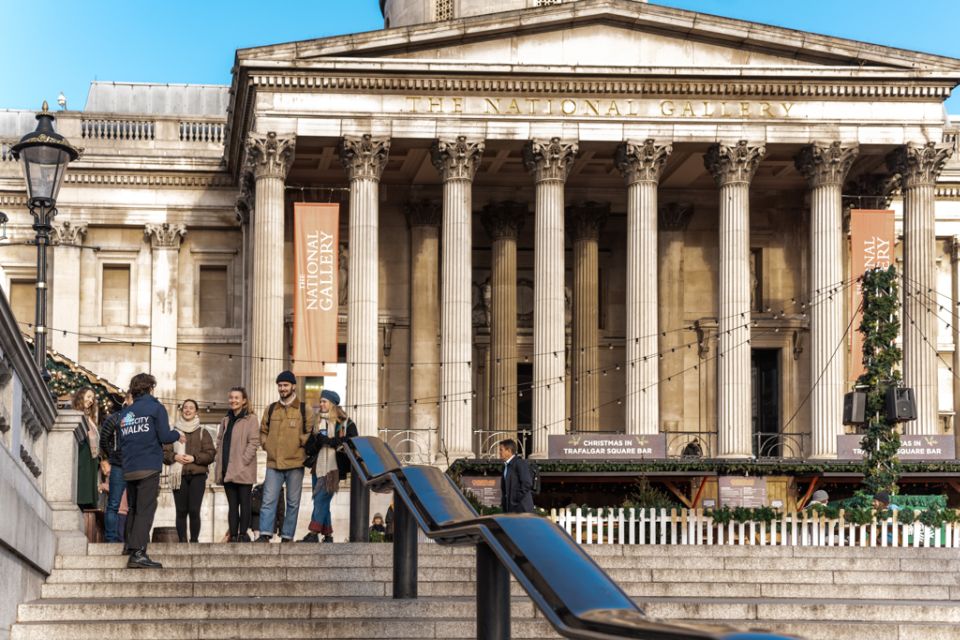
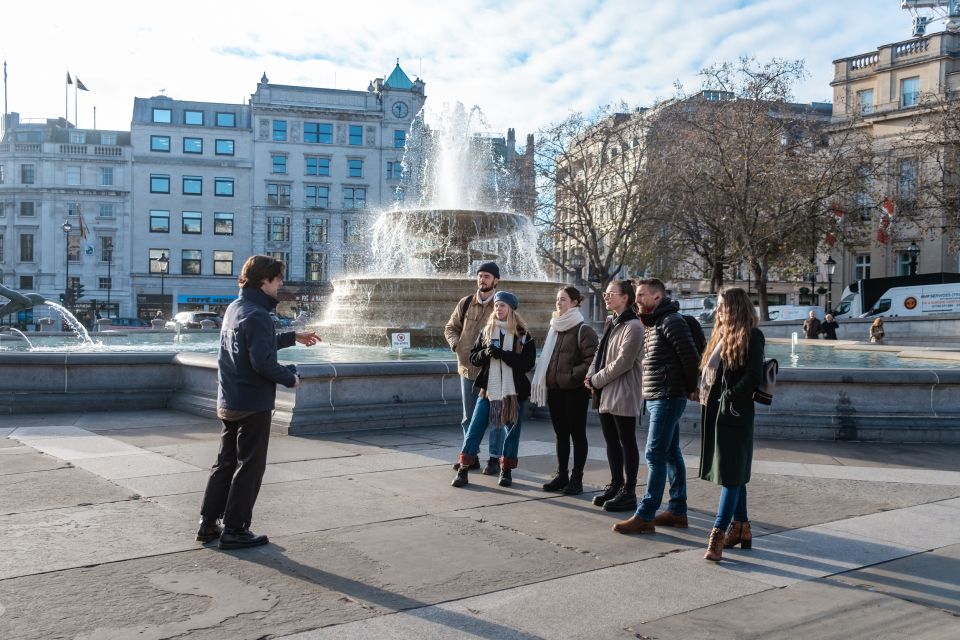
Your tour begins at the north-west corner of Trafalgar Square, at the top of the steps. Look for the Vox City Walks guide holding a blue umbrella, right by the large white cube statue on the 4th Plinth, opposite Canada House and near the National Gallery entrance.
That first minute matters. Trafalgar Square is one of those places where London’s layout clicks into place fast. From here you can see several “anchor points” for the rest of the walk, and the guide uses that moment to set the tone—what you’re looking at, why it matters, and how the route connects.
Then you move toward Nelson’s Column. Even if you’ve seen it in photos a hundred times, it hits differently in person because you get the scale and the surrounding street geometry. The tour’s style is practical: you’re not just staring up—you’re walking with an explanation that helps you recognize what’s ahead.
One small drawback to know: Trafalgar Square can be crowded, and you’ll spend a bit of time navigating people as you line up for good sight angles. If you’re the type who hates shoulder-to-shoulder crowds, I’d treat this as your “busy first stop” and plan your quieter moments later.
You can also read our reviews of more walking tours in London



Westminster Abbey and the royal story you’ll actually remember
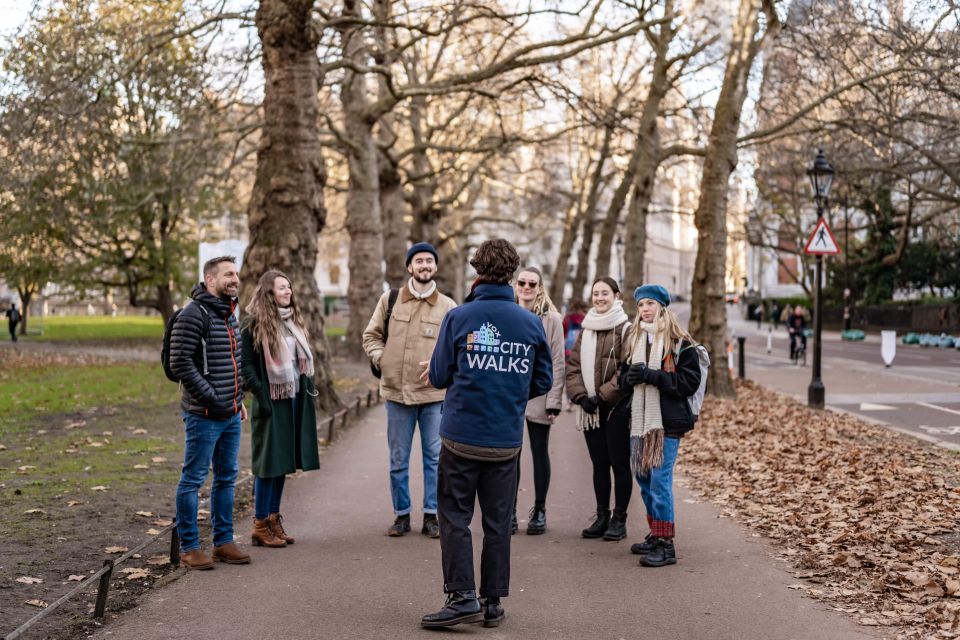
From Trafalgar Square, the route builds toward the heart of London’s ceremonial and political identity. When you reach Westminster Abbey, the guide’s commentary centers on the history of London’s royal family and the world-famous coronations tied to it.
This is a good place to slow down. Westminster Abbey is one of those buildings where the façade tells you it’s important, but the guide helps you decode what kind of important. You’re not getting a museum lecture—you’re getting a street-level narrative that makes the building feel connected to real events and people.
After Westminster Abbey, you follow the next royal-adjacent stretch through St James’s Park and toward St James’s Palace. The tour keeps the pacing friendly while still covering a lot of ground in two hours, and this is where it helps to have a guide who’s willing to answer questions. In the reviews, guides like Jess and Lou were repeatedly praised for being patient and engaging, which matters when you’re trying to understand a place you’ve never visited.
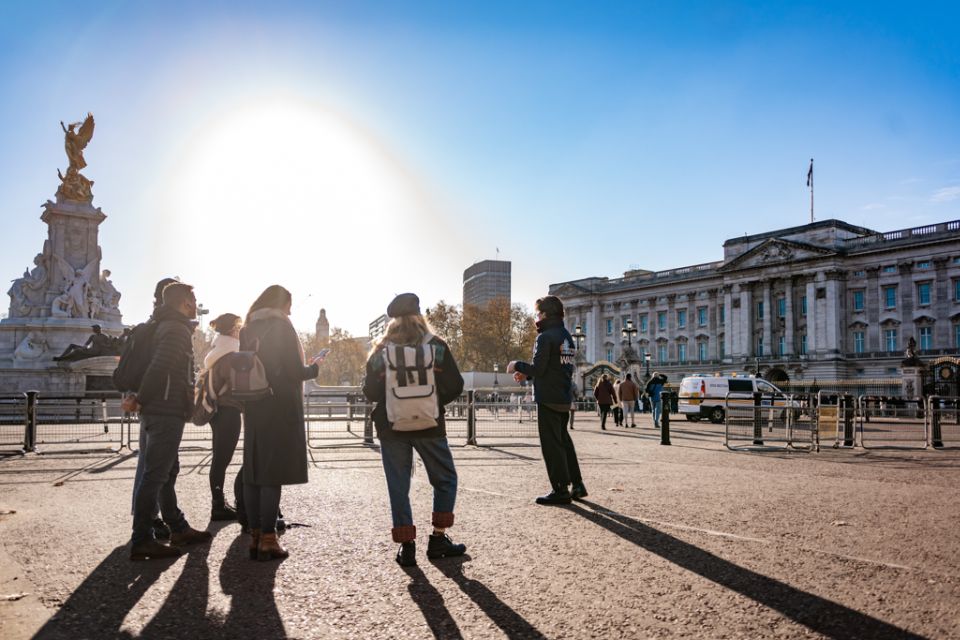
The final “royal payoff” in this sequence is Buckingham Palace. Even without ticket entry, the exterior views are impressive, and the context the guide provides makes it more than a photo stop. You’re learning the why behind the sight, not just the what.
A consideration here: depending on the day and time, you may have less space for photos near the Palace than you’d like. Go for quick, clean shots and then keep walking—this tour is designed to keep you moving.
Big Ben and the Houses of Parliament: architectural drama with real context
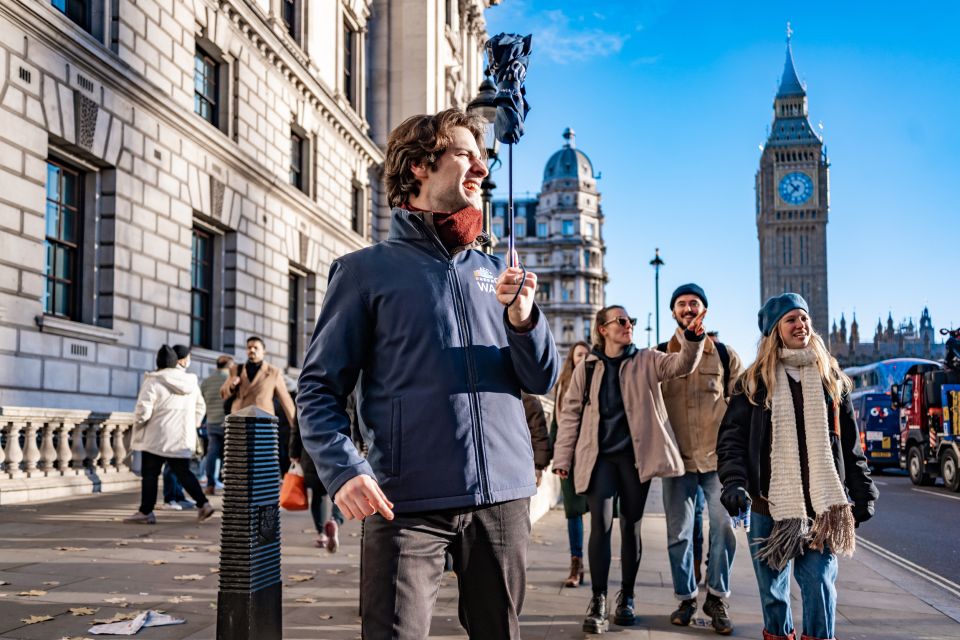
The walk around Big Ben and the Houses of Parliament is where London’s “power” look becomes obvious. The tour highlights the striking architecture of the Palace of Westminster and Big Ben, and the guide’s role is to connect the visuals to story—what these buildings represent and how they fit into the city’s identity.
This part is also good if you’re the type who likes structure. Big Ben and the Parliament area are a clear, concentrated block of landmarks. You get big sightlines, recognizable silhouettes, and commentary that makes the area feel like one connected story rather than unrelated stops.
There’s also Parliament Square and a pass by the Supreme Court on the way. Even without going inside, you’ll feel the theme: this walk threads civic life through the city’s most iconic architecture. The value here is not depth of legal history—it’s perspective. By the time you reach the next districts, you’ll understand where government fits in London’s everyday geography.
Whitehall stops: Horse Guards Parade and Churchill War Rooms from the outside
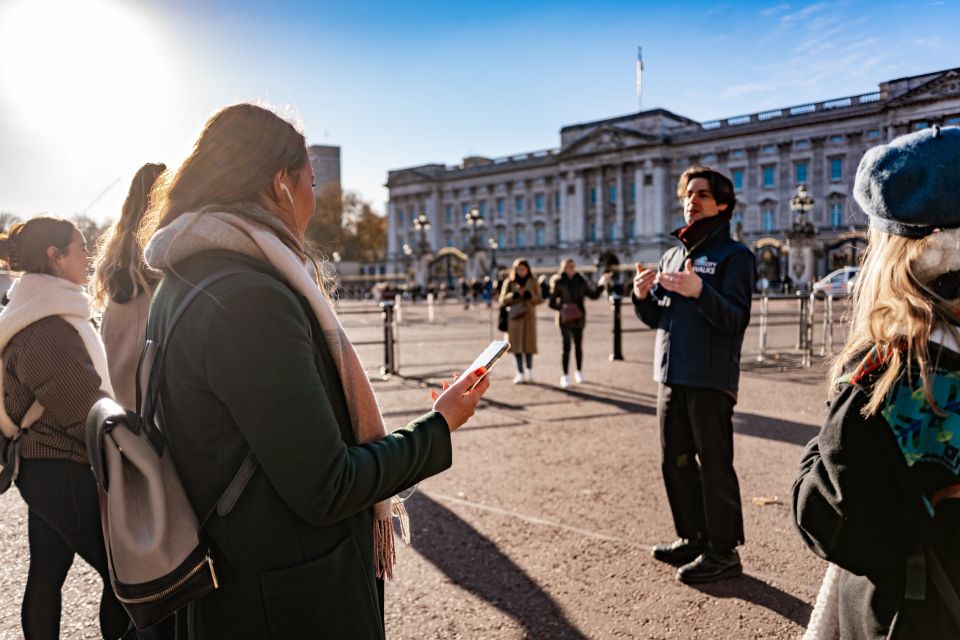
As you keep heading toward Whitehall, you reach Horse Guards Parade at Whitehall. This gives you a different kind of visual rhythm from the abbey-and-palace block. It’s still ceremonial and public-facing, but the setting feels more open and processional.
Then comes Churchill War Rooms. Since tickets aren’t included on this tour, you won’t go in—think of it as a strong “I understand where we are” moment. The guide’s storytelling helps you situate the building in London’s modern history themes, and it works well if you like your travel to include context without committing to a separate timed-entry site right away.
One practical note: by the time you hit Whitehall and the Churchill War Rooms area, you’re already a couple of stops into the walk. Wear comfortable shoes. This isn’t a gentle stroll where you stop every 20 steps; it’s a two-hour route designed to cover many landmarks with minimal downtime.
The Mall to Buckingham’s doorstep: classic London streets and serious photo angles
On the way from the palace zone into central shopping and theatre areas, you pass The Mall and take in the shift from royal grounds to the streets you’ll actually browse and pop into later.
The Mall is a great “in-between” section. You get long sightlines that make the city feel ordered, and it’s a natural stretch to catch better photos—especially if you’ve already shot the big exteriors and want something that looks more like London street composition.
Then you continue onward with Pall Mall, a route the tour describes as your pathway into the West End. This is where the tour becomes more playful. The commentary keeps pace, and you start passing landmarks that are less about ceremonies and more about crowds, culture, and nightlife energy.




Regent Street, Burlington Arcade, and Piccadilly Circus: shopping glamour meets theatrical London
Once you’re in the West End orbit, you’ll pass Regent Street and Burlington Arcade before reaching Piccadilly Circus.
Regent Street and Burlington Arcade give you the contrast that makes London feel like London: grand streetscape views mixed with distinctive, more “special” shopping architecture. Even if you don’t plan to shop, just walking through these blocks helps you build a mental map. That map is the real benefit of doing this early in your trip.
Piccadilly Circus is where the city’s energy becomes loud—more people, more visual stimuli, more street-level motion. The tour uses it as a landmark transition: you’re not just seeing it; you’re using it as a waypoint that sets up the next theatre stops and the final nightlife district.
Then comes West End and Apollo Theatre. The tour’s description includes several theatre names along the way, including Piccadilly, Sondheim, and Apollo. Even if you’re not planning to catch a show, this sequence helps you understand why the West End is more than a geographic label—it’s a whole lifestyle zone with its own rhythm.
Soho finish: where your guide’s recommendations can save you time
The end of the guided walk is Soho. This is a smart finish because it’s exactly where you’ll likely want food and a change of pace once the tour is over.
The tour encourages you to ask your guide for recommendations, and the Soho location helps make those suggestions immediately useful. If you’re someone who doesn’t want to spend your limited vacation time Googling menus, this is the practical part of the tour: you leave with leads for bars, eateries, and clubs while you’re still in the right neighborhood.
Also, Soho is close enough to central landmarks that you can keep wandering after the walk without feeling like you’ve started a second trip from scratch.
Your included app: keep walking after the two hours
Your ticket includes a complimentary sightseeing mobile app. You use your own phone, and you access self-guided walking routes through the app—after the guided portion ends.
Before you go, make sure you know where the QR code is on your voucher. The tour notes that you should scan that QR code to download the app and get full access to the routes.
This matters because two hours is just enough time to get your bearings, not enough time to explore deeply. The app turns your guided start into a longer, self-paced loop. You’ll be able to follow routes when you’re ready—on a different day, at a slower pace, or with different priorities (photos one day, museums another).
It’s also useful as weather insurance. If it rains or your energy level drops after the guided walk, you’re not stuck. You can keep exploring in a way that fits your day.
Where the tour really delivers value for $20
At $20 per person for a 2-hour guided walk, the value isn’t just that you see major landmarks. It’s what you’re buying: interpretation, direction, and time-saving.
First, you get a live guide with English commentary. Reviews frequently praise guides like Sebastian for cheeky fun facts, Ollie/Lou/Louis for relaxed humor and “need-to-know” context, and Matt for a friendly actor-style delivery. That sort of guide makes the difference between “I saw buildings” and “I understand what I’m seeing.”
Second, the ticket bundles the app. One of the easiest ways to get more out of a short trip is to have a ready-made plan for follow-up walking routes. You’re not paying extra just to keep exploring.
Third, you’re not paying for attraction tickets that you might not even want. Since the tour focuses on exterior viewing, you can decide later which interiors deserve paid entry. That’s a smart trade-off when you want flexibility.
If you’re hoping for a day packed with museum tickets and guided entrance access, you might feel constrained. But if you want a strong first-day overview and a map you can use immediately, the pricing makes sense.
Pace, timing, and photo opportunities (and how to use them well)
The tour runs about two hours, and you’re advised to arrive about 5 minutes early. That small buffer helps because the walk starts on time and you don’t want to miss the first landmarks and explanations.
Photo-wise, you’ll have plenty of iconic exterior moments: Trafalgar Square, Big Ben, Westminster Abbey, St James’s Park, St James’s Palace, Buckingham Palace, Piccadilly Circus, and the Soho finish zone. The guide also helps keep things moving, which can mean shorter stops at each landmark.
A quick strategy that works: take one “wide” photo early at each stop, then use a second shot for details or street composition when the guide finishes a key point. That way you’re not just collecting images—you’re collecting context you’ll remember later.
Also, this walk is especially good for solo travelers. Several reviews praise the experience for being easy to do alone and for feeling personable rather than overwhelming.
Should you book this London landmarks walking tour?
If you want an efficient, story-led way to get oriented in central London, I’d book it—especially if it’s your first day and you want to see the major landmarks in one connected route. The mix of royal sites (Westminster Abbey and Buckingham Palace), civic power (Big Ben and Parliament area), and theatre-and-nightlife zones (West End and Soho) makes it a smart “choose-your-later-adventures” day.
You might skip or swap to something else if you specifically want guided entry into major attractions, because this tour doesn’t include attraction tickets. Otherwise, it’s a solid value at $20, with the added benefit of the self-guided app to keep the walking going after the tour ends.
FAQ
How long is the London landmarks walking tour?
It runs for approximately 2 hours.
Where does the tour start?
It departs from the north-west corner at the top of the steps of Trafalgar Square, at 5 Trafalgar Square, near the entrance to the National Gallery. Look for a Vox City Walks guide holding a blue umbrella.
Where does the tour end?
It returns to 5 Trafalgar Square.
What’s included in the ticket price?
You get the walking tour, a live English-speaking tour guide, and a complimentary sightseeing mobile app (plus applicable taxes and fees).
Are attraction tickets included?
No. Attraction tickets are not included.
Is the tour guided or self-guided?
It’s a live guided walking tour, and your ticket also includes an app-based self-guided sightseeing option after the tour.
Do I need to bring my own phone for the app?
Yes. The app is accessed using your own mobile phone, and you’ll scan the QR code on your voucher to download and get access.
What language is the tour guide?
The live tour guide speaks English.
Is free cancellation available?
Yes. You can cancel up to 24 hours in advance for a full refund.
Can I reserve now and pay later?
Yes. The listing offers reserve now & pay later, so you can book your spot and pay nothing today.