REVIEW · BUCKINGHAM PALACE
London: Buckingham Palace Entry & Changing of the Guard Tour
Book on GetYourGuide →Operated by City Wonders Ltd. UK · Bookable on GetYourGuide
A guard parade with a palace ticket attached is rare, and that is why this tour works. I like the combo of a guided Changing of the Guard stand-in (with military music in the mix) and a focused visit to the State Rooms, where you get to take in famous Royal Collection pieces like Sèvres porcelain.
You’ll also get practical help: a guide sets the pace, talks through royal protocol, and keeps you moving to the best viewing spots for what is happening outside. One consideration: the Changing of the Guards can change or be canceled by British authorities (weather or other disruptions), and when that happens, you will be redirected to a Westminster walking tour instead, with no guarantee you’ll see the exact ceremony you planned for.
In This Review
- Key Highlights at a Glance
- Buckingham Palace and the Changing of the Guard: The Point of This 2.5-Hour Combo
- Meet at Duke of York Column: Finding the Starting Point Without Stress
- Changing of the Guard in Motion: How the Guide Helps You See What Counts
- Foot Guards or Horse Guards: What You Might See
- When the ceremony changes: Plan for a backup that still keeps you moving
- Inside Buckingham Palace State Rooms: What to Look for During Your One-Hour Visit
- Royal Collection highlights you should mentally tag before you start
- Royal Protocol and Precision: The Real Value Behind the “Pageantry”
- Group Pace, Headsets, and Palace Rules That Affect Your Comfort
- Good to know about check-in flow
- Is It Worth $97? Value Check for Ticket + Guide + Time
- Who This Tour Suits Best (and Who Should Rethink It)
- Should You Book This Tour? My Go/No-Go Checklist
- FAQ
- How long is the London Buckingham Palace Entry and Changing of the Guard tour?
- Where do I meet the tour?
- What happens if the Changing of the Guards is canceled?
- Will I always see the Foot Guards?
- What is included in the ticket price?
- Are cameras allowed?
- Is the tour suitable for wheelchair users or limited mobility?
Key Highlights at a Glance
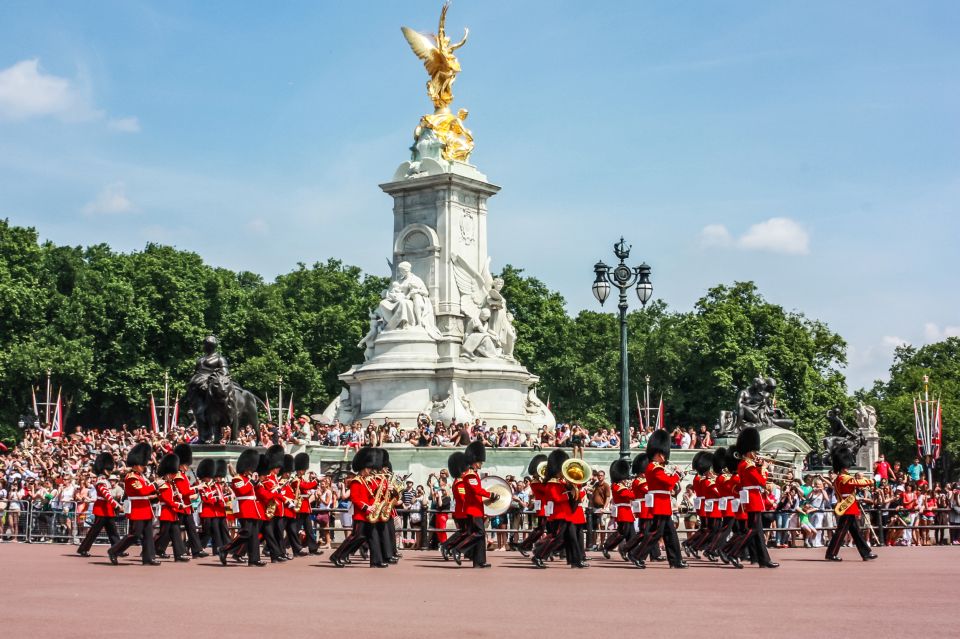
- Changing of the Guard with context: You’re not just watching marching. You learn what it means and how the Household Cavalry works.
- Royal Collection inside the Palace: You’ll see standout items like Sèvres porcelain and refined English and French furniture.
- Guided viewing spots: The route is planned so you can actually see the band and the guards as they move.
- Audio commentary during your palace visit: You’ll get more story once you’re inside, especially around the furnishings and family background.
- Fast 2.5-hour format: Changing of the Guard outside plus a timed State Rooms visit, without a half-day commitment.
Buckingham Palace and the Changing of the Guard: The Point of This 2.5-Hour Combo
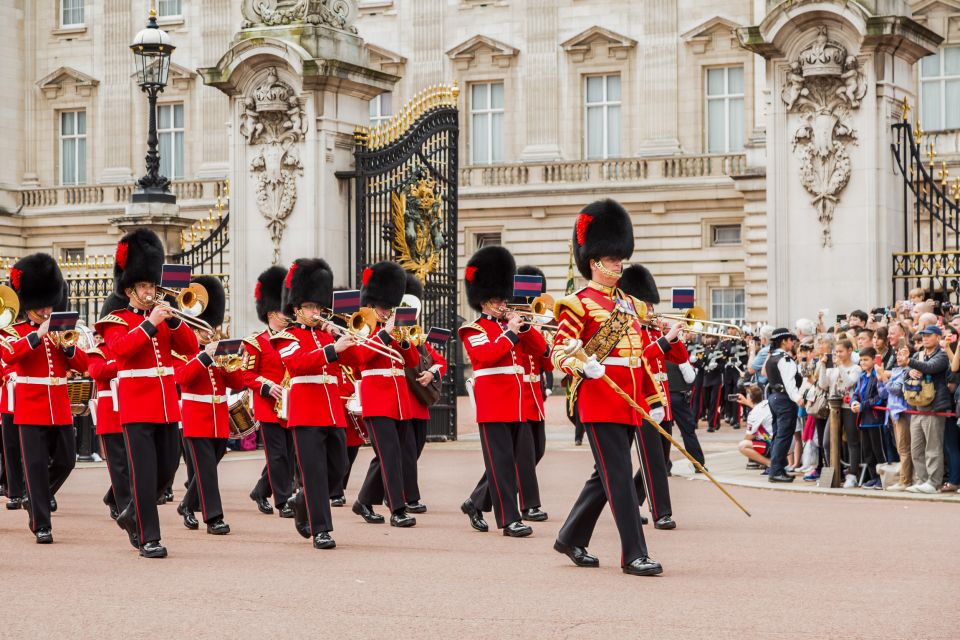
This is a classic London pairing done in an efficient way: you start by getting your bearings at Buckingham Palace, then you experience the ceremony with a guide, and finally you step into the lavish rooms that make the whole monarchy feel real instead of distant.
What I like most is that the tour helps you understand the theater. The Changing of the Guard is easy to watch, but harder to decode. With a guide, you learn the meaning and history behind the ceremony, so the precision looks like more than just costumes and drills. And once you go inside, the State Rooms stop being vague “royal rooms” and turn into specific spaces with specific stories behind the décor and furnishings.
There’s also a practical upside. You’re spending your time where the action is, without having to figure out everything on your own in a crowded area. When you only have a morning or afternoon window, this kind of structure is a big deal.
Meet at Duke of York Column: Finding the Starting Point Without Stress

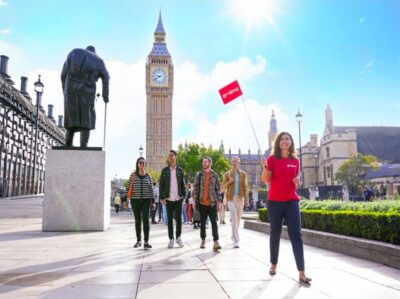
Your meeting point is not at Buckingham Palace gates. It’s at Duke of York Column on Waterloo Place, by Carlton Terrace. It’s a tall column with a statue on top, and your guide will be holding a City Wonders sign for your tour.
This matters because Buckingham Palace traffic and pedestrian bottlenecks can make late arrivals a problem. If you arrive early, you can get your bearings fast: the column is a clear landmark, and you’ll be able to check you’re in the right group before you start walking.
For transit, two simple options are given:
- Underground to Piccadilly Circus, exit 3 toward Regent Street/St James, then walk south down Regent Street toward St James Park (not toward Oxford Street). Waterloo Place is at the end of Regent Street.
- Underground to Charing Cross, then walk down the Mall toward Buckingham Palace.
Once you know you’re looking for the statue-topped column on Waterloo Place, the rest is straightforward.
Changing of the Guard in Motion: How the Guide Helps You See What Counts
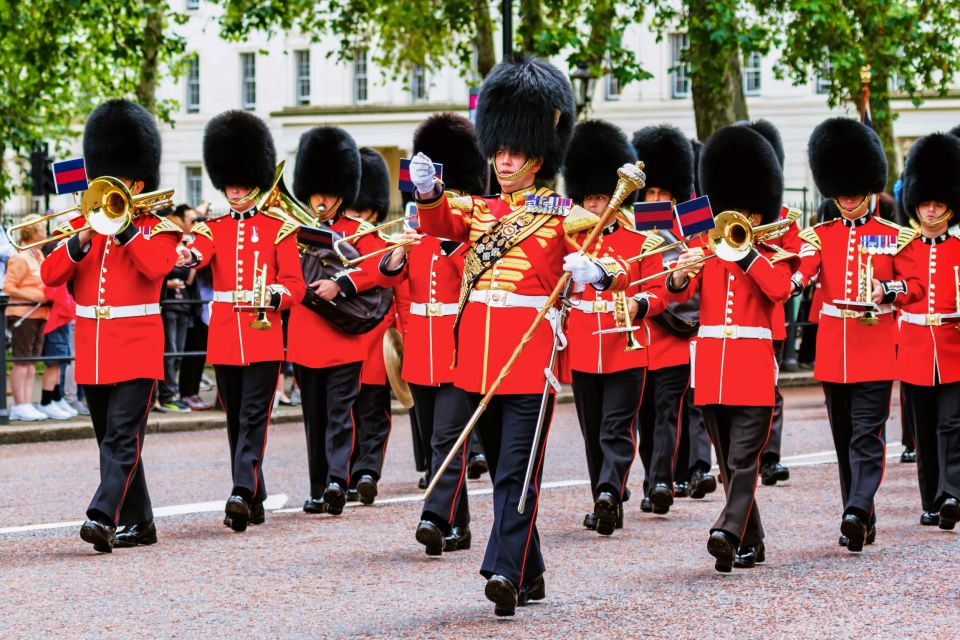
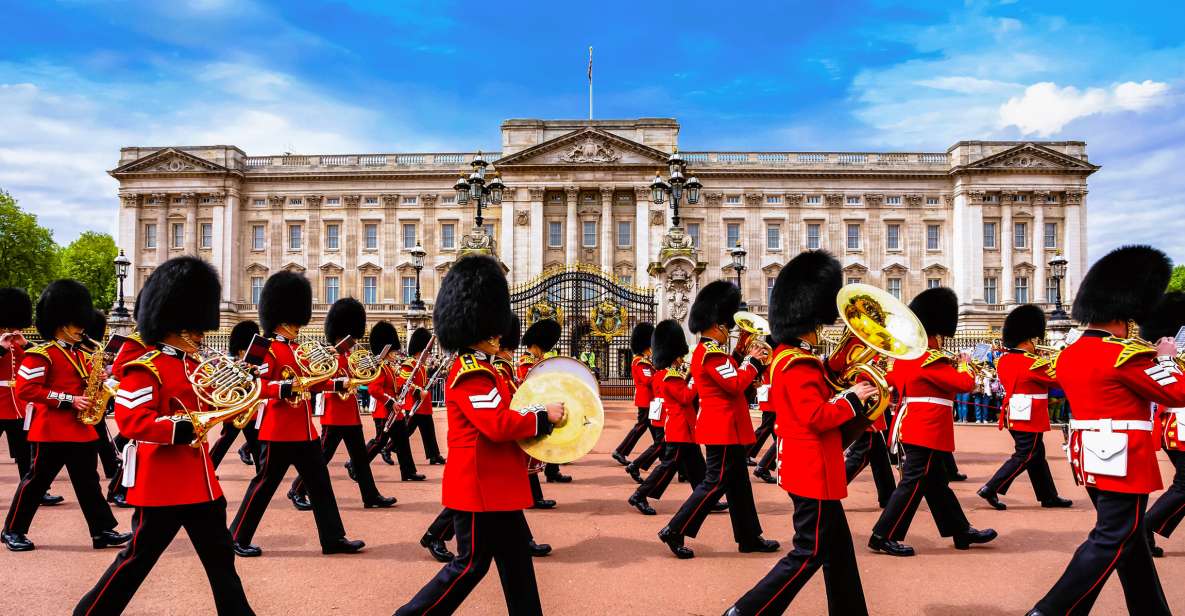
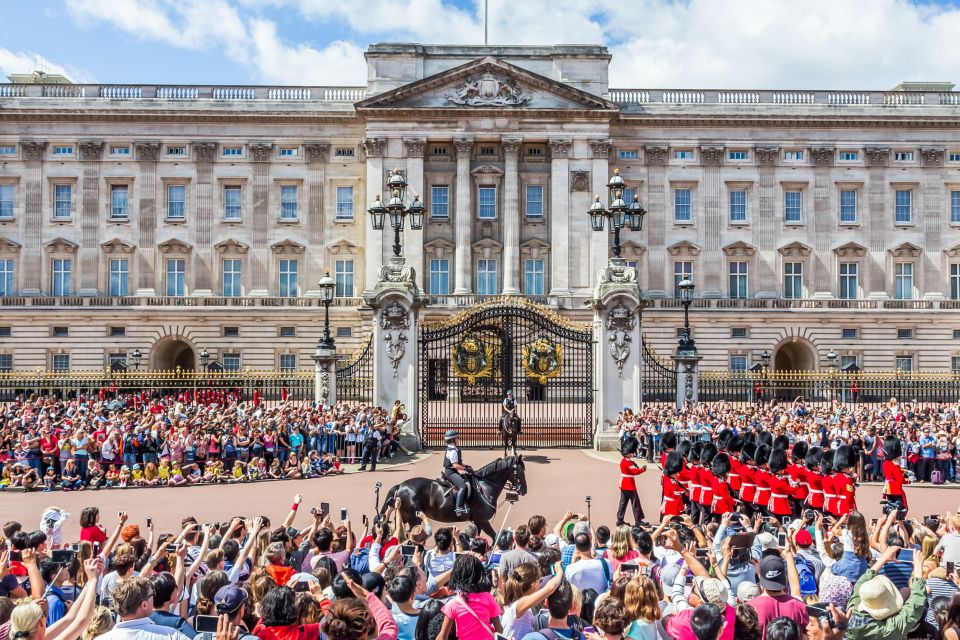
The ceremony part is guided and timed at about an hour. The format is built around one goal: get you to spots where you can watch the guards march and hear the explanation without constantly craning your neck or getting pushed behind taller people.
Your guide leads the group and explains the history and meaning of the ceremony. That guide context is one of the main reasons this tour feels different from just standing at the curb. You learn how royal protocol connects to the Household Cavalry and why the marching and timing matter.
Then you watch the precision in real time. The group gets to see the guards up close as they move to the sound of a military band. That combination is the magic: pageantry meets choreography.
Foot Guards or Horse Guards: What You Might See
Depending on the Household Cavalry schedule, you may see either:
- the Changing of the Foot Guards, or
- the Changing of the Horse Guards.
There’s also a day-specific wrinkle you should know before you go:
- There is no Changing of the Foot Guards on Tuesday, Thursday, and Saturday, so you’ll be provided with a Walking Tour of Westminster City instead.
- On Sundays, the ceremony follows a slightly different version known as the Sunday Parade.
If your priority is a specific version of the ceremony, plan for the possibility that the schedule in London controls what happens that day.
When the ceremony changes: Plan for a backup that still keeps you moving
British authorities can adjust dates, times, and cancellations, and that can happen due to bad weather or other circumstances. In those cases, it won’t be announced in advance that day; you’ll be told in the morning. When that happens, you’ll switch to a Westminster walking tour.
That backup matters because it reduces the chance of the day going flat. It also means you should treat the palace interior visit as the sure thing, and the exact guard ceremony as the variable.
Inside Buckingham Palace State Rooms: What to Look for During Your One-Hour Visit
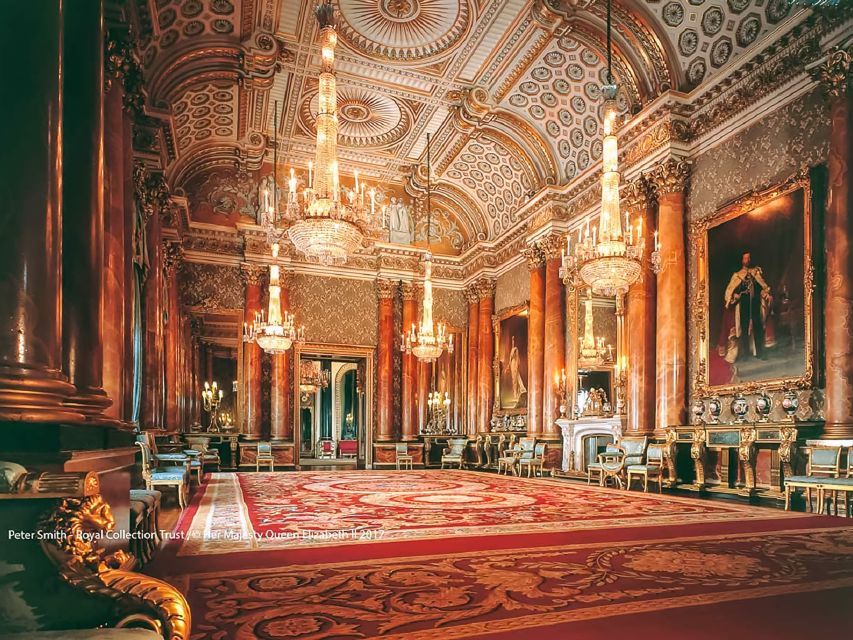
After the outdoor portion, you step inside and spend about an hour at Buckingham Palace. This is where the tour earns its title in a very physical way.
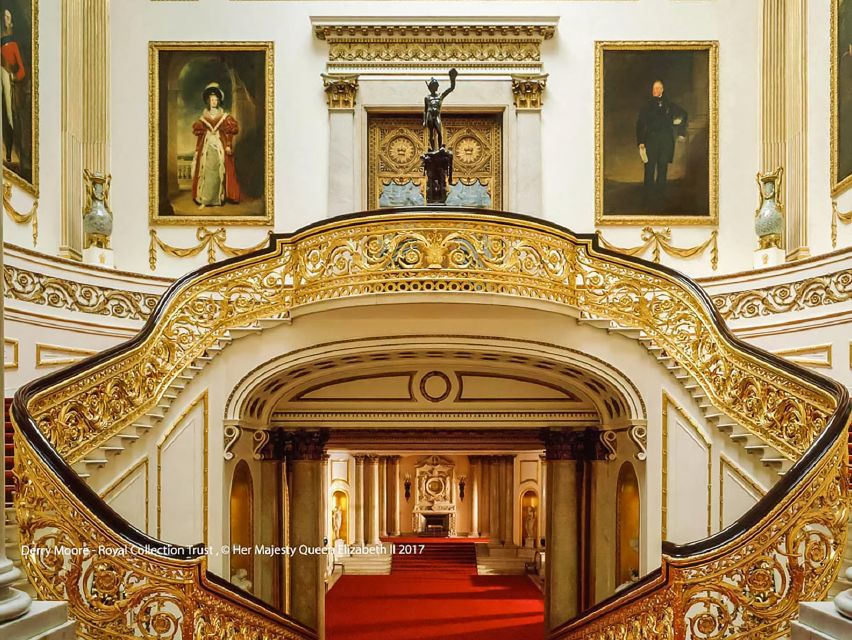
You’ll explore the lavish State Rooms of the British monarchy’s official London residence. Expect big visual impact: sparkling chandeliers, grand rooms, and a sense of scale that photos simply cannot match. But the better value is what you learn while you look.
Inside, you use an official audio guide for commentary. The stories focus on the history behind the sumptuous furnishings and the family background connected to the spaces. If you like turning a room into a timeline, this format works well: you can slow down when something grabs you and still stay on track.
Royal Collection highlights you should mentally tag before you start
The tour’s standout mentions include Sèvres porcelain and fine English and French furniture. Even if you’re not a serious collector, these are the kinds of objects that help you understand the monarchy as a cultural force, not just a ceremonial brand.
Sèvres porcelain is a big one. It’s the kind of detail that makes you stop walking. In a palace context, it also signals taste, connections, and the long-term collecting habits that shaped what ends up on display.
The furniture is the other category to watch for. The tour notes that some of the finest English and French furniture in the world is represented. That matters because furniture is what you sit near, look at from different angles, and notice once you start paying attention to materials and craftsmanship.
Royal Protocol and Precision: The Real Value Behind the “Pageantry”

The Changing of the Guard is often sold as a must-see spectacle, but the payoff here is the meaning. Your guide explains the ceremony’s history and what the different elements signify. That changes how you watch the guards and the band. Instead of only counting footsteps, you start noticing patterns and roles.
This is where I think this tour gives you better value than a solo stop. When you stand on your own, you can still see a great show. But you don’t get the layer that makes it click. With the guide, you leave with a more complete picture of what you just watched.
Also, the group experience helps. The guide keeps everyone together and moves you between viewing moments. Many of the best moments are short. The pace helps you catch the turning points instead of arriving mid-action.
And if you get a guide who is good at storytelling, it adds fuel to the whole thing. Names that have been praised for that kind of delivery include Sophie, Aaron, Joseph, Natalie, Michael, Paul, Kevin, Flora, and Katerina. You might not get the same person, but the fact that the tour consistently attracts strong performers is a good sign for your experience.
Group Pace, Headsets, and Palace Rules That Affect Your Comfort
This is a short tour, about 2.5 hours total, and it moves. You should wear comfortable shoes because you are walking between the ceremony area and the palace.
You’ll also be given headsets if needed. That matters because the outdoor ceremony is noisy and crowded, and you don’t want to miss the explanation while the band is playing.
A few rules can also affect your day:
- Cameras are not allowed.
- Baby strollers are not allowed.
- The tour is not suitable for people with mobility impairments or wheelchair users.
If you rely on a camera for travel documentation, this is the one rule you should weigh carefully. You can still see plenty, but you’ll have to leave the photo-taking behind. If you’re traveling with a stroller, you’ll need a different plan.
Good to know about check-in flow
Some people report that check-in can feel chaotic at first, but once you start the tour, the experience tends to settle into a smooth rhythm. Arrive a little early so you’re not fighting the clock.
Is It Worth $97? Value Check for Ticket + Guide + Time
At $97 per person, you’re paying for more than just entry. You’re getting:
- an entrance ticket to Buckingham Palace,
- a tour guide, and
- headsets (if needed),
- plus skip-the-ticket-line access.
That bundle is what makes the math work if you want to do both the exterior ceremony and the interior palace without spending extra time organizing it all yourself.
Also consider how London rewards planning. The area around Buckingham Palace fills fast. A guided route that gets you to strong viewing positions can save you from wasting time standing in the wrong spot.
One more value angle comes from the way the ceremony itself is often accessible elsewhere. If you only cared about watching the guards, you might be tempted to DIY. This tour justifies its price by giving you structure for the best sightlines and by adding the palace interior component with audio commentary.
Who This Tour Suits Best (and Who Should Rethink It)
This tour is a good fit if you:
- love ceremonies but also want the meaning behind them,
- want a time-efficient London royal experience,
- prefer guided pacing and clear direction in busy areas,
- plan to spend your one trip day inside the State Rooms rather than just outside the gates.
It may not be the best choice if you:
- need wheelchair accessibility or mobility support,
- plan to bring a stroller,
- strongly rely on cameras for sightseeing,
- dislike it when guides drift into personal opinions during a factual moment.
One theme that appears in a few comments is that guide style can vary. Some people liked history-focused delivery, while others felt extra negativity about modern royal topics took away from the ceremony. If that kind of commentary would bother you, you might want to keep your expectations anchored on the palace and the protocol lessons.
Should You Book This Tour? My Go/No-Go Checklist
Book it if you want a guided, organized way to do both the Changing of the Guard and Buckingham Palace State Rooms in one short block. The best reason to choose it is simple: you get a planned ceremony experience plus meaningful palace time, without turning your day into guesswork.
Pass or look for another option if:
- you are traveling with a stroller or need mobility accommodations,
- you’re hoping for a camera-heavy day,
- you can’t handle the possibility that the guard ceremony might be changed or canceled that morning and you’ll pivot to a Westminster walking plan.
If you’re flexible and you care about understanding what you’re seeing, this is one of those tours that saves time and adds context, which is exactly what you want in London.
FAQ
How long is the London Buckingham Palace Entry and Changing of the Guard tour?
The tour lasts 2.5 hours.
Where do I meet the tour?
You meet by the Duke of York Column on Waterloo Place, 9 Carlton Terrace, London SW1Y 5AJ. Guides will have a City Wonders sign.
What happens if the Changing of the Guards is canceled?
If the ceremony is canceled or altered by British authorities (including due to bad weather or other circumstances), you’ll be provided with a Walking Tour of Westminster City instead.
Will I always see the Foot Guards?
No. There is no Changing of the Foot Guards on Tuesday, Thursday, and Saturday, so those days you’ll get the Westminster walking tour instead. Depending on the schedule, you may see either Foot Guards or Horse Guards, and Sundays follow a Sunday Parade version.
What is included in the ticket price?
You get an entrance ticket to Buckingham Palace, a tour guide, and headsets if needed to hear your guide.
Are cameras allowed?
No. Cameras are not allowed.
Is the tour suitable for wheelchair users or limited mobility?
No. It is not suitable for people with mobility impairments and wheelchair users.